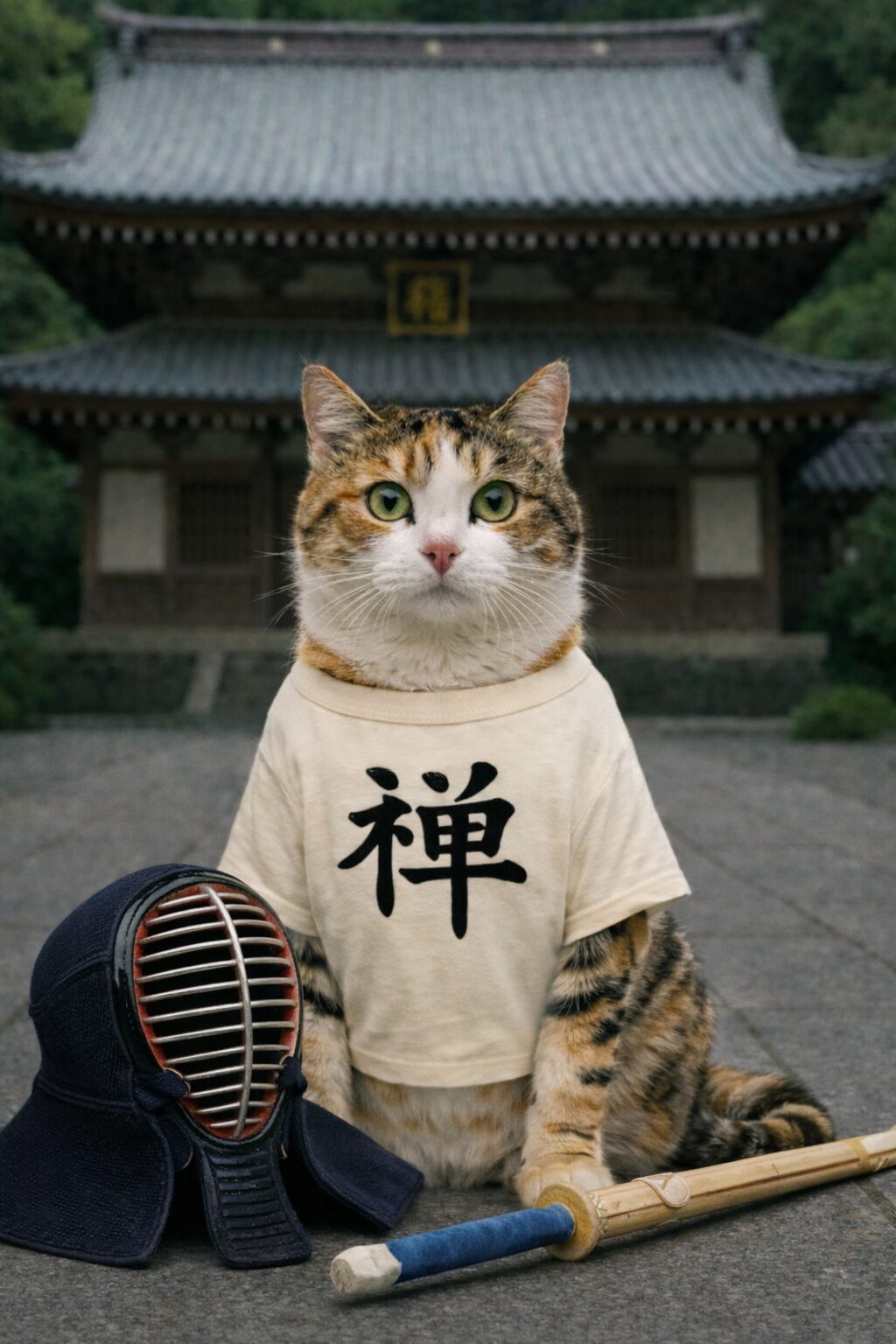
Origin in the Samurai Era: Kendo evolved from Kenjutsu, the sword techniques practiced by Samurai on and off the battlefield. For centuries, it was a matter of life and death. (剣道は「剣術」から進化したもので、侍の戦場内外での技術です。何世紀もの間、それは生死を分かつ技術でした。)
Transition to Spiritual Discipline: During the peaceful Edo period, the focus shifted from defeating opponents to ”polishing one’s mind and spirit”.(平和な江戸時代、目的は敵を倒すことから「己の心身を磨くこと」へと変化しました。)
0-2. 日本文化としての剣道(Kendo as Japanese Culture)
Reiho (Etiquette): Kendo begins and ends with a bow. This reflects the Japanese ethos of showing respect to one’s opponent.(剣道は礼に始まり礼に終わります。相手を敬う日本人の価値観の表れです。)
Zanshin (Lingering Awareness): Even after a strike, you must maintain focus. This alertness is the beauty of Kendo. (打った後も油断せず、集中を維持する「残心」。この緊張感こそが剣道の美学です。)
0-3. 他の武道(柔道・空手)との関わり(Relation to Other Budo)
🗻ゲストからよく聞かれる「他の武道との違い」を整理しました。
武道 (Budo)
焦点 (Focus)
特徴 (Characteristics)
Kendo (剣道)
Sword & Distance
Focuses on using the sword and mastering the interval (Ma-ai).
Judo (柔道)
Grappling & Balance
Focuses on using an opponent’s strength against them.
Karate (空手)
Striking & Hardness
Focuses on powerful strikes with hands and feet.
1. 挨拶と心構え(Greetings & Mindset)
⚔️剣道は「礼に始まり礼に終わる」という文化を伝えるのがポイントです。
Kendo begins and ends with a bow. (剣道は礼に始まり、礼に終わります。)
Please take off your shoes and hats before entering the Dojo. (道場に入る前に、靴と帽子を脱いでください。)
Let’s sit in “Seiza” style. It is a formal way of sitting to calm your mind. (正座をしましょう。心を落ち着かせるための正式な座り方です。)
“Mokuso” means meditation. Close your eyes and focus on your breathing. (「黙想」はメディテーションです。目を閉じ、呼吸に集中してください。)
2. 用具の説明(Equipment & Gear)
🛡️ 用具に対する心構え(Mindset for Equipment)を押さえておきます。
“Shinai and Bogu (armor) are not just tools. In Kendo, they are considered sacred and are an extension of your own body. Please treat them with great respect and care.”(竹刀や防具は、単なる道具ではありません。剣道においてこれらは神聖なもので自分の分身です。敬意を持って、大切に扱ってください。)
💡 体験者にこの精神をより深く伝えるための、いくつかの英語表現のバリエーションです。
1.「自分の分身」であることを強調する場合
“Think of your Shinai as an extension of your soul, not just a wooden stick.” (竹刀をただの木の棒と思わず、自分の魂の延長(分身)だと考えてください。)
👆Extension of your soul/body という表現は、武道の精神性を説明する際によく使われる非常に美しいフレーズです。
2. 「神聖さ」を強調する場合
“These are sacred items in Japanese Budo. Please do not treat them carelessly.” (これらは日本の武道における神聖な品々です。不注意に(雑に)扱わないでください。)
“Show respect to your equipment just as you do to your opponent.” (相手に対するのと同じように、用具にも敬意を示しましょう。)
👆剣道の「礼に始まり礼に終わる」という考え方が用具にも適用されることを伝えるのに適しています。
⚔️用具の違いを英語で補足するとスムーズに進みます。
This is a “Shinai,” a bamboo sword used for practice. (これは「竹刀」です。練習で使う竹の剣です。)
The armor is called Bogu. It consists of a helmet (Men), gloves (Kote), a body protector (Do), and a waist protector (Tare).(防具は「面」「小手」「胴」「垂」で構成されています。)
Please hold the Shinai with both hands, left hand at the bottom. (竹刀は両手で持ち、左手を一番下に添えてください。)
3. 基本動作と掛け声(Basic Moves & Kiai)
🗻動きを指示する際は、短く簡潔な命令形が伝わりやすいです。
Step forward with your right foot. (右足から一歩前へ出てください。)
Raise your sword above your head into the ready position. (剣を頭の上に振り上げてください。)
Strike the target and shout “MEN!” loudly. (打突部位を打ちながら、大きな声で「メン!」と叫んでください。)
“Kiai” is the spirit shout. It helps you focus your energy. (「気合」は魂の叫びです。エネルギーを集中させる助けになります。)
4. 指導中のアドバイス(Tips & Guidance)
⚔️初心者が陥りやすいポイントをフォローする表現です。
Don’t use too much strength in your shoulders. Relax. (肩に力を入れすぎないで。リラックスしてください。)
Keep your back straight and look your opponent in the eyes. (背筋を伸ばし、相手の目を見てください。)
The power comes from your left hand and your core, not just your arms. (力は腕だけでなく、左手と体幹から生み出します。)
Good job! / Nice strike! (いいですね! / ナイス打ちです!)
5. 終了時の挨拶(Closing)
🗻感謝と敬意を伝えて締めくくります。
Thank you for your hard work. “Otsukaresama-deshita.” (お疲れ様でした。)
How did it feel to strike with your full spirit? (全力で打ってみて、どんな気分でしたか?)
I hope you enjoyed experiencing the Samurai spirit.(侍の精神を楽しんでいただけたなら幸いです。)
💡 インバウンド対応のコツ
👆 ➊擬音語を活用する: “Swing it down like a Whoosh!”(シュッと振り下ろして!)など、音で伝えると動きのイメージが共有しやすくなります。
➋安全第一: “Safety first. Please do not swing the Shinai outside the designated area.”(安全第一です。指定場所以外で竹刀を振り回さないでください)という注意喚起は最初に行いましょう。 Kotetsu
“Swing it down like a Whoosh!”“Safety first. Please do not swing the Shinai outside the designated area.”