 源氏(Genji)
皆さん、こんにちは!日本の城・建築ウオッチャー&ガイドのGenjiです。加賀百万石を治めた前田家の歴史と文化を今に伝える『金沢城公園』英語紹介ブログへようこそ。
このブログでは、大切な海外ゲストから、商談後、金沢城に行ってみたい!と急に言われた場合でも、現場で『すぐに使える英語表現』をご紹介しています。
AIで公式情報が簡単に得られる昨今、ゲストは素晴らしい建築や公式説明だけでなく、現場でしか聞けない「驚きと笑いの裏話」にもとても興味があります。多忙でなかなか準備のお時間が取れない皆さまの為に、ピンポイントでアクセスできるボタンもご用意していますので、皆さんのご興味やニーズに合わせて、ご気軽にご利用ください。このシリーズでは私が最後まで分かりやすくご案内します。
📍 Quick Navigation: 各章へジャンプ
👉タイトルの各語は「海鼠壁(なまこ壁)」”sea cucumber wall” 、「鉛瓦(なまりがわら)」”lead roof tile”という言い方が可能です。👉特定のお城でなく日本の城に共通した一般的な英語表現は『日本の城』わかりやすく解説へお立ち寄りください。
👉直接インバウンドに向けてまとめた英語版ご参照の際はこちらからどうぞ!
0. 本ブログの全体ガイド 🌸
本ブログは大きく分けて3つの階層で構成しております。皆様のその時々のニーズや目の前のゲストの様子に合わせて、目次からお好きな場所へアクセスしてください。
🔰 【Step 1】基本用語
まずは「これを知らなきゃ始まらない」金沢城案内の必須ワードからご紹介いたします。「海鼠壁(なまこかべ)」や「鉛瓦(なまりがわら)」を英語で分かりやすく説明するには?「櫓(やぐら)」や「曲輪(くるわ)」のニュアンスは? 混雑した現場でもパッと口から出るよう、使い勝手の良い単語を厳選いたしました。
🧭 【Step 2】スポット別の「三段構え」解説
各名所(金沢城全体、石川門、河北門、菱櫓・五十間長屋、玉泉院丸庭園など)ごとに、以下の3つの切り口をご用意いたしました。今の状況に合わせてお選びください。
📚 基本情報(Deep Facts)
「金沢城の歴史や天守閣がない背景をまだよくご存じない」ゲストへ、加賀藩の設計思想や正確な知識をお伝えするためのパートです。
🗣️ 歩きながらの即答例(Easy & Fast)
「基本は分かっているけれど、城内を歩きながら英語で話すと詰まっちゃう」という方に。思考を止めず、リズムよく伝えられる短いフレーズ集をご用意しました。
🤣 インバウンド視点!笑いが取れるかも?
「普通のガイドじゃ物足りない」というゲスト向けに。案内現場で磨いた、ゲストを唸らせ、時にクスッと微笑ませる「粋な裏話」と「比喩」を詰め込んでおります。
1. 押さえておきたい基本用語
最初に押さえておきたい基本用語をご紹介します。他の城案内でも使える共通用語からマニア向け、および金沢特有表現まで、ニーズに合わせてご活用ください。
1.1 日本の城共通用語(日常会話向け)
日本人の日常会話でも使うレベルの用語です。
- Japanese castle(城) / hill castle(平山城) / castle town(城下町)
平山城は金沢城のように高台の上に建てられた城です。 - story(階) / a 2-story building(二階建て) / This tower is 5 stories high(この櫓は5階建て)
- castle gate(城門) / castle wall(城壁) / stone wall(石垣)
- plaster(漆喰、石膏) / stucco(漆喰) / mortar(モルタル、漆喰)
- moat(堀) / inner moat(内堀) / outer moat(外堀)
- lord(領主、殿様) / feudal lord(大名) / vassal(家臣) / retainer(家臣)
- castle tower(天守閣) / main tower / keep / donjon
- samurai warrior(侍、武士) / warrior class(武士階級)
Samuraiで通じますが、歴史的背景を補足する際に便利です。 - bridge(橋) / wooden bridge(木橋) / drawbridge(跳ね橋)
極楽橋など、お城の橋を案内する際の基本用語です。 - main gate(正門、大手門) / side gate(勝手口、裏門)
河北門(正門)と石川門(裏門)の役割の違いを説明する際に使えます。
1.2 日本の城共通用語(城愛好家向け)
日本人でも正確な説明が難しく、城愛好家が使うレベルの用語です。
- turret(櫓) / guard tower / watch tower / lookout tower / storage rooms
「矢倉」とも書き、兵器の倉庫のほか、見張りや装飾の役割も担います。 - enclosure(曲輪) / main enclosure(本丸) / secondary enclosure(二の丸) / tertiary enclosure(三の丸)
土塁、石垣、水堀で区切られた区画のことです。 - gable / gablet(破風) / roof over bay window
日本建築独特の装飾性のある雨除けです。 - masugata gate(枡形門) / square-shaped compound gate
四角いスペースに敵を閉じ込めて撃退する二重構造の門です。 - loopholes(狭間) / arrow slits(矢狭間) / gun ports(鉄砲狭間)
壁に開けられた矢や鉄砲を放つための穴です。 - stone drop(石落とし) / stone-dropping chute
壁の下に登ってきた敵に石を落とすための仕掛けです。 - earthen wall(土塁) / rampart / earthen embankment
石垣が普及する前に敵を防ぐために盛られた土の防壁です。 - guardhouse(番所) / guard post
門の近くで警備や警護の武士が待機していた施設です。 - palace(御殿) / lord’s residence / administrative palace
政務を行う場であり、藩主の住居でもあった豪華な大邸宅です。 - storehouse(土蔵) / storehouse with thick plaster walls
耐火性に優れた厚い漆喰で覆われた頑丈な倉庫です。
1.3 金沢城の説明で使われる関連用語
金沢城の説明で主に使用される関連用語です。
- marsh of gold(金の湿地) / digging potatoes(芋掘り)
金沢の名前の由来と言われる「芋掘り藤五郎」伝説の説明用です。 - restoration(復元) / fully restored castle(復元城)
金沢城は完全な木造復元を行っている点が大きな特徴です。 - fortress(要塞) / administration(行政) / residence(住居)
金沢城は戦用だけでなく行政や住居の役割も兼ね備えていました。 - Diamond Turret(菱櫓) / diamond-shaped turret(菱形櫓)
全国的にも珍しいダイヤモンド型(菱形)の櫓です。 - sea cucumber wall(海鼠壁、なまこ壁)
平瓦の継ぎ目に漆喰を盛り上げた金沢城の特徴的な壁塗り様式です。 - lead tile(鉛瓦)
金沢城の屋根に使用されている鉛製の瓦です。 - Tomuro stone(戸室石) / red and blue volcanic rocks
金沢近郊で採掘される、石垣や庭園に使用された火山岩です。 - Kimon direction(鬼門) / unlucky northeast direction
陰陽道において邪気が入ると嫌われた北東の方角です。 - Gyokusen’inmaru Garden(玉泉院丸庭園) / three-dimensional garden
高低差を活かして作られた鑑賞用の立体庭園です。 - Maeda Clan(前田家、加賀藩前田氏) / Maeda family
加賀百万石を治め、金沢の文化の礎を築いた藩主一族です。
2. 金沢城全体
ここでは金沢城全体をカバーします。用途に合わせて以下のボタンから直接アクセスできます。
2.1 基本情報(10項目)
金沢城の歴史的背景、建築美、およびガイド現場で役立つ背景知識をまとめた基本情報です。
- 1. A flatland-mountain castle boasting a 400-year history
English: Kanazawa Castle was originally constructed about 400 years ago in the late 16th century by Maeda Toshiie. Built on a plateau (river terrace) overlooking the city center of Kanazawa, this flatland-mountain castle (hirayamajiro) served as the political and cultural seat of the powerful Kaga Domain.
日本語: 今から約400年前(16世紀末)に前田利家によって本格的な築城が始まりました。金沢市街地を見下ろす河岸段丘の高台に位置する「平山城(ひらやまじろ)」で、加賀百万石の政治と文化の拠点でした。 - 2. A phoenix-like castle shaped by a cycle of fires and restorations
English: The history of Kanazawa Castle is defined by a cycle of destructive fires and grand rebuilds. Repeatedly ravaged by lightning strikes and accidental fires, the castle was faithfully reconstructed each time as a display of the lord’s authority and domain prestige.
日本語: 金沢城の歴史は、まさに火災と復元の繰り返しでした。落雷や不審火により何度も壊滅的な火災に見舞われましたが、そのたびに藩の威信をかけて忠実に再建されてきた歴史を持っています。 - 3. The strategic and political reasons behind the missing main keep
English: Although a magnificent main keep (tenshu) was built early on, it was destroyed by a lightning strike in 1602 and never rebuilt. This decision was driven by political prudence to show deference to the Tokugawa Shogunate, as well as a practical shift toward a defense system anchored by defensive turrets (yagura).
日本語: 築城初期には立派な天守閣が存在しましたが、1602年の落雷による焼失後は再建されませんでした。これは江戸幕府への恭順(反意がないこと)を示す政治的配慮に加え、軍事的な実用性を重視して櫓(やぐら)を中心とした防衛体制にシフトしたためです。 - 4. The oldest surviving structure, Ishikawa Gate, and the French Revolution
English: The oldest surviving structure inside the castle grounds is the Ishikawa Gate, rebuilt in 1788. Coincidentally dating back to the era of the French Revolution, this impressive historical gate is designated as an Important Cultural Property of Japan.
日本語: 城内で現存する最も古い建造物は「石川門(1788年再建)」です。世界史で言えば「フランス革命」が起きた頃の建物が現存しており、国の重要文化財に指定されています。 - 5. Authentic full-scale wooden reconstruction using traditional methods
English: Structures standing today, such as the Hishi Yagura and Gojuken Nagaya, were restored in recent decades. Rather than using modern steel or concrete, they were reconstructed entirely in authentic timber using traditional mortise-and-tenon joinery without relying on nails or bolts.
日本語: 現在立ち並ぶ菱櫓や五十間長屋などは、平成以降に復元されたものです。鉄筋コンクリートではなく、江戸時代の図面や古文書を基に、釘やボルトを極力使わない伝統的な木造軸組工法で忠実に復元されています。 - 6. The functional elegance of “Namako Walls” (Sea Cucumber Walls)
English: Kanazawa Castle’s iconic white walls feature “Namako walls,” created by laying flat tiles and plastering the raised joints into rounded shapes. Beyond their striking geometric beauty, these walls provided exceptional fireproofing and waterproofing against North Coast winters.
日本語: 金沢城を象徴する白い壁は、平瓦の目地に漆喰を盛り上げた「海鼠壁(なまこ壁)」です。見た目の美しさはもちろんのこと、防火性や防水性に極めて優れており、北陸の厳しい気候や火災から城を守る工夫が施されています。 - 7. Emergency ammunition in disguise: Lead roof tiles
English: The castle roofs are covered with specialized tiles sheeted in lead, giving them a distinct whitish appearance. Beyond their visual appeal, folklore suggests these tiles could be removed and melted into musket bullets during times of siege.
日本語: 屋根には木枠に鉛板を貼り付けた特注の「鉛瓦」が葺かれています。白い独特の外観を生み出すだけでなく、万が一の戦時には取り外して溶かし、鉄砲の弾丸として利用できるように作られていたと伝えられています。 - 8. A “Museum of Stone Walls” showcasing evolving masonry technique
English: The castle grounds feature diverse styles of stone walls built across different eras and for different functions. Ranging from rough unhewn natural stones to finely cut interlocking blocks, the site is celebrated as a living “museum of stone masonry.”
日本語: 城内には時代や目的に応じて作られた様々な様式の石垣が残されています。自然石をそのまま積んだ初期のものから、加工した美しい石を隙間なく積んだ後期のものまで揃っており、まさに「石垣の博物館」として見ごたえがあります。 - 9. A unique post-war history as a university campus
English: After serving as a feudal domain castle and later a military base during the Meiji era, the castle grounds took on a unique post-WWII role as the campus for Kanazawa University. It holds a distinct place in history for having modern higher education housed within a historic castle site.
日本語: 加賀藩の居城、明治以降の陸軍拠点としての歴史を経て、戦後は一時期「金沢大学」のキャンパスとして使用されていました。国指定の史跡・城郭の中に近代的な大学が置かれていたという非常にユニークな歩みを持っています。 - 10. The deep historical connection with Kenrokuen Garden
English: Adjacent Kenrokuen Garden was originally developed by successive Maeda lords as an outer private garden of Kanazawa Castle. Connected today by a single bridge (Ishikawa Bridge), the castle and garden form an integrated historical landscape.
日本語: 隣接する兼六園は、もともと金沢城の外郭(外庭)として前田家の歴代藩主によって作庭されたプライベート庭園です。お城と庭園は橋一枚(石川橋)で結ばれており、一体の歴史的空間として楽しむことができます。
Glossary:用語集
flatland-mountain castle ☛ 平山城 / river terrace ☛ 河岸段丘 / political and cultural seat ☛ 政治と文化の拠点 / overlooking the city ☛ 市街地を見下ろす / ravaged by fires ☛ 火災で壊滅的被害を受ける / lightning strike ☛ 落雷 / faithfully reconstructed ☛ 忠実に再建された / domain prestige ☛ 藩の威信 / main keep (tenshu) ☛ 天守閣 / political prudence ☛ 政治的配慮 / show deference ☛ 恭順を示す / defensive turrets (yagura) ☛ 櫓による防衛施設 / oldest surviving structure ☛ 現存最古の建造物 / Important Cultural Property ☛ 重要文化財 / era of the French Revolution ☛ フランス革命の時代 / mortise-and-tenon joinery ☛ ほぞ組(伝統継手) / authentic timber ☛ 本格木造 / without nails or bolts ☛ 釘やボルトを使わずに / full-scale restoration ☛ 原寸大の復元 / Namako walls ☛ 海鼠壁 / raised plaster joints ☛ 盛り上げた漆喰の目地 / geometric beauty ☛ 幾何学的な美しさ / fireproofing & waterproofing ☛ 防火性・防水性 / lead tiles ☛ 鉛瓦 / whitish appearance ☛ 白く見える外観 / a theory suggests ☛ 〜という説がある / melted into bullets ☛ 弾丸に溶かして使う / stone masonry ☛ 石垣技法 / unhewn natural stones ☛ 自然石の野面積み / interlocking blocks ☛ 加工石の密着積み / diverse styles ☛ 多様な様式 / post-war role ☛ 戦後の役割 / modern higher education ☛ 近代的高等教育 / housed within a historic site ☛ 城郭内に置かれた / outer private garden ☛ 外庭(プライベート庭園) / successive Maeda lords ☛ 歴代前田藩主 / integrated landscape ☛ 一体の歴史的景観 / connected by a single bridge ☛ 橋一つで結ばれている
2.2 口頭説明用(10項目)
案内中に歩きながらテンポよく説明できるよう、コア要素を短くまとめたフレーズ集です。
- 1. Flatland-mountain castle / 約400年の歴史を持つ平山城
English: Kanazawa Castle was built about 400 years ago on a hill overlooking the city.
日本語: 金沢城は約400年前、街を見下ろす高台に建てられた平山城です。 - 2. Cycle of fires / 火災と再建の歴史
English: It was destroyed by fires many times, but rebuilt over and over again.
日本語: 何度も火災で焼失しましたが、そのたびに再建されてきました。 - 3. No main keep / 天守閣がない理由
English: The main keep burned down in 1602 and was never rebuilt to show peace to the Shogun.
日本語: 天守閣は1602年に焼失後、幕府へ平和(恭順)を示すため再建されませんでした。 - 4. Ishikawa Gate / 現存最古の石川門
English: The oldest remaining structure is Ishikawa Gate, rebuilt around the French Revolution.
日本語: 現存する最古の建物は石川門で、フランス革命の頃に再建されたものです。 - 5. Traditional wooden reconstruction / 伝統的な木造復元
English: Recent restorations were built purely with traditional wooden joinery, without nails.
日本語: 近年の復元建物は、釘を使わない伝統的な木造工法で造られています。 - 6. Namako walls / 防火・防水に優れた海鼠壁
English: The white grid pattern on the walls is fireproof and waterproof plaster.
日本語: 壁の白い格子模様は、防火・防水性に優れた漆喰(海鼠壁)です。 - 7. Lead roof tiles / 弾丸にもなる鉛瓦
English: The roofs are covered with lead tiles. There’s a theory that they could be melted into bullets in emergencies.
日本語: 屋根は鉛瓦で葺かれています。非常時には溶かして弾にできた、という説があります。 - 8. Museum of stone walls / 石垣の博物館
English: You can see various styles of stone walls built in different periods here.
日本語: ここでは時代ごとに異なる様々なスタイルの石垣を見ることができます。 - 9. Former university campus / 元キャンパスというユニークな歴史
English: After WWII, this historic site was actually used as a university campus.
日本語: 戦後の一時期、この歴史的な城内は金沢大学のキャンパスとして使われていました。 - 10. Connected to Kenrokuen / 兼六園とのつながり
English: Kenrokuen next door was originally created as the castle’s outer private garden.
日本語: 隣にある兼六園は、もともと金沢城の外庭(プライベート庭園)として造られたものです。
2.3 笑いが取れるかも?説明例
🌸一目みて素朴に思うであろう想定疑問への説明例として、基本的に前半部は説明にも使える真面目パート、後半部は雑談力UPの為のおふざけパートの2部構成になっています。以下のボタンから各ストーリーへ直接飛べます。
Q1: ここはお城なの?公園なの?
Is this a castle or a park?
石川門をくぐって、三の丸の広場の前にたつと良き聞かれる質問を元に纏めてみました。前半(1-6)が真面目パート、後半(7-10)がおふざけパートです。
-
- As this place is called Kanazawa Castle Park, it’s both a castle and a park.
- ここは金沢城公園と名付けられているので、城でもあり、公園でもあるのです。
- In Japan, many former castle grounds have been turned into public parks; they’re generally known as “castle ruins parks.”
- 日本には、このように城の広大な敷地を市民のために公園にしているところが多く、一般的に「城跡公園」と呼ばれています。
- The large lawn in front of us used to be called the Sannomaru, the third most important section of the castle.
- 目の前の広い芝生スペースは、昔は三の丸と呼ばれていて、城の中で3番目に重要だった区画です。
- The Sannomaru has had quite a varied history.
- 三の丸には、なかなか複雑で多様な歴史があるようです。
- During the Edo period, it’s said to have been home to samurai residences, tenement houses and government buildings.
- 例えば江戸期には、武家屋敷・長屋・役所的な建物が存在したそうです。
- After the samurai era ended, there were military barracks here in the Meiji period. Then, after the war, it became part of the Kanazawa University campus.
- 武士の時代が終わった後、明治期には軍の兵舎があり、戦後は金沢大学のキャンパスとして使われていました。
- People often ask me why they don’t restore a building on such prime land and turn it into a tourist attraction, especially since there are historical records.
- よく聞かれるんですよ。こんな城の中の一等地に建物を復元して観光資源にしないのかって。歴史資料もあるのに、と。
- I didn’t really know the reason at first, but after working as a guide here, I’ve gradually come to understand it.
- 理由は最初はよく知らなかったんですけど、ここでガイドをしているうちに、だんだん分かってきたんです。
- You know, nobody really wants to get too involved with someone who has a complicated past.
- 誰だって、複雑な過去を持つ人とはあまり深く関わりたくないですよね。
- It’s the same here. Even with all the historical records, the only sensible option is to leave it alone like this.
- 同じなんですよ。いくら資料があっても、ここはそっとして広場のままにしておくのが一番なんです。
- As this place is called Kanazawa Castle Park, it’s both a castle and a park.
Q2:なぜ金沢と呼ばれる様になったの?
”What is the reason that Kanazawa came to be called Kanazawa?” / “Why is this city called Kanazawa? “/ “What is the meaning of this city, Kanaawa? “
👉金沢城以外でも同行中に聞かれる質問ですので、それなりに備えておきたいですね。前半(1-5)は真面目パート、後半(6-10)がおふざけパートです。
- According to some documents, the name “Kanazawa” appears to mean “golden spring.”
- 残された文書によると、金沢は「金の泉」という意味があるようです。
- The Japanese word “sawa” is often translated as “marsh,” but since it can also mean “stream” or “spring,” “spring” is the most appropriate translation here.
- 日本語の「沢」は英語でよく“marsh(湿地)”と訳されますが、小川や泉の意味もあるので、ここでは“湧水”が適切でしょうね。
- The name is said to have originated from the spring next to Kenroku-en Garden, so if you’re interested, you should stop by.
- 名前の発祥は兼六園の横にある湧水と言われていますので、ご興味あれば寄られると良いですよ。
- This spring was historically known as “Kana-arai no Sawa” (Gold-Washing Brook), and legend says that while a potato farmer named Togorō was washing the potatoes he had dug up, gold fell from his hands.
- 古くは「金洗いの沢」と呼ばれた湧水で、芋掘り百姓・藤五郎が掘り出した芋を洗っているうちに、手から金がこぼれ落ちたという伝承があります。
- Ironically, he had no interest in money—meaning gold—so he simply gave it away.
- 皮肉なことに、彼はお金、つまり金に興味がなかったので、人にあげてしまったそうです。
- People have always admired those who aren’t driven by greed, and he was exactly that kind of person.
- 今も昔も、金銭欲のない人には誰でも憧れますが、伝説の彼はまさにそういう人物でした。
- It’s surprising that gold leaf developed in Kanazawa—a city whose roots lie in potato farmers who had no interest in money.
- 金に興味のない芋掘り百姓がルーツの金沢で、金箔が発展したなんて驚きですよね。
- Kanazawa now accounts for nearly 100 percent of Japan’s gold leaf production.
- 金沢の金箔シェアは、今やほぼ100パーセントです。
- Unlike those potato-digging farmers, modern Kanazawa people are quite greedy. But don’t get the wrong idea.
- 芋掘り百姓とは違って、現代の金沢人はずいぶん貪欲なんですよ。でも誤解しないでくださいね。
- They’re not greedy for gold or money—it’s their appetite that’s greedy, because they turn gold into gold leaf just to eat it!
- 金や金銭に貪欲なのではなく、金を金箔にして食べようとする、その“食欲”が貪欲なんです!
Q3:この目の前の金沢城って何?
“What is this ground, Kanazawa Castle, in front us?”
これはよく出る質問ではありませんが、石川門を抜けて目の前に広がる三の丸広場を見て、多くのゲストがそのような表情をされますので、その際には是非お試しあれ。前半(1-7)が真面目パート、後半(8-10)がおふざけパートです。
- Kanazawa Castle was once the residence of the Maeda clan, one of the wealthiest daimyo families of the time.
- 金沢城は当時、全国トップクラスの裕福な大名・前田家の居城でした。
- They built this magnificent castle about 400 years ago on land that had originally been the headquarters of a regional Buddhist organization.
- 元々は地方の宗教団体(浄土真宗)の本部があった場所に、前田家が約400年前にこの立派な城を築きました。
- For roughly 260 years, across 14 generations, the Maeda clan used this place as their base to lay the foundations of modern Kanazawa culture.
- 前田家は約260年間、14代にわたり、ここを拠点に現在の金沢文化の基礎を作り上げました。
- Kanazawa culture has a unique atmosphere that reflects samurai aesthetics in tea ceremony, Noh theater, and traditional crafts.
- 金沢文化は、茶道・能楽・工芸品などに武士の美学を反映させた独特の雰囲気があります。
- In that sense, this place can be considered the birthplace of Kanazawa culture.
- その意味で、ここは金沢文化発祥の地とも言えます。
- Castles were originally fortresses built for battle, but by that time Japan was already living in peace.
- 城は元々戦うための要塞でしたが、この頃にはすでに平和な時代でした。
- The Maeda family gathered cultural figures and cultivated a culture that still shapes the city today.
- 領主はさまざまな文化人を集め、現代にもそのまま通用する文化へと育て上げました。
- In fact, they may have understood “culture” far more deeply than we do today.
- 実は前田家は、我々現代人よりも文化=culture を深く理解していた人たちかもしれません。
- This highland—the Kodatsuno Plateau—was probably just wasteland in the past, wasn’t it? They cultivated that wasteland.
- 金沢城があるこの高地(小立野台地)は、昔はただの荒れ地だったでしょう?その荒れ地を耕したのです。
- They understood culture through firsthand experience. We modern people could never turn wasteland into such a rich cultural landscape, could we.
- 前田家は culture を身をもって理解していたのです。現代人には荒れ地をこんな文化的な景観に変えるなんて、とてもできませんよね。
Q4:何故こんなに新しいの?/とても新しく見えるけど…
“Why is it so new?”/”It looks very new, however.”
これも目前の城郭群を見て多くのゲストから出る質問です。前半(1-7)が真面目パート、後半(8-10)がおふざけパートです。
- Since many of the buildings have been restored over the past few decades, they look brand new, don’t they?
- 多くの建物はここ数十年のうちに復元されたので、新しく見えますよね。
- This castle was originally built about 400 years ago, but most of the buildings were destroyed by fires many times.
- 元々この城は約400年前に作られましたが、ほとんどの建物は度々火災で焼失しました。
- They were restored each time, but sooner or later, they would be destroyed by fire again.
- その度に建て直されましたが、遅かれ早かれまた火災で焼失することになりました。
- This is the fate of traditional Japanese wooden architecture, and at Kanazawa Castle you can witness this recurring history.
- 木造の日本建築の宿命ですが、金沢城ではその繰り返しの歴史を観ることができます。
- I used the term “restoration” rather than “rebuilding” at the beginning, and there’s a reason for that.
- 最初に「再建」でなく「復元」という言葉を使いましたが、それには意味があるのです。
- These buildings, which look brand-new, have been restored using the technology, tools, materials, and techniques of that era.
- これらの新しく見える建物は、当時の技術・道具・材料・手法を使って復元しているのです。
- Photographs taken just before the last fire over 100 years ago still exist, and they show the buildings exactly as they look now.
- 100年以上前の最後の火災で焼失する直前に撮られた写真が今も残っており、現在の姿と全く同じなのです。
- People in Kanazawa want to make a clear distinction between these restored buildings and those rebuilt using concrete or rebar.
- 金沢の人々は、コンクリートや鉄筋で再建した建物と、こうした復元建物を言葉でしっかり区別したいのです。
- Occasionally, mischievous guests point out, “How can you call this a restoration when there are electrical outlets?”
- 時々、意地悪なゲストが「コンセントがあるのに復元と言えるの?」なんてことを言うんですね。
- But for the people of Kanazawa, that’s within acceptable limits. After all, even though they use silver and copper, they still confidently call it genuine gold leaf!
- でも金沢人にとって、それは許容範囲なのです。だって銀や銅を使っているのに、本物の金箔だって自信をもって言ってますから!
Q5:どうして屋根が白く見えるのですか?
“Why do the roofs look white?”
これは、三の丸広場や丑寅櫓から屋根を見た時に特によく出る質問です。金沢城の特徴のひとつでもありますが、前半(1-5)の真面目パートでチェックできます。後半(6-10)はいつものおふざけパートです。
- The roofs of the castle are covered with lead plates instead of ordinary tiles.
- 城の屋根は普通の瓦ではなく、鉛の板で葺いてあるためです。
- When exposed to rainwater for a while, lead reacts and turns white, making the roofs look as if they’re covered with snow.
- 鉛はしばらく雨水にさらされると反応して白く変色するので、雪が積もったように見えるのです。
- Not everything is made of lead; the roofs are built with wood and then covered with thin lead plates.
- すべてが鉛ではなく、木で屋根を作り、その上に薄い鉛板を張り付けて造ります。
- I’m not sure why lead tiles came to be used, but they were used not only here but also at Edo Castle in Tokyo.
- なぜ鉛瓦を使うようになったのかは分かりませんが、ここだけでなく江戸城にも使われていました。
- One theory says they were used so the lead could be turned into bullets in emergencies, while old documents also mention that they were used to enhance the castle’s appearance. Considering the unstable times, both purposes were likely true.
- 非常時に鉄砲の玉に使えるようにという説もありますが、姿を美しく見せるためと古文書に記載があるそうです。当時の不安定な状況を考えると、恐らく両方の目的があったのでしょう。
- In the past, lead was also used in women’s white face powder called “oshiroi,” which is equivalent to today’s foundation.
- 昔は女性のお化粧のおしろい(今のファンデーションに相当)にも鉛が使われていました。
- In essence, to make themselves look more beautiful, they regularly applied lead—which is harmful if ingested—directly onto their skin.
- 要は、より美しく見せるために、飲むと有害な鉛を肌の上に日常的に使っていたわけですね。
- I recall a story in a novel where a geisha used that poison to make an unpleasant customer drink it, or something like that.
- 小説では、芸者がその毒性を利用して、いやなお客に飲ませたとか、そんな物語もあった気がします。
- But when you think about it, this dangerous lead is also used in smartphone batteries today, isn’t it?
- でも考えてみれば、この危険な鉛は現代のスマホのバッテリーにも使われていますよね。
- Modern husbands might want to keep a closer eye on where their wives’ smartphones are.
- 現代のご主人たちは、奥様方のスマホがどこにあるか、もっと真面目に管理したほうがいいかもしれませんね。
Q6:どんな人が住んでたの?
“What kind of people lived there?”
これは、公園内を歩いているときによく出る質問です。前田家は有名な大名なので、覚えくと便利ですよ、と言っても良いですね。前半(1-7)は真面目パート、後半(8-10)はおふざけパートです。
- The Maeda family, a very famous daimyo family, lived here for 14 generations.
- 前田家というとても有名な大名が14代にわたって住んでいました。
- They were extremely wealthy—said to be the second richest family in Japan after the ruling Tokugawa Shogunate.
- とても裕福で、当時日本を統治していた徳川将軍家に次いで2番目にお金持ちだったと言われています。
- This region used to be called Kaga, and the phrase “Kaga Hyakumangoku Daimyo,” reflecting the Maeda family’s wealth, is still used today.
- この辺りは昔は加賀と呼ばれており、前田家の豊かさを示す「加賀百万石大名」という言葉が今も使われています。
- The “koku” in “one million koku” is a unit of rice production; one koku is the amount of rice an adult eats in a year—about 150 kilograms.
- 百万石の「石」は米の生産量の単位で、一石は大人一人が一年で食べる量、約150kgです。
- So “one million koku” means enough wealth to feed one million people, making the Maeda family exceptionally wealthy among all daimyo.
- つまり百万石とは100万人を養えるほどの豊かさを示していて、当時の大名の中でも群を抜いていました。
- Ironically, it was precisely because of this wealth that the Tokugawa Shogunate suspected them of treason and kept them under surveillance for about 260 years.
- 皮肉なことに、この豊かさゆえに徳川幕府から謀反を疑われ、なんと約260年も監視されていたのです。
- Yet despite repeated threats of having their domain abolished, they consistently showed obedience and managed to remain daimyo.
- それでも彼らは取り潰しの危機にひたすら恭順を示し、大名として生き残ったのです。
- Showing deference is important—whatever the circumstances. And the same applies to us guides.
- やはりどんな状況でも恭順を示すことは大切で、それは私ガイドも同じです。
- But in this era of widespread AI adoption, simply showing deference to guests may not be enough to survive.
- しかし、AIが普及したこの時代、ゲストに恭順を示すだけでは生き残れないかもしれません。
- Unless we show how we differ from AI, we won’t survive. We must clearly articulate the difference—deference versus difference!
- AIとの“違い”を示さないと生き残れませんね。ちゃんと両方の違いを発音できるようにしておかないと!恭順と違い!
Q7:他の城とどこが違うの?
“What makes it different from other castles?”
日本人の私達ですら、ちょっと見、日本の城は殆ど同じに見えます。(勿論詳しい人は別にして。)前半(1-6)が真面目パート、後半(7-10)がおふざけパートです。
- Well, that’s true. To many overseas visitors, Japanese castles may all look rather similar.
- そうですね。多くの海外のゲストには、日本の城はほとんど同じように見えるかもしれません。
- A towering main keep, black tiled roofs, white plastered walls, stone foundations and moats here and there.
- 高層階の天守閣、黒い瓦屋根、白い漆喰の城壁、土台の石垣、沸そして所々にあるお堀。
- Kanazawa Castle doesn’t look much different either, but it actually has one major distinguishing feature.
- 金沢城も見た目は大きな違いはありませんが、実は一つ大きな特徴があります。
- That is the absence of a main keep, which is the symbol of Japanese castles.
- それは、日本の城のシンボルである天守閣がないことなのです。
- Around 150 years ago, towards the end of the samurai era, there were approximately 150 castles, but most of them were destroyed by modernisation and wartime air raids.
- かつてサムライ時代が終わる頃、約150年前にあった約150の城は、近代化や戦争の空襲でほとんどが焼失しました。
- Only 12 castle keep towers remain today; five are designated as National Treasures and seven as Important Cultural Properties.
- 現存する天守閣は12だけで、そのうち5城が国宝、7城が重要文化財です。
- However, because Kanazawa Castle has no keep at all, it is—ironically—considered even more valuable.
- でも金沢城は天守閣がまったく存在しないからこそ、逆に貴重と言えるのです。
- Although the Maeda clan were wealthy, they chose not to rebuild it as a sign of submission to the Tokugawa Shogunate; this very absence is what gives it historical significance.
- 前田家はお金持ちでしたが、徳川幕府への恭順の印として天守閣を再建しませんでした。この「存在しないこと」こそが歴史的価値なのです。
- And since there are no historical records of the original keep, it has never been reconstructed. But even if such records existed… would the keep really be rebuilt?
- そして天守閣の歴史的資料がないため、今も復元されていません。しかし、もし資料があったとしても……本当に復元されたでしょうか?
- Given how much the citizens of Kanazawa admire the Maeda family, they might still say, “No keep? Perfect. Let’s keep it that way!”
- 前田家を敬愛する金沢市民ならきっと、「天守閣なし?それが前田家流なら、それでいいじゃない!」と言って、結局復元しなかったかもしれませんね。
Q8:何故天守閣がないの?
“Why is there no castle tower?/Doesn’t this castle have a donjon?”
シンボルタワーの天守閣がないので、時々海外ゲストばかりでなく、国内関係者からも、聞かれる質問です。前半(1-5)が真面目パート、後半(6-10)がおふざけパートです。
- Since it was destroyed by fire following a lightning strike some four hundred years ago, it has never been rebuilt to this day.
- 約四百年前に落雷で焼失して以来、再建されることなく現代に至っています。
- It once stood on the highest point within the grounds of present-day Kanazawa Castle, but nothing remains there now; the area has become overgrown with scrub.
- 現代の金沢城の敷地の中で最も高い高台の上に立っていましたが、今は何も残っておらず、雑木林のようになっています。
- There is a signpost marking the spot where it once stood, so one can only stand there and imagine what it looked like back then.
- かつて天守があった場所には立て札があるので、そこに立って当時の様子を想像するしかありません。
- At that time, the Sengoku warring state period—which had lasted for about a hundred years—was drawing to a close, and a peaceful era was beginning to take shape.
- 当時は約百年続いた戦国時代がほぼ終わり、平和な時代が始まりつつある頃でした。
- For the lord of Kanazawa, who was suspected of plotting rebellion by the Tokugawa shogunate due to his considerable wealth, it would have been impossible to rebuild the castle keep, which symbolised a willingness to wage war.
- 徳川幕府から資金力の豊かさゆえに謀反を疑われていた金沢領主にとって、戦争の意思を象徴する天守閣を再建することは不可能だったでしょう。
- Although there seem to be calls for the reconstruction of the castle keep in the wake of the current overseas tourist boom, nothing can be built as no historical records remain.
- 現代のインバウンドブームで天守閣の再建を望む声はあるようですが、歴史的資料や絵図が残っていないため、何も作れません。
- Some people might be thinking, ‘Don’t be so rigid—why not just build a new, impressive castle keep? There are plenty of examples of this across the country.’
- そんな固いこと言わないで、見栄えする新しい天守閣を作ればいいじゃん。全国的にもそんな例はたくさんあるし、と思う人もいるかもしれませんね。
- However, the Kanazawa locals’ insistence on nothing less than an authentic reconstruction is very real indeed. Even in a diorama recreating the entire castle as it was back then, the space where the castle keep should be remains empty.
- しかし、本物の復元しか認めない金沢人のこだわりは本物です。当時の城全体を再現したジオラマでも、天守閣の場所だけ空白のままなのです。
- Still, some of the international tourists might think something like this:
- でも、海外の観光客の中にはこんなふうに思う人もいるかもしれません。
- ‘I just don’t get the Japanese—they’ve been churning out countless Buddha statues since ancient times, none of which anyone has ever actually seen’ (laughs).
- 「日本人ってよく分からないね。誰も見たことがないブッダの姿を、古代からずっと無数に作り続けてるんだから」(笑)
Q9:この城は誰か住んでるの?
“Does anyone live in this castle?”
日本人にはびっくりの質問かもしれませんが、海外ゲストからは結構頻繁に聞かれるのです。金沢城の歴史を織り込みましたので、必要の際は真面目パート(1-7)をご活用ください。後半(8-10)はいつものおふざけパートですが、海外ゲストがこんな質問をする背景もわかります。
- No one lives there now. This is true of all castles throughout Japan. As valuable historical assets, they are generally operated and managed by local governments.
- 今は誰も住んでいません。日本中のお城はみなそうです。貴重な歴史的資産として、基本的には地方自治体が運営管理しています。
- Until about 150 years ago, when the samurai era ended, the Maeda clan—the feudal lords—lived there, but the 14th head of the clan was forced to leave the castle.
- サムライ時代が終わった150年ほど前までは領主の前田家が住んでいましたが、14代目の当主は城を去らなければなりませんでした。
- After that, the military of the new modern government used it as an operations headquarters and a warehouse for military supplies.
- その後は近代新政府の軍隊が、作戦本部や軍需物資の倉庫として使っていました。
- However, following Japan’s defeat in World War II, the military was disbanded, and for a time afterward, Kanazawa University was housed there.
- しかし第2次大戦で日本が敗れ、軍隊が解散した後、しばらくの間は金沢大学が城内に置かれていました。
- After this hiatus of nearly 100 years, a restoration project began in the year 2000, and over the course of several decades, the castle was restored to its former glory.
- その約100年近い空白期間を経て、2000年頃から復元プロジェクトが始まり、数十年かけて往時の姿に復元されました。
- Since it was originally a vast castle, restoration isn’t yet complete, but work continues.
- 元々が広大なお城だったので、まだ完全復元ではありませんが、復元作業は続けられています。
- According to a newspaper article, they’ve invested several billion yen in its restoration, so they’re clearly counting on the economic benefits.
- ある新聞記事によると、その再生に数十億円を投じたそうで、経済効果に期待しているわけですね。
- If that’s the case, couldn’t they take a cue from European castles—where the exterior looks like a castle but the interior is luxurious? But they can’t win in international competition by simply copying others. Since there are plenty of luxurious hotels out there, how about taking the opposite approach?
- であれば、ヨーロッパのお城のように外見はお城、内装は豪華というモデルも参考にできるのでは?でも単純なモノマネでは国際競争に勝てません。豪華なホテルは世の中にいくらでもあるので、その逆路線はどうでしょう?
- Since this is a castle from the samurai era without electricity, how about offering an energy-efficient hotel experience—complete with candles and simple meals—that lets guests feel like feudal lords?
- 電気のないサムライ時代のお城なので、省エネ型ホテルとして、蝋燭と質素な食事だけで殿様気分を味わえるサービスなんてどうでしょう?
- Kanazawa Castle was originally designed to withstand a prolonged siege by the Tokugawa Shogunate, so why not create a unique overnight stay where guests sleep on the floor in a “hyakken nagaya” (a row of narrow, connected rooms) to experience the atmosphere of the night before battle!
- 元々金沢城は徳川幕府との長期籠城戦も想定した設計なので、百閒長屋で床にごろ寝して、合戦前夜の雰囲気を体験できるユニーク宿泊コースなんてどうでしょう!
Q10: そんなに雷が多いのですか?
’Is there that much lightning?’
多くのインバウンドから(天守閣落雷の火災の説明から)雷についての質問が多いので、前半(1-5)説明パートをご活用ください。後半(6-10)がおふざけパートです。
- Kanazawa is the most lightning‑prone city in Japan, recording more thunderstorm days than anywhere else in the country.
- 金沢は日本で最も雷が多い都市で、年間の雷日数は全国トップです。
- The region is known for “winter lightning,” a rare global phenomenon in which extremely powerful lightning strikes occur during snowstorms.
- この地域は世界的にも珍しい「冬の雷」が発生し、雪嵐の中で非常に強い落雷が起こることで知られています。
- Kanazawa Castle stood on an exposed plateau facing the Sea of Japan, where winter storms and low thunderclouds made lightning strikes especially frequent.
- 金沢城は日本海からの冬の嵐を真正面に受ける台地の上にあり、雷雲が低く発達するため、落雷が特に多い環境でした。
- Its large wooden buildings, including the main keep, were extremely vulnerable to fire once struck by lightning.
- 天守を含む巨大な木造建築は、ひとたび落雷を受けると非常に火災に弱い構造でした。
- Historical records show repeated lightning strikes around the castle since the era of Lord Maeda Toshiie, and in 1602 a lightning bolt ignited the main keep, spreading to a gunpowder storehouse and causing a massive explosion.
- 前田利家の時代から城周辺で落雷が繰り返し記録されており、1602年には落雷で天守が炎上し、火薬庫に延焼して大爆発を起こしました。
- People at the time believed it was divine punishment, and even today the violent thunder and ground‑shaking rumble of Kanazawa’s lightning can make modern visitors tremble.
- 当時は神の祟りだと思ったそうですが、現代人の私たちでも、落雷の音と地鳴りの激しさに震えを感じることがあります。
- It is widely said that the keep was never rebuilt to avoid giving the Tokugawa Shogunate an excuse to attack, but after witnessing Kanazawa’s lightning, one might wonder if that was the only reason.
- 金沢城の天守閣が再建されなかったのは徳川幕府に攻撃の口実を与えないためというのが定説ですが、この落雷を経験すると本当にそれだけだったのか疑問に思うことがあります。
- In an age without lightning rods, a tall wooden keep rising above all other structures was practically the most vulnerable object in the entire region.
- 避雷針のない時代、周囲より高くそびえる巨大な木造天守は、この地域で最も落雷に弱い建物だったのです。
- The Tokugawa Shogunate’s accusations and potential attacks were certainly frightening, but something far more terrifying was always present above the castle.
- 徳川幕府の言いがかりや攻撃は確かに怖いですが、城の上空にはそれよりはるかに怖いものが常にありました。
- Compared to the Shogunate, whose “lightning‑fast attack” would still take months to reach Kanazawa, real lightning—capable of destroying the keep in an instant—was undeniably the greater threat.
- 「電光石火の攻撃」と言いながら金沢への進軍に数か月かかる幕府より、文字通り電光石火で天守閣を一瞬で破壊する落雷の方が怖いに決まっています。
Q11: 金沢城公園の中にお城は何処にあるのですか?
“Where is the castle located in Kanazawa Castle Park?”
ご自身は既に金沢城の中に入っているのに、お城は何処にあるのですか?とたまに聞かれますので、それに因んだストーリーです。このパートではガッカリした感情に関する表現を織り込んでみました。
- You’re already inside Kanazawa Castle—where countless real samurai once served their lord.
- あなたはもう金沢城の中にいるんですよ。かつて本物のサムライたちが主君に仕えていた場所です。
- Still, many international visitors ask, “So… where’s the castle?” even while standing right here.
- それでも多くの外国人ゲストは、まさにこの場所で「で、城はどこ?」と聞くんです。
- For many people, “castle” means the tower itself, and since Kanazawa Castle doesn’t have one, they don’t immediately recognize it as a castle.
- 多くの人にとって「城=天守閣」なので、金沢城に天守閣がないと城だと気づきにくいんですね。
- When foreign visitors arrive at a Japanese castle, they usually make a beeline straight for the keep.
- 外国人観光客は日本の城に着くと、まず天守閣に一直線です。
- They want to climb to the top and enjoy that triumphant feeling—like reaching a mountain summit and soaking in the view.
- 山の頂上に登って絶景を味わうような、あの達成感を天守閣で感じたいんでしょうね。
- But the founders of Kanazawa Castle were forbidden to build a keep, since it symbolized defiance against the central government—the Tokugawa Shogunate.
- でも金沢城を築いた人々は、中央政府である徳川幕府への反抗の象徴になる天守閣を建てることを禁じられていたんです。
- Legend has it that the lords felt the same frustration you do now, which is why they created Kenrokuen Garden right next door.
- 当時の領主たちもあなたと同じ不満を抱えていたらしく、その思いから城の隣に兼六園を造らせたと言われています。
- They tried to ease their disappointment by indulging in a lavish private garden and entertaining distinguished guests there.
- 豪華なプライベート庭園で贅沢をし、高貴な客をもてなすことで、不満を紛らわせようとしたんですね。
- We hope visitors like you will enjoy Kenrokuen and let go of any disappointment about not seeing a castle keep.
- 私達も、あなたのようなゲストには兼六園を楽しんでいただき、天守閣がないことへの失望を忘れてほしいと思っています。
- Still, as a local guide, I must admit—this happens all the time. Most visitors become so enchanted by Kenrokuen that they forget not only their initial disappointment, but even the fact that Kanazawa Castle Park exists at all.
- とはいえ、地元ガイドとして正直に言うと——これ、本当によくあるんです。多くの外国人ゲストは兼六園に夢中になり、最初の物足りなさどころか、金沢城公園の存在そのものまで忘れてしまうんですよ。
3. 石川門(いしかわもん)
“Ishikawa-mon Gate”
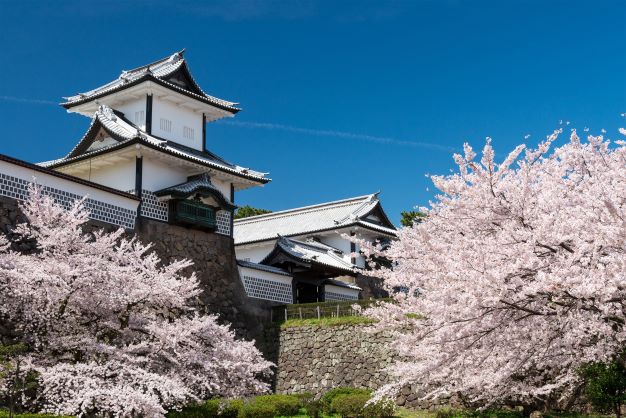
ここでは石川門をカバーします。用途に合わせて以下のボタンから直接アクセスできます。
3.1 基本情報(5項目)
石川門の歴史的背景、建築美、およびガイド現場で役立つ背景知識をまとめた基本情報です。
Set 1: History / 歴史
EN: One of the Oldest Surviving Structures in Kanazawa Castle
Although the current gate is not the original structure, it was rebuilt in 1788 after being destroyed in the great fire of 1759. It was designated an Important Cultural Property of Japan in 1950.
JP:金沢城に残る最古級の建造物
現在の門は創建当初の建物ではありませんが、1759年の大火で焼失した後、1788年に再建されました。1950年には国の重要文化財に指定されています。
Set 2: Role / 役割
EN: Originally a Rear Gate, Now a Main Entrance
Ishikawa-mon was originally the rear gate (karamete-mon) of Kanazawa Castle. Today, it serves as one of the castle park’s main entrances and is one of its most recognizable landmarks, especially for visitors arriving from Kenrokuen Garden.
JP:かつての裏門、現在の主要な入口
石川門は、もともと金沢城の搦手門(裏門)でした。現在では、兼六園から訪れる人々にとって、金沢城公園の主要な入口の一つであり、城を象徴する景観となっています。
Set 3: Architecture / 防御構造
EN: A Defensive Gate Complex with a Masugata Layout
Ishikawa-mon is a typical masugata gate complex, with a square defensive enclosure enclosed by the first gate (a korai-mon), the second gate (a turret gate), connecting turrets, a two-story turret, and defensive walls. This layout prevented enemies from advancing straight through the gate and exposed them to attacks from multiple directions.
JP:防御性の高い枡形門
石川門は、表門(一の門・高麗門)、櫓門(二の門)、続櫓、二重二階の櫓、太鼓塀などで構成された典型的な枡形門です。敵が門を直進できない構造になっており、枡形内に入った敵を複数方向から攻撃できるよう工夫されています。
Set 4: Stone Walls / 石垣の特徴
EN: Two Distinct Styles of Stone Masonry
Two distinct styles of stone masonry can be seen within the Ishikawa-mon gate complex. The south side features roughly dressed stonework (araisai-zumi), while the west and north sides feature finely cut stonework (kirikomi-hagi). The reason for using these different techniques in the same complex is not clearly established.
JP:異なる2種類の石垣
石川門の枡形では、異なる2種類の石垣を見ることができます。南側は粗加工石積み、西側から北側は切石積みです。同じ枡形の中で異なる技法が用いられた理由は、明確には分かっていません。
Set 5: Scenery / 季節の景観
EN: A Popular Cherry-Blossom View
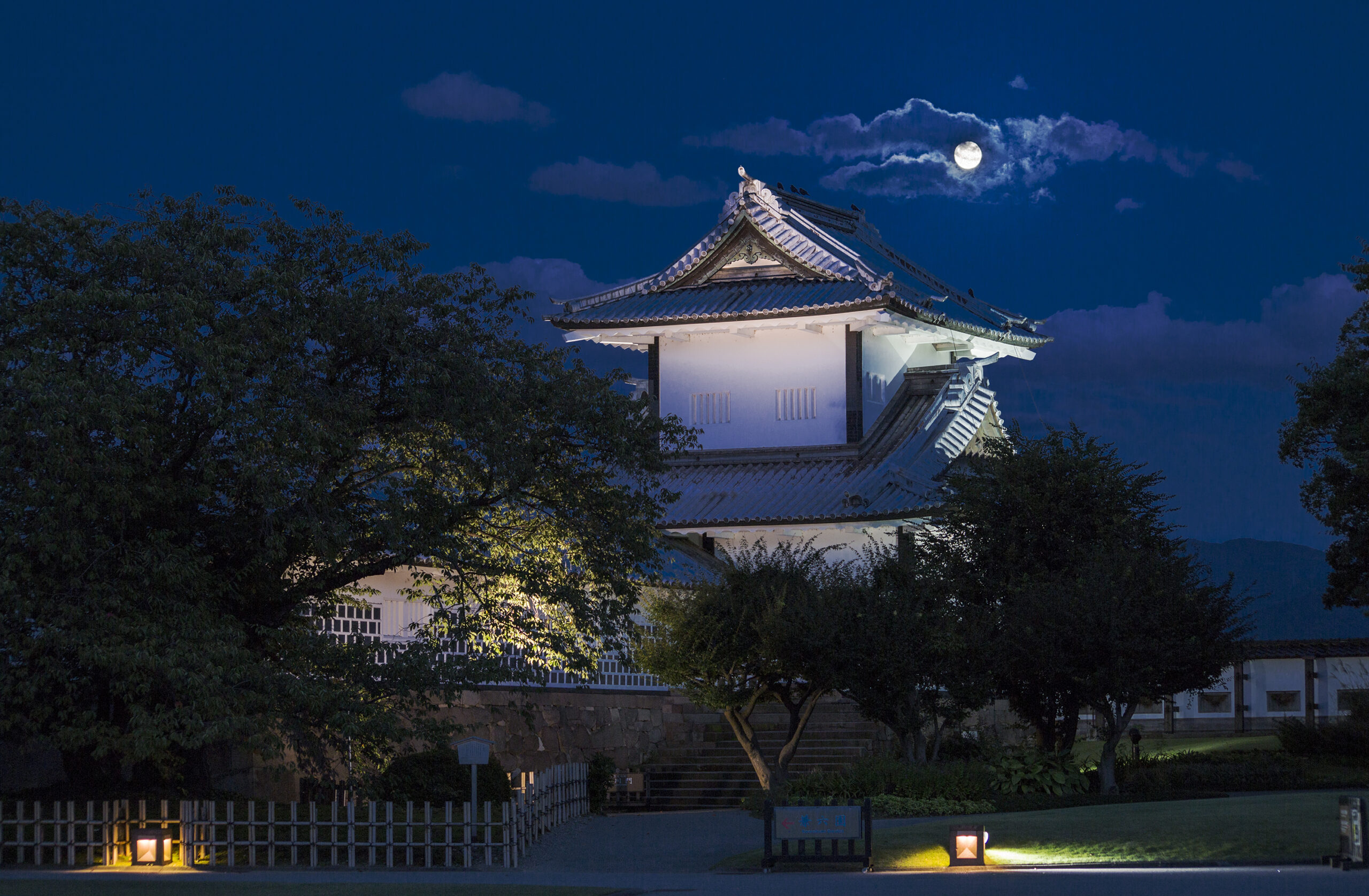
In spring, the cherry blossoms near Ishikawa Bridge create a beautiful contrast with the white walls of Ishikawa-mon. The view of the blossoms, gate, and turrets together makes this one of Kanazawa’s most popular spots for cherry-blossom viewing and photography. The gate and surrounding stone walls are also illuminated at night.
JP:春の桜の名所
春には、石川橋付近の桜と石川門の白い壁との美しいコントラストを楽しめます。桜と門、櫓を一緒に眺められるこの場所は、金沢でも人気の桜の名所・撮影スポットの一つです。夜には門や周囲の石垣もライトアップされます。
3.2 口頭説明用(5項目)
案内中に歩きながらテンポよく説明できるよう、コア要素を短くまとめたフレーズ集です。
Set 1: History / 歴史
EN
This is not the original gate. It was rebuilt in 1788, just before the French Revolution, so it’s over 230 years old.
JP
これは創建当初の門ではありません。1759年の大火で焼失した後、1788年に再建されました。フランス革命の前年にあたり、230年以上の歴史があります。
Set 2: Role / 役割
EN
This was originally the rear gate of Kanazawa Castle. Today, it’s one of the castle’s main entrances, especially for visitors from Kenrokuen Garden.
JP
ここはもともと金沢城の裏門でした。現在では、特に兼六園から来る人々にとって、金沢城公園の主要な入口の一つになっています。
Set 3: Architecture / 防御構造
EN
Notice how there are two gates, one behind the other, with a square space in between. This made it difficult for enemies to charge straight in and left them exposed to attacks from several directions.
JP
門が二つあり、前後に配置され、その間に四角い空間があることに注目してください。この構造によって敵がまっすぐ攻め込むのを難しくし、複数の方向から攻撃できるようにしていました。
Set 4: Stone Walls / 石垣の特徴
EN
You can see two different styles of stonework here. This side is roughly cut, while that side is much more precisely cut. The reason for this difference is not clear.
JP
日本では、2種類の異なる石積みを見ることができます。こちら側は比較的粗く加工されているのに対し、あちら側はより精密に加工されています。この違いが生まれた理由は、はっきり分かっていません。
Set 5: Scenery / 季節の景観
EN
In spring, the area around Ishikawa Bridge is one of the best spots in Kanazawa for taking photos, thanks to the beautiful cherry blossoms.
JP
春には、石川橋周辺は美しい桜を楽しめる、金沢でも特におすすめの撮影スポットの一つです。
3.3 笑いがとれるかも?
🌸一目みて素朴に思うであろう想定疑問への説明例として、基本的に前半部は(様々な表現を織り込んだ)説明にも使える真面目パート、後半部は雑談力UPの為のおふざけパートの2部構成になっています。
Q1. What are the highlights of this gate? / この門は何が見どころ?
“What are the highlights of this gate?”
👉実際に口頭で頻繁に質問される質問ではありませんが、皆さんよくキョロキョロされますので、それを想定した説明例です。前半(1-5)が真面目パートで、後半(6-10)がおふざけパートですが、no7,8も説明に使えます。
1. It is the famous Ishikawa Gate, the oldest gate at Kanazawa Castle, with a history stretching back over 200 years.
・金沢城で最も古い、200年以上の歴史を持つ有名な石川門です。
2. As the main gate leading from the castle to Kenroku-en Garden, it is also the busiest gate.
・お城から兼六園へ通じる主要な門として、最も人通りの多い門でもあります。
3. During the cherry blossom season in particular, the area around the gate is packed with people taking souvenir photos against the backdrop of the gate and the cherry trees in full bloom.
・特に桜のシーズンには、門とその周辺に広がる満開の桜を背景に記念写真を撮る人々であふれます。
4. Images of the Ishikawa Gate can be seen in various media, not only as a symbol of Kanazawa Castle but also as a symbol of Kanazawa City itself.
・石川門の画像は、金沢城だけでなく金沢市そのものの象徴として、さまざまな媒体で見ることができます。
5. It is beautifully decorated, featuring elements such as a karahafu-style roof, as if to showcase the authority and aesthetic sensibilities of the lords of Kanazawa Castle.
・金沢城の歴代藩主の権威と美意識を示すかのように、唐破風屋根などの美しい装飾が施されています。
6. Many people are so captivated by these beautiful features that they may well forget that this gate was built for defence in times of war.
・多くの人々はこうした美しい特徴に見とれて、この門が戦時の防御のために築かれたことを忘れてしまうかもしれません。
7. This gate is a typical masugata gate, commonly found in Japanese castles, and is said to be one of the most advanced and robust gate designs.
・この門は日本の城によく見られる典型的な枡形門で、最も進歩的で堅牢な門の構造の一つといわれています。
8. For example, just when an enemy force thinks it has passed through the first gate with ease, there is another gate to its right; if the first gate is then closed, there is no escape.
・例えば、敵軍が最初の門を難なく通過したと思ったその時、右手にはもう一つの門があります。そこで最初の門を閉じられると、もはや逃げ場はありません。
9. It is just like a rat trapped in a mousetrap. By the time they realise their mistake, it is already too late.
・まるでネズミ捕りに閉じ込められたネズミのようです。自分たちの失敗に気づいた時には、すでに手遅れです。
10. You must never be deceived by outward appearances, especially when you get married!
・何事も見た目の良さに惑わされてはいけません。特に結婚の時は!
Q2.この門は他の城門と何か違うの?
-
“Is there anything special about this gate compared with other castle gates?”
👉既に他の城を経験されたゲストに使えるネタです。前半(1-7)が真面目パートで、後半(8-10)がおふざけパートです。
1. Structurally, there’s nothing particularly unusual about it. It’s similar to other gates at Kanazawa Castle and at many other Japanese castles.
・構造的には、特に珍しいものではありません。金沢城の他の門や、多くの日本の城の門と似ています。
2. It’s called a masugata-mon, a type of defensive gate that became common in Japanese castles in the early modern period.
・これは「枡形門」と呼ばれ、近世の日本の城で普及した防御形式の一つです。
3. Two gates and the surrounding walls and turrets form a square enclosure. This makes it difficult for enemies to charge straight in and allows defenders to attack them from several directions.
・二つの門と周囲の塀や櫓で、四角い空間が形成されています。敵がまっすぐ攻め込むのを難しくし、守る側が複数の方向から攻撃できる構造です。
4. So, what makes Ishikawa-mon stand out from all those other castle gates? Probably its fame!
・では、石川門が数ある城門の中で際立っているのはなぜでしょう? おそらく、その知名度でしょう!
5. One reason may be that Kanazawa University was located inside the castle grounds for nearly half a century after the war.
・その理由の一つは、戦後およそ半世紀にわたって、金沢大学が城内に置かれていたことかもしれません。
6. After the war, the former military site became a university campus. Kanazawa University, a national university, opened in 1949.
・戦後、かつて陸軍が使用していた城跡は大学のキャンパスになりました。国立大学の金沢大学は1949年に開学しました。
7. It was one of the few universities in Japan to have a campus inside an actual castle. At the time, Kanazawa University was very popular.
・実際の城跡にキャンパスを置く、全国でも珍しい大学の一つでした。当時、金沢大学はとても人気がありました。
8. The gate was often seen in images introducing the university, which may have helped make it even more famous.
・大学を紹介する写真などにも石川門がよく登場し、その知名度をさらに高めたのかもしれません。
9. Many students dreamed of getting into Kanazawa University and took its entrance exams. But getting into this popular national university was no easy task, just like getting through this gate!
・多くの学生が金沢大学への入学を夢見て、入学試験を受けました。しかし、人気の国立大学に合格するのは簡単ではありませんでした。ちょうど、この門を突破するのと同じように!
10. Both then and now, getting through the Ishikawa Gate could feel like a matter of life and death!
・今も昔も、この石川門を突破するのは命がけだったのかもしれません!
Q3. What is this roofed bay window? / この屋根のある出窓は何でしょう?
 "石川門破風 - 現役通訳ガイドも愛用 | Beyond AI ブログ")
城内に沢山ありますが、最初に見る破風なので、石川門で質問されることがあります。前半(1-7)の真面目パートでは唐破風の特徴をカバーしています。後半(8-10)がいつものおふざけパートです。
1. This is a traditional Japanese architectural feature known as a karahafu. It can be seen not only on castles but also on temples, shrines, and other traditional buildings.
・これは唐破風と呼ばれる日本の伝統建築の意匠です。城だけでなく、寺社などの伝統建築にも見られます。
2. Strictly speaking, karahafu refers to this distinctive curved gable, not to the bay window itself.
・厳密には、唐破風とはこの独特の曲線を持つ破風のことで、出窓そのものを指す言葉ではありません。
3. A more conventional triangular gable is simply called a hafu. You can see this type of gable on many Japanese castles, too.
・もっと一般的な三角形の破風は、単に「破風」と呼ばれます。このタイプも日本の城でよく見られます。
4. Both designs can help shelter the space below from the rain, but the karahafu serves a purpose beyond its practical function.
・どちらも下の空間を雨から守る役割を果たすことがありますが、唐破風には実用面以外の意味もあります。
5. The word kara is associated with China, particularly the Tang dynasty, but the karahafu is a distinctive feature of Japanese architecture rather than simply a copy of a Chinese design.
・「唐」という言葉は中国、特に唐王朝を連想させますが、唐破風は中国建築を単純に模倣したものではなく、日本建築の特徴的な意匠です。
6. The karahafu was often used as a decorative feature to give a building a grand appearance and symbolize the lord’s authority and wealth.
・唐破風は建物を豪華に見せ、城主の権威や財力を象徴する装飾としてよく使われました。
7. Its shape is basically symmetrical when viewed from the front, although its three-dimensional appearance changes depending on the viewing angle. Intricate wood carvings can add even more decorative detail.
・正面から見ると基本的に左右対称ですが、見る角度によって立体的な見え方が変わります。さらに、精巧な木彫りを施して装飾性を高めることもあります。
8. Kanazawa Castle has no surviving main keep, so it may seem rather modest at first glance. But when you look at details like this, you can see how much money and effort went into its construction.
・金沢城には現存する天守がないため、第一印象では地味に感じられるかもしれません。しかし、このような細部を見ると、建築に多くのお金と手間がかけられたことが分かります。
9. The Maeda clan, one of the wealthiest daimyo families in Japan, had good reason to be wary of attracting the shogunate’s suspicion. Perhaps that’s why they might have avoided spending too conspicuously.
・日本でも屈指の財力を持っていた前田家は、幕府から警戒されないよう気を配る必要がありました。だから、あまり目立つお金の使い方を避けていたのかもしれません。
10. Come to think of it, truly wealthy people often spend money on the details rather than showing off. Unfortunately, I can’t even afford the details!
・考えてみれば、本当に裕福な人は、見栄を張るよりも、細かいところにお金を使います。残念ながら、私にはそんな細かい余裕もないのです!
Q4. ここに大学があったって本当?
”Is it true that there used to be a university here? ”
ネットや説明看板を見た海外ゲストから時々聞かれる質問です。前半(1-5)の真面目パートの内容は金沢大学があった経緯に関する雑談に使えます。後半(8-10)がいつものおふざけパートです。
-
1. Yes. For nearly half a century after the war, Kanazawa University was located here, and many students passed through this Ishikawa Gate on their way to class.
・はい。戦後、約半世紀にわたって金沢大学がここにあり、多くの学生が授業に向かうために、この石川門を通っていました。2. At the time, it was famous as “a university inside a castle,” and students often referred to the campus as jōnai, meaning “inside the castle.”
・当時は「お城の中の大学」として有名で、学生たちはキャンパスを「城内」と呼んでいました。3. Although the castle grounds may look vast, they proved too small to accommodate all the faculties of a growing comprehensive university.
・金沢城の敷地は広大に見えますが、発展する総合大学のすべての学部を収容するには手狭でした。4. The university headquarters and several faculties, including Arts, Law and Economics, were located within the castle grounds, while Engineering and Medicine were based outside the castle.
・大学本部や文学部・法学部・経済学部などは城内に置かれ、工学部と医学部は城外にありました。5. As student numbers grew and the university expanded its undergraduate and postgraduate programmes, the campus became increasingly cramped. The university completed its relocation to the suburbs by 1995.
・学生数が増え、学部や大学院が拡充されるにつれて、キャンパスはますます手狭になりました。そして1995年までに郊外への移転が完了しました。6. In any case, Kanazawa University was famous for its unique location inside the castle. This unusual setting added to its appeal, and admission was highly competitive.
・いずれにしても、金沢大学は城の中にあるというユニークな立地で有名でした。この珍しい環境も人気の一因となり、入試の競争率も高かったのです。7. For students and their families, passing the entrance exam and walking through the Ishikawa Gate must have been a source of great pride. They probably had something to boast about to their neighbours, too!
・受験に合格して石川門をくぐることは、学生本人だけでなく家族にとっても誇らしいことだったでしょう。ご近所にも自慢できたかもしれませんね!8. However, as is often the case in any walk of life, one incident changed everything.
・しかし、どこの世界にもよくあることですが、ある出来事がすべてを変えました。9. On the day the Kahoku Gate was restored as the castle’s main gate, a shocking truth came to light: the Ishikawa Gate had actually been the rear gate all along.
・河北門が金沢城の正門として復元された日、衝撃の事実が明らかになったのです。実は石川門は、ずっと裏門だったのでした。10. You thought you’d entered through the main gate in all glory, but in reality, it was a back-door entry? Just kidding.
・堂々と正門から入学したと思っていたら、実は裏口入学だった? なーんちゃって。4. 河北門(かほくもん)
“Kahoku-mon gate”
4.1 基本情報(5項目)
河北門の歴史的背景、正門としての役割、防御構造、および復元建築の特徴をまとめた基本情報です。
Set 1: History / 歴史
EN: Rebuilt in 1772 and Restored in 2010
The original gate was destroyed by a fire and later rebuilt. It was demolished in the Meiji era, but reconstructed in 2010 based on historical drawings, old photographs, documents, and archaeological findings.JP:1772年に再建され、2010年に復元
創建当初の門は火災で焼失した後、再建されました。明治時代に撤去されましたが、古絵図、古写真、文献、発掘調査の成果などに基づき、2010年に復元されました。Set 2: Role / 役割
EN: The Main Gate of Kanazawa Castle
Kahokumon stood at the front of the Third Bailey (Sannomaru) and served as the castle’s main gate for visitors and official access from the Otemon side. Together with Ishikawa-mon and Hashizume-mon, it is one of the Three Great Gates of Kanazawa Castle.JP:金沢城の実質的な正門
河北門は三の丸の正面に位置し、大手側から入城する際の実質的な正門として機能していました。石川門、橋爪門とともに「金沢城三御門」と呼ばれる重要な城門の一つです。Set 3: Architecture / 防御構造
EN: A Masugata Gate with Its Own Defensive Features
Like Ishikawa-mon and Hashizume-mon, Kahokumon has a square defensive enclosure between two gates. The basic design is much the same, but the details differ. Unlike Ishikawa-mon, with its connecting turrets and two-story turret, Kahokumon features a hidden stone wall and a projecting structure with a stone-drop opening.JP:二つの門を備えた枡形門
河北門も石川門や橋爪門と同じく、二つの門の間に四角い防御空間を設けた枡形門です。基本的な仕組みは共通していますが、細部は異なります。石川門が続櫓や二重二階の櫓を備えているのに対し、河北門には外から石垣と分からない「隠し石垣」や、石落し付きの出し(出窓)があります。Set 4: Defensive Features / 防御の工夫
EN: Hidden Gunports and a Concealed Stone Wall
Hidden gunports were built into the inner side of the wall beside the first gate; in wartime, the tiles could be broken through to create openings for firing guns. Another unusual feature is the square enclosure’s earthen wall, which conceals an inner stone wall behind its plaster finish.JP:隠し狭間と「隠し石垣」
一の門の脇の土塀の内側には隠し狭間が設けられ、戦時には瓦を破って鉄砲を撃つための穴として利用できる構造でした。また、枡形を囲む土塀は、漆喰仕上げの内側に石垣を隠しているという珍しい特徴があります。Set 5: Restoration / 復元建築
EN: A Faithful Reconstruction Using Traditional Techniques
Like Hashizume-mon, Kahokumon was reconstructed using traditional Japanese building techniques, based on historical evidence. The second gate, standing over 12 meters tall, is open to visitors, allowing them to see its traditional wooden structure up close.JP:伝統工法による復元建築
河北門は、橋爪門と同じく、史実に忠実な復元を目指して日本の伝統工法で再建されました。高さ約12メートルの二の門は内部も公開されており、伝統的な木造構造を間近に見ることができます。4.2 口頭説明用(5項目)
案内中に歩きながらテンポよく説明できるよう、河北門の歴史、役割、防御構造、特徴的な仕掛け、復元建築を短くまとめたフレーズ集です。
Set 1: History / 歴史
EN
The gate was destroyed by a fire, rebuilt, and later demolished in the modern era. After more than a century, it was reconstructed in 2010.JP
この門は火災で焼失した後に再建され、近代になって撤去されました。その後、100年以上の空白を経て、2010年に復元されました。Set 2: Role / 役割
EN
This was the main gate of Kanazawa Castle, leading into the Third Bailey. Together with Ishikawa-mon and Hashizume-mon, it is one of the castle’s three great gates.JP
ここは金沢城の三の丸に通じる実質的な正門でした。石川門、橋爪門とともに、金沢城三御門の一つです。Set 3: Architecture / 防御構造
EN
This layout of the two gates made it difficult for enemies to charge straight in and exposed them to attacks from different directions.JP
二つの門の構造によって、敵がまっすぐ攻め込むのを難しくし、複数の方向から攻撃できるようにしていました。Set 4: Defensive Features / 防御の工夫
EN
The wall beside the first gate has hidden gunports behind the tiled surface. In wartime, defenders could break through the tiles and fire their guns at attackers.JP
一の門の脇の土塀の瓦の表面の内側には隠し狭間があり、戦時には瓦を破って、攻めてくる敵に鉄砲を撃てる仕組みでした。Set 5: Restoration / 復元建築
EN
This gate was reconstructed using traditional Japanese building techniques. You can also go inside the second gate to see the traditional wooden structure.JP
この門は、日本の伝統的な建築技法を使って復元されました。二の門の内部に入って、伝統的な木造構造を見ることもできます。4.3 笑いが取れるかも?
🌸一目みて素朴に思うであろう想定疑問への説明例として、基本的に前半部は説明にも使える真面目パート、後半部は雑談力UPの為のおふざけパートの2部構成になっています。
Q1. 河北門は石川門と何か違うの?

春の河北門🔶門の右の階段から上層階の展示室に入場できます “Is there any difference between Kahokumon and Ishikawa-mon?”
日本人でも難しいので、インバウンドにはどの門も同じに見えるでしょうね。前半(1-5)の真面目パートでは両門の運命の違いがチェックできます。後半(6-10)がいつものおふざけパートです。
-
❶ Kahokumon was the main gate of Kanazawa Castle, an important gateway used for entering and leaving the castle for centuries.
河北門は金沢城の実質的な正門で、何世紀にもわたって城への出入りに使われた重要な門でした。❷ Ishikawa-mon, famous today as an entrance to Kenrokuen Garden, was actually the castle’s rear gate.
現在は兼六園の入口として有名な石川門ですが、実は金沢城の搦手門、つまり裏門でした。❸ Both are masugata-style gates with essentially the same defensive layout, but Kahokumon has some interesting features of its own, including hidden gunports.
どちらも基本的には同じ防御構造を持つ枡形門ですが、河北門には隠し狭間など、興味深い独自の特徴があります。❹ These were concealed openings in the wall that could be used to fire guns at attackers. Similar defensive features can also be found at Hashizume-mon.
これは壁の内側に隠された穴で、敵に向けて鉄砲を撃つために使える仕組みでした。橋爪門にも、同様の防御上の工夫が見られます。❺ So, Kahokumon has a distinguished history and some fascinating defensive features. But when it comes to popularity, Ishikawa-mon clearly wins.
こうして見ると、河北門には由緒ある歴史と興味深い防御の工夫があります。しかし、知名度では石川門に明らかに負けています。❻ Both gates were destroyed in the same great fire in 1759 and later rebuilt, although not in the same year. So, when did the balance of popularity between these two gates begin to change?
この二つの門は、1759年の同じ大火で焼失し、その後再建されました。ただし、再建された年は同じではありません。では、いつ頃からこの二つの門の知名度に差がつき始めたのでしょうか?❼ Kahokumon wasn’t lost in a fire the second time. It was dismantled during the Meiji era.
河北門は、二度目は火災で失われたのではありません。明治時代に撤去されたのです。❽ As a guide, I want more visitors to discover Kahokumon, just as they do Ishikawa-mon. So I always recommend the free exhibition room inside the gate.
ガイドとしては、石川門と同じように、もっと多くの人に河北門を見てもらいたい。そこで、門の内部にある無料の展示室をいつもおすすめしています。❾ If more people discover its charm, perhaps Kahokumon can regain some of its former glory and become a major attraction again.
多くの人にその魅力を知ってもらえれば、河北門もかつての栄光を取り戻し、再び人気スポットになるかもしれません。❿ But as the saying goes, the road back to former glory is a narrow gate. Wait, if the gate is that narrow, how am I supposed to get more visitors through it? What on earth should I do as a guide?
しかし、かつての栄光を取り戻すのは、文字どおり「狭き門」です。 あれ? 門が狭かったら、そもそも大勢の人を通せないじゃないですか。ガイドの私は一体どうすればいいのでしょう?5. 三の丸広場(さんのまるひろば)
ここでは三の丸広場をカバーします。用途に合わせて以下のボタンから直接アクセスできます。
5.1 基本情報(3項目)
三の丸の歴史的な位置づけ、藩政における役割、および城郭全体の配置の中での位置をまとめた基本情報です。
Set 1: Historical Background / 歴史的背景
EN: One of the Main Enclosures of Kanazawa Castle
The Sannomaru was one of the major enclosures of Kanazawa Castle. The castle’s present layout took shape in the early Edo period, following a major fire. The Sannomaru formed part of the castle complex organized around the Ninomaru, which became the center of the domain’s government.
JP:金沢城を構成する主要な曲輪の一つ
三の丸は金沢城を構成する主要な曲輪の一つです。現在につながる城の配置は、江戸時代初期の大火後に整えられました。藩政の中心となった二の丸を軸とする城郭構成の一部を担っていました。Set 2: Role in Domain Government / 藩政における役割
EN: From Retainers’ Residences to Government Offices
In the early Edo period, residences of senior retainers stood in the Sannomaru. After the great fire in the early seventeenth century, government offices were established there. This reflects the Sannomaru’s role as an important administrative area within the castle, rather than merely a defensive enclosure.
JP:重臣の屋敷から藩の役所へ
江戸時代初期の三の丸には重臣の屋敷がありました。その後、大火を経て藩の役所建物などが置かれるようになりました。三の丸は単なる防御区画ではなく、藩の行政機能を支える重要な区域でもありました。Set 3: Position within the Castle / 城郭内での位置づけ
EN: An Important Enclosure Guarded by Major Gates
The Sannomaru was connected to other parts of the castle through important gates, including Kahokumon and Ishikawa-mon. These gates controlled movement between the enclosures and formed part of the castle’s defensive system. Together with Hashizume-mon, they are known as the Three Great Gates of Kanazawa Castle.
JP:重要な城門によって接続された曲輪
三の丸は、河北門や石川門などの重要な城門を通じて、城内の他の区域とつながっていました。これらの門は曲輪間の通行を管理するとともに、城の防御体系を構成していました。河北門、石川門、橋爪門は「金沢城三御門」と呼ばれています。5.2 口頭説明用(3項目)
三の丸の歴史、藩政における役割、城内の構造を、歩きながら簡潔に説明するフレーズ集です。
Set 1: Historical Background / 歴史的背景
EN
The Sannomaru was one of the main sections of Kanazawa Castle. The castle’s layout took shape in the early Edo period, following a major fire.
JP
三の丸は金沢城を構成する主要な区域の一つでした。現在につながる城の配置は、江戸時代初期の大火後に整えられました。Set 2: Role in Domain Government / 藩政における役割
EN
This area once housed senior retainers and later government offices. So, it was not just a defensive area but also an important administrative center within the castle.
JP
この区域には、かつて重臣の屋敷があり、その後は藩の役所が置かれました。つまり、単なる防御区域ではなく、城内の重要な行政拠点でもありました。Set 3: Position within the Castle / 城郭内での位置づけ
EN
The Sannomaru was connected to other parts of the castle through major gates such as Kahokumon and Ishikawa-mon.
JP
三の丸は、河北門や石川門などの重要な城門を通じて、城内の他の区域とつながっていました。5.3 笑いがとれるかも?
🌸一目みて素朴に思うであろう想定疑問への説明例として、基本的に前半部は説明にも使える真面目パート、後半部は雑談力UPの為のおふざけパートの2部構成になっています。
Q1. この広場は何のためにあるの?
“What was the purpose of this square?”
これも石川門をくぐって広場を前にして、よく聞かれる質問です。前半(1-6)は真面目パート、後半(7-10)はおふざけパートです。
❶ Today, this open space is used for various events, but it was once home to samurai residences.
現在、この広場は様々なイベントに利用されていますが、昔は武家屋敷が建ち並んでいました。❷ Today, the buildings are gone, leaving this vast open space.
現在では建物はなくなり、このような広大な空間が残されています。❸ During festivals, stalls sometimes line the square, while other events showcase traditional Japanese culture.
お祭りの時には屋台が並び、それ以外にも日本の伝統文化を紹介する様々なイベントが開催されます。❹ Two notable events are falconry demonstrations and Takigi Noh, traditional Noh performances held by torchlight.
代表的なものとして、放鷹術(ほうようじゅつ)の実演や、かがり火の下で行われる薪能(たきぎのう)があります。❺ The falconry demonstrations give visitors a glimpse of the falconry traditions once practiced by the feudal lords.
放鷹術の実演では、かつて大名たちが親しんだ鷹狩り文化の一端を見ることができます。❻ Takigi Noh also has historical connections with the Noh traditions of the Kaga Domain.
また薪能も、加賀藩に受け継がれた能楽の伝統と深い関わりがあります。❼ When no events are taking place, people can stroll across the lawn, sit down, or even lie down and relax.
イベントがない時は、芝生の上を散歩したり、座ったり、寝転んでのんびり過ごしたりすることができます。❽ When I walk across this soft lawn with overseas guests, they sometimes exclaim, “It’s so spongy!”
海外からのお客様とこの柔らかい芝生の上を歩くと、「スポンジみたいにふかふかだ!」と驚かれることがあります。❾ As a local guide, I take that as a compliment. But then I remember that “sponge” can also be a verb.
地元ガイドとしては、それは褒め言葉として受け取っています。でもその一方で、“sponge” には動詞としての意味もあることを思い出すんです。❿ So even today, we Kanazawa people are still sponging off the Maeda family!
つまり私たち金沢市民は、今でも前田家の遺産で食べさせてもらっているんですよ!Glossary:用語集
open space ☛ 広場、オープンエリア / samurai residences ☛ 武家屋敷 / vast open space ☛ 広大な空間 / traditional Japanese culture ☛ 日本の伝統文化 / notable events ☛ 代表的なイベント / falconry demonstration ☛ 放鷹術の実演 / Takigi Noh ☛ 薪能 / torchlight ☛ かがり火 / feudal lord ☛ 大名 / Kaga Domain ☛ 加賀藩 / stroll across ☛ 散歩して渡る / lie down ☛ 寝転がる / exclaim ☛ 感嘆する、大声を出す / spongy ☛ スポンジのようにふかふかした / compliment ☛ 褒め言葉 / sponge off ☛ (人に)たかる、〜の脛をかじる / Maeda family ☛ 前田家6.菱櫓(ひしやぐら)
“Hishi Yagura / Diamond shaped tower”
ここでは菱櫓をカバーします。用途に合わせて以下のボタンから直接アクセスできます。
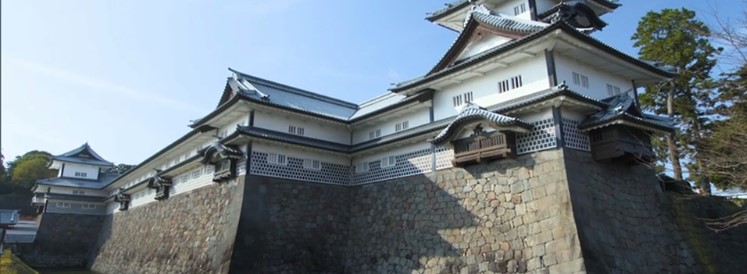
鬼門の方角から見上げる菱櫓と五十間長屋🔶鬼門除けの段差 6.1 基本情報(5項目)
菱櫓の建築的特徴、防御機能、歴史的背景、およびガイド現場で役立つ知識をまとめた基本情報です。
Set 1: Architecture / 建築的特徴
EN: An Unusual Diamond-Shaped Structure
The Hishi Yagura is named after its unusual diamond-shaped floor plan, with interior angles of 80 and 100 degrees rather than the usual right angles. Its pillars are also shaped and arranged to fit this distinctive geometry, demonstrating the advanced carpentry skills required to construct the building.
JP:菱形の平面を持つ珍しい建築
菱櫓の名前は、一般的な建物のような直角ではなく、内角が80度と100度の菱形の平面に由来します。柱もこの独特な形状に合わせて加工・配置されており、建物の構造からは当時の高度な木造建築技術を知ることができます。Set 2: Role / 役割
EN: A Watchtower with a Prominent Presence
The Hishi Yagura served as a watchtower for monitoring the castle grounds and its approaches. Although it is not a substitute for the original main keep in terms of function, the Hishi Yagura serves as a prominent landmark within the castle grounds.
JP:存在感のある物見櫓
菱櫓は、城内や城への接近経路を監視するための物見櫓として機能しました。本来の天守と機能的に同じものではありませんが、菱櫓は現在の金沢城を象徴する建物の一つとなっています。Set 3: Defensive Features / 防御機能
EN: A Tower Equipped for Defense
The Hishi Yagura was not merely a lookout point. It incorporated defensive features, including stone-dropping openings that allowed defenders to attack enemies approaching the stone walls below. Its design reflects the practical military role of castle towers.
JP:防御機能を備えた櫓
菱櫓は、単に周囲を見張るだけの施設ではありません。石垣の下に接近する敵に対して攻撃するための石落としなど、防御のための工夫も備えていました。城の櫓が実戦的な役割を担っていたことを示しています。Set 4: Historical Background / 歴史的背景
EN: Destroyed by Fire and Later Reconstructed
The original Hishi Yagura was destroyed by fire in the late nineteenth century. The present structure was reconstructed in 2001, based on historical materials, old photographs, and archaeological research. It is therefore a modern reconstruction rather than an original Edo-period building.
JP:焼失後に復元された建物
かつての菱櫓は、明治時代の火災で焼失しました。現在の建物は、古写真や歴史資料、発掘調査などをもとに2001年に復元されたものです。そのため、江戸時代から現存する建物ではなく、歴史的な資料に基づいて再現された木造建築です。Set 5: Architectural Complex / 建築群としての特徴
EN: Part of a Larger Defensive Complex
The Hishi Yagura is connected to the Gojukken Nagaya, a long building that links it with the Hashizume-mon Tsuzuki Yagura. Together, these structures formed part of the castle’s defensive system. The Gojukken Nagaya also served as a storehouse, illustrating how castle buildings could combine practical and military functions.
JP:防御施設を構成する建築群の一部
菱櫓は、長大な建物である五十間長屋を介して橋爪門続櫓につながっています。これらは一体となって金沢城の防御施設を構成していました。五十間長屋は倉庫としても利用されており、城内の建物が実用性と防御機能を兼ね備えていたことが分かります。6.2 口頭説明用(5項目)
案内中に歩きながらテンポよく説明できるよう、コア要素を短くまとめたフレーズ集です。
Set 1: Architecture / 建築的特徴
EN
The Hishi Yagura is named after its unusual diamond-shaped floor plan, with angles of 80 and 100 degrees instead of right angles. Even its pillars are shaped to fit this distinctive design.
JP
菱櫓の名前は、一般的な直角ではなく、80度と100度の角を持つ菱形の平面に由来します。柱もこの独特な形に合わせて加工されています。Set 2: Role / 役割
EN
This tower was used to watch over the castle grounds and its approaches. Although it is not a substitute for the main keep in function, it is one of the most prominent structures in Kanazawa Castle today.
JP
この櫓は、城内や城への接近経路を監視するための物見櫓でした。天守と機能は異なりますが、現在の金沢城を代表する建物の一つです。Set 3: Defensive Features / 防御機能
EN
The Hishi Yagura was more than a lookout point. It had stone-dropping openings that allowed defenders to attack enemies approaching the stone walls below.
JP
菱櫓は単なる物見櫓ではありません。石垣の下に接近する敵を攻撃するための石落としも備えていました。Set 4: Historical Background / 歴史的背景
EN
The original tower was destroyed by fire in the Meiji period. The present structure was reconstructed in 2001 based on historical materials, old photographs, and archaeological research.
JP
かつての櫓は明治時代の火災で焼失しました。現在の建物は、歴史資料や古写真、発掘調査などをもとに2001年に復元されたものです。Set 5: Architectural Complex / 建築群としての特徴
EN
The Hishi Yagura is connected to the Hashizume-mon Tsuzuki Yagura by the long Gojukken Nagaya. This building also served as a storehouse and formed part of the castle’s defensive system.
JP
菱櫓は、長い五十間長屋を介して橋爪門続櫓につながっています。五十間長屋は倉庫としても使われ、金沢城の防御施設の一部を構成していました。6.3 笑いが取れるかも?
🌸一目みて素朴に思うであろう想定疑問への説明例として、基本的に前半部は(様々な表現を織り込んだ)説明にも使える真面目パート、後半部は雑談力UPの為のおふざけパートの2部構成になっています。
Q1.この菱櫓って何か特別なの?
”Is there anything special about this Hishi-yagura?”
ゲストと一緒に菱櫓を見上げながら、時々このような質問をされます。前半(1-5)が真面目パートで、後半(6-10)がおふざけパートですが、今回は鈍角、鋭角の英語表現が身に付きますよ!
❶ Although it is not obvious from the outside, this Hishi-yagura has a unique structure.
外から見ただけでは分かりませんが、この菱櫓はとてもユニークな構造をしています。❷ As its name suggests, it is diamond-shaped rather than square or rectangular.
名前のとおり、この櫓は正方形や長方形ではなく菱形をしています。❸ When viewed from above, one of its corners forms an obtuse angle of 100 degrees rather than a right angle.
上空から見ると、その角の一つは直角ではなく100度の鈍角になっています。❹ This unusual design faces the north-east side of the castle.
この独特な構造は城の北東側を向いています。❺ One theory is that the wider angle improved visibility for surveillance.
その広い角度によって見張りの視界を広げたという説があります。❻ But would an extra 10 degrees really make that much difference?
でも、たった10度広がるだけで、そんなに違いがあるのでしょうか?❼ Another theory relates to the north-east, traditionally known in Japan as the “demon gate.”
もう一つの説は、日本で古くから「鬼門」と呼ばれてきた北東の方角に関係しています。❽ Perhaps they wanted to reinforce that unlucky direction.
その不吉な方角を強化したかったのかもしれません。❾ If so, that certainly sounds like samurai spirit. I admire their courage.
もしそうなら、まさに侍スピリットですね。その勇気には敬服します。❿ After all, most people today would probably use an acute angle to deflect bad luck rather than an obtuse angle to face it head-on!
だって現代人なら、不運に真っ向から立ち向かうために鈍角を使うのではなく、鋭角でうまくかわそうとするでしょうから!Glossary:用語集
obvious ☛ 明らかな、分かりやすい / unique structure ☛ ユニークな(独特な)構造 / as its name suggests ☛ その名が示す通り / diamond-shaped ☛ 菱形の / square ☛ 正方形の / rectangular ☛ 長方形の / view from above ☛ 上から見る / right angle ☛ 直角 / unusual design ☛ 独特なデザイン / one theory is… ☛ 一説には〜である / wide angle ☛ 広い角度 / visibility ☛ 視界、見通し / surveillance ☛ 監視、見張り / make a difference ☛ 違いを生む、影響する / relate to ☛ 〜に関連する / traditionally ☛ 伝統的に、古くから / demon gate ☛ 鬼門 / reinforce ☛ 強化する / unlucky direction ☛ 不吉な方角 / admire ☛ 敬服する、感心する / acute angle ☛ 鋭角 / deflect ☛ かわす、逸らす / bad luck ☛ 不運、厄 / obtuse angle ☛ 鈍角 / face head-on ☛ 正面から立ち向かうQ2. 菱櫓の中はどうなっているのですか?
“What is the interior of the Hishi-yagura like?”
これもゲストと一緒に菱櫓の前を歩きながら、このような質問をされます。前半(1-6)が真面目パートで、後半(7-10)がおふざけパートですが、今回は角度の英語表現の応用編です!
❶ Once inside the Hishi-yagura, you can see that the floorboards near the corner form an obtuse angle—that is, an angle wider than 90 degrees.
菱櫓の中に入ると、隅にある床板が90度より広い、つまり鈍角になっていることがわかります。❷ Of course, you can’t tell the exact angle just by looking. However, the information board shows diagrams of the floor plan, with angles of 100 and 80 degrees.
もちろん、見ただけで正確な角度まではわかりません。しかし案内板には平面図が掲示されており、100度と80度の角度を持つ構造であることが示されています。❸ You can also go up to the second floor and look out in two directions to appreciate how the unusual shape of the tower provides a wider field of view.
また、2階へ上がって二方向を見渡すことで、この独特な形状がより広い視界を生み出していることを実感できます。❹ On the ground floor, there is also an exhibition explaining the tower’s architectural features, which is well worth a look if you’re interested in traditional Japanese architecture.
1階には菱櫓の建築的な特徴を解説する展示もあり、日本の伝統建築に興味のある方には特におすすめです。❺ For example, you can see a diagonal reinforcing beam inserted where the beams intersect—a feature you wouldn’t normally expect to see in a building with conventional right-angled corners.
例えば、梁と梁が交差する部分には斜めの補強梁が入れられています。これは通常の直角の建物ではあまり見られない特徴です。❻ And, naturally, the angles at these intersections are 80 and 100 degrees.
そして当然ながら、その交差部分の角度も80度と100度になっています。❼ I suppose the unusual geometry requires some extra reinforcement. (The exact structural reason would need to be confirmed.)
この独特な形状のため、通常よりも補強が必要だったのかもしれません。(正確な構造上の理由については確認が必要ですが。)❽ I’ve always wondered why a 90-degree angle is called a “right angle” in English. Now I think I understand!
私は昔から、なぜ英語で90度を「ライトアングル(right angle)」と呼ぶのだろうと不思議に思っていました。顔でも今なら納得できます!❾ A right angle must be the right angle, then!
やはり直角こそが、本当に「正しい(right)」角度だったのですね!❿ Just as this obtuse angle has been reinforced by a diagonal beam, my obtuse mind has finally been reinforced by the right angle!
この鈍角が斜めの梁によって補強されているように、鈍角並みに鈍かった私の頭も、ついに「正しい角度」のおかげで補強されたようです!Glossary:用語集
interior ☛ 内観、内部 / floorboard ☛ 床板 / form an angle ☛ 角度をなす、角度を作る / obtuse angle ☛ 鈍角 / exact angle ☛ 正確な角度 / information board ☛ 案内板 / diagram ☛ 図解、平面図 / floor plan ☛ 床面図、平面図 / appreciate ☛ 実感する、味わう、感謝する / field of view ☛ 視界、視野 / exhibition ☛ 展示 / architectural feature ☛ 建築的特徴 / worth a look ☛ 見る価値がある / diagonal ☛ 斜めの / reinforcing beam ☛ 補強梁(はり) / intersect ☛ 交差する / conventional ☛ 従来の、通常の / intersection ☛ 交差点、交差部分 / geometry ☛ 幾何学構造、形状 / extra reinforcement ☛ 追加の補強 / structural reason ☛ 構造上の理由 / confirm ☛ 確認する / wonder ☛ 不審に思う、不思議に思う / right angle ☛ 直角(「正しい角度」との掛け言葉) / obtuse mind ☛ 鈍い頭、頭の回転が遅いこと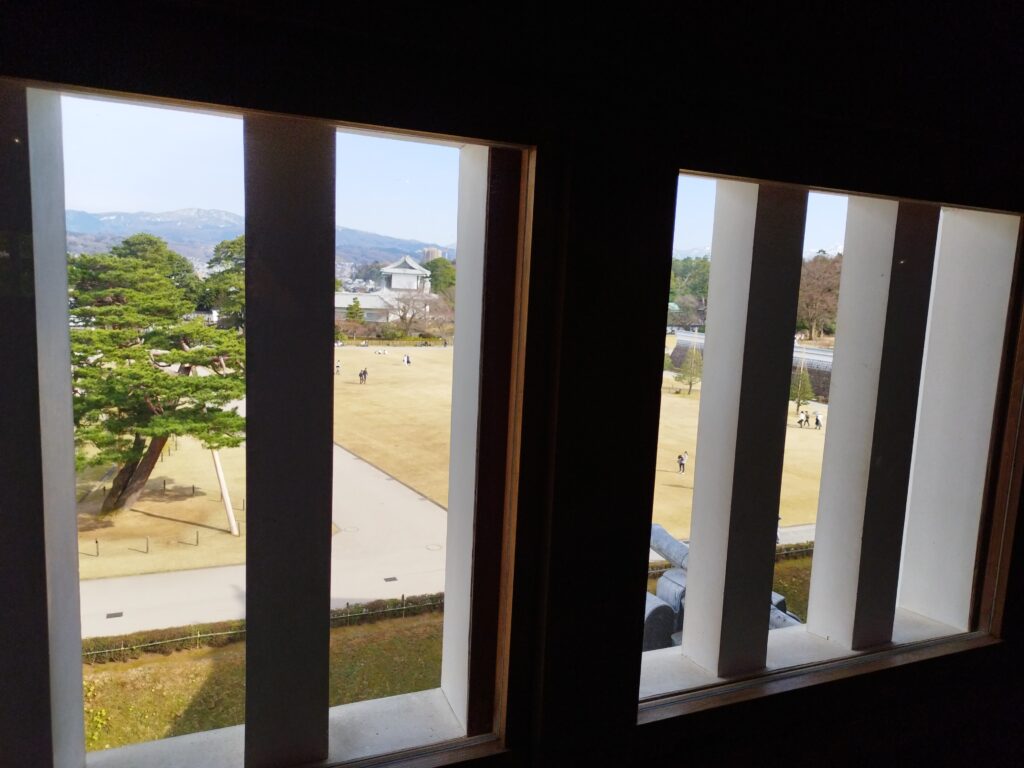
菱櫓の中から石川門方向の眺望🔶春午後 Q3. 建物の鬼門はどう対処するのですか?
“How do people deal with the unlucky direction in a building?”
菱櫓で鬼門の説明をしている際に、時々出る質問です。前半(1-5)が真面目パート、後半(6-10)がいつものおふざけパートです。不吉な鬼門、邪気払う非対称等の英語表現が身に付きますよ。
❶ In Japan, the northeast direction is called “Kimon”, and this diamond-shaped turret was built to face that direction.
日本では北東方向を鬼門と呼び、この菱型櫓はその方向を向いて建てられています。❷ It is also known as the “demon’s gate” and is considered an unlucky direction in Japanese culture.
それは鬼の門としても知られ、日本文化では不吉な方角と考えられています。❸ Japanese buildings sometimes have L-shaped indentations at the northeast to ward off evil spirits.
日本建築では時々、北東の場所にL型の凹みを設けて邪気を払おうとしました。❹ In Japan, there has been a tendency to dislike complete symmetry, as it is believed to invite evil spirits since ancient times.
日本では、完全な対称性を嫌う傾向がありますが、それは古来より、邪気を招くと信じられた為です。❺ Therefore, for example, shrines and temples were often intentionally designed to be asymmetrical, avoiding perfect left-right symmetry.
なので、例えば神社やお寺では、しばしば意図的に非対称で作られ、完全な左右対称性を避けました。❻ If you think about it, humans too can invite a lot of unhappiness when they fall into perfectionism.
考えてみれば、人間も多くの不幸を招くことがあるのは完全主義に陥るときです。❼ That’s why Kanazawa Castle had a L-shaped indentation near the diamond-shaped turret.
それで金沢城ではひし形櫓のところにL型の凹みを設けていました。❽ Thanks to that, Kanazawa didn’t experience air raids during World War II.
そのおかげか、金沢には第二次世界大戦中、空襲がありませんでした。❾ However, recently, I have a slight concern after Kanazawa Castle was completely restored.
でも最近、金沢城が完全に復元されてから少し心配な事があります。❿ The concern is that this indentation area too has been restored so perfectly and beautifully that it might invite evil spirits.
それはですね、この凹みの部分もあまりに完全で美しく復元されたので邪気を呼び込むのではないかと。Glossary:用語集
deal with ☛ 対処する、扱う / unlucky direction ☛ 不吉な方角 / face ☛ 〜に直面する、向く / demon’s gate ☛ 鬼門 / consider ☛ 〜と考える / L-shaped ☛ L字型の / indentation ☛ 凹み、窪み / ward off ☛ 追い払う、払う / evil spirits ☛ 邪気、悪霊 / tendency ☛ 傾向 / dislike ☛ 嫌う / complete symmetry ☛ 完全な対称性 / invite ☛ 招く、引き起こす / ancient times ☛ 古代、古来 / intentionally ☛ 意図的に / asymmetrical ☛ 非対称の / avoid ☛ 避ける / perfectionism ☛ 完璧主義、完全主義 / air raid ☛ 空襲 / World War II ☛ 第二次世界大戦 / slight concern ☛ わずかな懸念、少しの心配 / completely restored ☛ 完全に復元された7.五十間長屋(ごじゅっけん ながや)
“Gojukken Nagaya”
ここでは五十間長屋をカバーします。用途に合わせて以下のボタンから直接アクセスできます。
7.1 基本情報(3項目)
Set 1: Architecture / 建築様式
EN: A Classic Feature of Japanese Castles
The Gojikken Nagaya is a type of tamon-yagura, a long, roofed defensive building commonly found in Japanese castles. It connects Hishi-yagura and Hashizume-mon Tsuzuki-yagura.JP:日本の城の定番建築
五十間長屋は、日本の城によく見られる多聞櫓の一種です。菱櫓と橋爪門続櫓をつなぐ長い建物です。Set 2: Restoration / 復元技術
EN: A Faithful Reconstruction
Reconstructed in 2001, the building was based on historical drawings, old photographs, and archaeological findings. Traditional Japanese wooden construction techniques were used to recreate the historic structure.JP:史料と伝統工法に基づく復元
2001年に復元された建物で、古絵図・古写真・発掘調査の成果などを参考に、伝統的な木造建築技術を用いて再現されています。Set 3: Learning from the Reconstruction / 復元から学ぶ
EN: More Than Just Looking at a Castle
Inside, you can see detailed displays explaining how the building was reconstructed, including traditional carpentry techniques. This makes it possible to learn not only what the building looked like, but also how it was built.JP:建物を見るだけでなく、造り方を学ぶ
内部では、伝統的な大工技術を含め、復元工事の詳細を紹介する展示を見ることができます。建物の外観だけでなく、どのように造られたのかまで学べます。7.2 口頭説明(3項目)
案内中に歩きながらテンポよく説明できるよう、コア要素を短くまとめたフレーズ集です。
❶ Architecture
EN: This is called a tamon-yagura, a common type of defensive building in Japanese castles. It connects the two turrets on either side.
JP: これは多聞櫓と呼ばれる、日本の城によくある防御用の建物です。両側の二つの櫓をつないでいます。❷ Restoration
EN: This building was reconstructed in 2001, based on historical records and traditional construction techniques.
JP: この建物は、史料と伝統的な建築技術に基づいて、2001年に復元されました。❸ Learning from the Reconstruction
EN: Inside, you can see how it was reconstructed, including traditional carpentry techniques. It’s a chance to learn how these historic wooden buildings were actually built.
JP: 内部では、伝統的な大工技術を含め、どのように復元されたのかを見ることができます。昔の木造建築が実際にどのように造られたのかを学べる機会です。7.3 笑いが取れるかも?説明例
一目みて素朴に思うであろう想定疑問への説明例として、基本的に前半部は(様々な表現を織り込んだ)説明にも使える真面目パート、後半部は雑談力UPの為のおふざけパートの2部構成になっています。
Q1 この横長の建物は何ですか?
Q1. What is the purpose of this long, horizontal building?
❶ This long, wall-like structure is called a tamon-yagura or nagaya, a common feature of Japanese castles.
これは多門櫓(たもんやぐら)、または長屋と呼ばれる、 日本の城によく見られる長い壁のような建物です。❷ It connects the turrets at either end, forming part of the castle’s defences.
両端の櫓をつなぎ、城の防御施設の一部を構成しています。❸ Its spacious interior also served as a storehouse for weapons and food, and could accommodate soldiers when necessary.
広い内部は武器や食料の倉庫としても使われ、必要に応じて兵士を収容することもできました。❹ It could also be used to attack the enemy, although it has few openings for firing firearms.
敵を攻撃するためにも使われましたが、銃を撃つための開口部はあまり多くありません。❺ Like many such structures, it has stone-dropping openings, known as ishiochi, for attacking enemies trying to climb the stone walls.
このような建物の多くと同様に、石垣をよじ登ろうとする敵に石を落として攻撃するための「石落とし」も設けられています。❻ Put simply, it was a long, fortress-like structure built to defend the castle. As it now hosts various exhibitions, much like an art gallery, I sometimes wonder whether we are properly conveying the true nature of this defensive structure.
簡単に言えば、城を守るために造られた、長い砦のような建物です。現在は美術館のようにさまざまな展示を行っているので、私たちはこの防御施設の本来の姿をきちんと伝えられているのだろうか、と時々思います。❼ Occasionally, some visitors mistakenly believe that samurai used to sleep here, so I do wonder whether it might be better to recreate life in the castle more realistically.
時々、侍がここで寝泊まりしていたと勘違いする訪問者もいます。そこで、城での暮らしをもっとリアルに再現した方がよいのではないか、と考えることもあります。❽ But that wouldn’t do! Although it was built for wartime, peace prevailed for so long that it must have served little more than as a storeroom.
駄目ですね!戦時に備えて造られたものの、あまりにも長く平和が続いたため、倉庫として使われるくらいのことしかなかったはずです。❾ Of course, we can’t very well show visitors around a mere storeroom—that wouldn’t fulfil its defensive function.
もちろん、ただの倉庫を見学してもらうわけにもいきません。それでは、この建物の防御機能を果たせませんからね。➓ What kind of defence, you ask? That’s the job of the guiding staff here!
どんな防御か、ですって?それは、ここのガイドスタッフの仕事ですよ!Q2 この建物は何が面白いの?
“What is interesting about this building?”
言葉にすることはなくても、そのようなことを考えているような顔をしているゲストを見たら、お試しあれ。
❶ This is called the Gojukken Nagaya, a long building that connected two turrets and served both as a storehouse and a defensive structure.
これは五十間長屋と呼ばれる建物で、二つの櫓をつなぎ、倉庫としての役割と防御施設としての役割を兼ねていました。❷ “Gojukken” refers to a length of about 90 metres, while “nagaya” means a long, connected building.
「五十間」は約90メートルの長さを表し、「長屋」は長く連なった建物という意味です。❸ One of the distinctive features of this building is the authenticity of its reconstruction.
この建物の際立った特徴の一つは、復元のリアルさにあります。❹ Although the original building was destroyed by fire in 1881, it was reconstructed in 2001 based on historical documents, old photographs and other evidence.
元の建物は1881年に火災で焼失しましたが、歴史的な文書や古写真などの資料に基づいて、2001年に復元されました。❺ Traditional materials and carpentry techniques were used as faithfully as possible, allowing visitors to appreciate the craftsmanship firsthand.
伝統的な資材や大工の技法が、できる限り忠実に用いられており、訪問者はその職人技を自分の目で確かめることができます。❻ But if we’re talking about authenticity, you might think, “Surely buildings that have survived in their original form at other castles are more authentic than this, aren’t they?”
でも、リアルさという点で言えば、「他のお城に現存している、昔のままの建物の方が、これよりも本物らしいんじゃない?」と思われるかもしれませんね。❼ Well, the authenticity I’m talking about has another dimension. Unfortunately, Kanazawa Castle, with its many wooden buildings, suffered repeated fires and reconstructions over the centuries.
そうですね。私が言っているリアルさには、もう一つ別の側面があるのです。残念ながら、木造建築の多い金沢城は、何世紀にもわたって火災と再建を繰り返してきました。❽ I imagine that whenever a building was rebuilt, people would have come to see it, much as visitors do today. That’s the kind of historical realism I want to highlight.
建物が再建されるたびに、今の観光客と同じように、人々が見物に訪れたのではないかと想像します。私が強調したいのは、そういう歴史的なリアリティなのです。❾ And perhaps some of you can even see a bit of historical realism in me, your guide.
そして、もしかすると、皆さんはここでご案内している私にも、ちょっとした歴史的なリアリティを感じるかもしれませんね。❿ You might be thinking, “He looks just like a low-ranking samurai—or maybe a foot soldier!”
「この人、昔の下級武士、いや、足軽なんかにそっくりだな!」なんて思っているかもしれませんね。8. 橋爪門
“Hashizume-mon”
ここでは橋爪門をカバーします。用途に合わせて以下のボタンから直接アクセスできます。
8.1 基本情報(3項目)— 橋爪門
橋爪門の歴史的な格式、警備機能、および二の丸御殿との関係についての基本概要です。
Set 1: Historical Role / 歴史的な役割
EN: The Most Prestigious Gate in Kanazawa Castle
Hashizume-mon was the main gate to the Ninomaru, where the feudal lord’s palace was located. As the final gateway to the palace, it was considered the most prestigious gate in Kanazawa Castle, and access through it was strictly controlled.JP: 金沢城で最も格式の高い門
橋爪門は、藩主の御殿があった二の丸の正門でした。御殿へ至る最後の門であったことから、金沢城内で最も格式の高い門とされ、通行も厳しく制限されていました。Set 2: Security / 警備機能
EN: A Guard Station Inside the Gate
A guard station was located on the ground floor of the inner gate. It served as a critical checkpoint for monitoring people entering the lord’s private and administrative domain.JP: 門の内部に設けられた番所
橋爪門の二の門の1階には番所が設けられていました。藩主の御殿へ至る重要な入口として、門を通る人々を監視する役割を担っていました。Set 3: Flooring / 床の特徴
EN: Stone Flooring Reflecting the Gate’s Prestige
The floor of the inner gate is paved with Tomuro stone, laid in the same pattern as the stone paving in front of the Ninomaru Palace. This distinctive feature reflects the high status of Hashizume-mon as the main entrance to the lord’s palace.JP: 門の格式を示す床石
橋爪門の二の門の床には、戸室石が敷かれています。その敷き方は二の丸御殿の玄関前と同じで、藩主の御殿の正門にふさわしい格式を示しています。8.2 口頭説明(3項目)— 橋爪門
現地案内中に歩きながら短く簡潔に伝えられる口頭用フレーズです。
Set 1: Main Entrance to the Palace / 御殿への正門
EN
This was the entrance to the lord’s palace. Because of its importance, it had the highest status in the castle, and entry was strictly regulated.JP
ここは藩主の御殿へと続く正門でした。最も重要な門だったため、城内で最高の格式を誇り、通行規制も大変厳格でした。Set 2: Watchful Eye / 24時間体制の監視
EN
Inside the gate, there was a guardhouse where guards stayed on duty 24/7 to check anyone entering the palace grounds.JP
門の内側には番所があり、御殿へ向かう人々を昼夜を問わず24時間体制で厳しく監視していました。Set 3: Palace-Style Paving / 御殿同等の石畳
EN
Notice the stone floor under your feet? It’s paved in the exact same luxury style as the palace entrance, showing just how special this gate was.JP
足元の石畳にご注目ください。実は御殿の玄関前とまったく同じ高級な工法で敷かれており、この門の特別な格式の高さを表しています。8.3 笑いが取れるかも?
一目みて素朴に思うであろう想定疑問への説明例として、基本的に前半部は説明にも使える真面目パート、後半部は雑談力UPのためのクスッと笑えるパートの2部構成になっています。
Q1.この門はこれまでの門と何がちがうのですか?
“What is the difference between this gate and the previous two gates?”
👉石川門以上に防御力と格式が意識されていますので、その辺りはしっかり伝えたいですね。
- Hashizume-mon was the main gate to the Ninomaru, where the feudal lord’s palace stood. It had a particularly high status and several distinctive features.
- 橋爪門は、藩主の御殿があった二の丸の正門でした。特に格式が高く、いくつかの際立った特徴があります。
- Like the other two gates, it has a masugata layout, but its defensive enclosure is the largest of the three. It also had a guard station inside the inner gate.
- 他の二つの門と同じく枡形構造ですが、防御用の空間は三御門の中で最大です。また、内側の門の内部には番所も設けられていました。
- Another distinctive feature is the stone flooring inside the inner gate, made of Tomuro-ishi, a local stone quarried in the nearby mountains.
- もう一つの特徴は、二の門の内部に敷かれた床石です。近くの山で採掘された地元の石、戸室石が使われています。
- Tomuro-ishi comes in two varieties, reddish-grey and bluish-grey, and its quarrying and use were controlled by the Kaga Domain.
- 戸室石には赤みがかった灰色と青みがかった灰色の2種類があり、採掘や使用は加賀藩によって管理されていました。
- The stone was also used for the castle’s stone walls, where the two colours create a distinctive appearance.
- この石は金沢城の石垣にも使われており、2種類の色が独特の景観を生み出しています。
- At Hashizume-mon, the paving stones are laid in the same pattern as those in front of the Ninomaru Palace, reflecting the gate’s high status.
- 橋爪門の床石は、二の丸御殿の玄関前と同じ様式で敷かれており、門の格式の高さを表しています。
- Unfortunately, although many people pass through this gate every day, most are so captivated by its heavy doors and timber framework that they hardly notice the stone flooring.
- 残念ながら、毎日多くの人がこの門を通りますが、重厚な扉や木組みに目を奪われ、床石にはほとんど気づきません。
- I used to point it out from time to time, but I’ve gradually stopped mentioning it.
- 私も以前は時々紹介していましたが、最近はだんだん説明しなくなりました。
- You see, some overseas visitors are already tired of having to take their shoes off at one exhibition hall after another. They often say, “If I have to take my shoes off one more time, that’s it!”
- というのも、海外からのお客様の中には、あちこちの展示施設で靴を脱ぐことに、すでにうんざりしている人もいるからです。「また靴を脱がなきゃいけないなら、もう結構!」とよくおっしゃいます。
- So if I tell them that these paving stones are as prestigious as those in front of the lord’s palace, they might well say, “Wait a minute! Do I have to take my shoes off here, too? In that case, I’m going home!”
- そこで、床石が藩主の御殿の玄関前と同じくらい格式の高いものだと説明したら、こう言われかねません。「ちょっと待って! ここでも靴を脱がなきゃいけないの? それなら帰る!」
Q2. この穴/狭間(さま)は何ですか?(何のために?)
“What are these holes /sama (for)?”
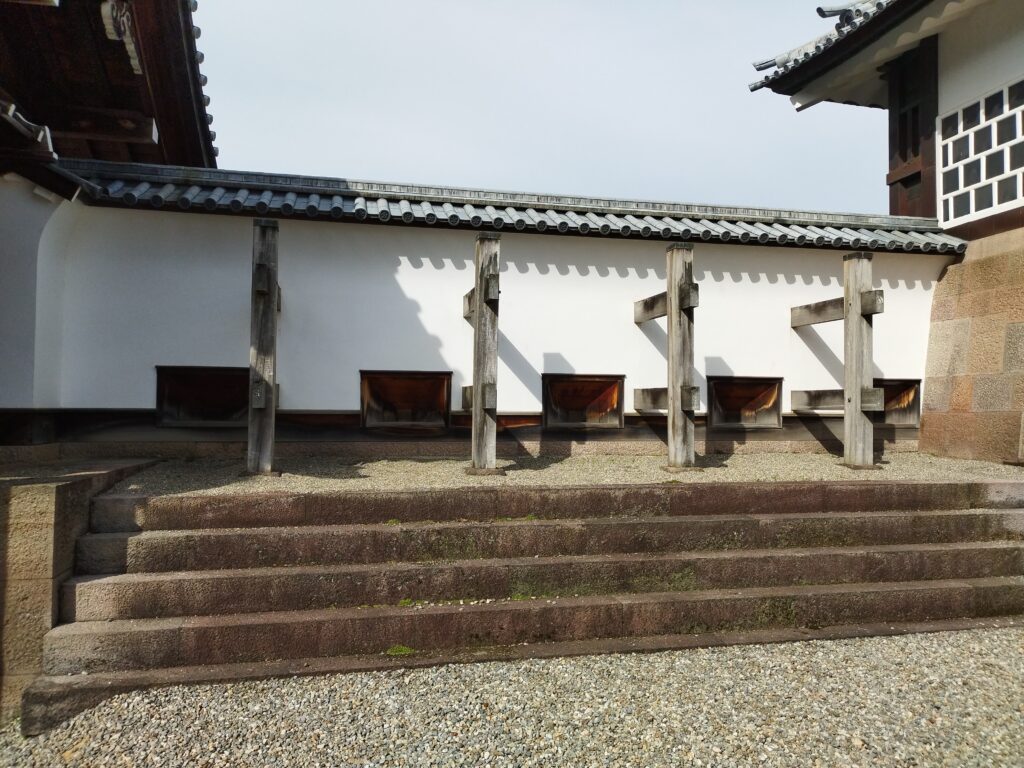
橋爪門内部🔷狭間 - These openings are known as ‘samā’ (loopholes), which were installed in various locations within Japanese castles for defensive purposes.
- その穴は日本の城の様々な場所に防御の為に設置されている狭間(さま)です。
- They were typically built into castle walls or ramparts and used to attack enemies with bows and arrows or firearms.
- 通常は城の壁や塀などに設けられ弓矢や鉄砲で敵を攻撃するために使われます。
- The ‘yazama’ (arrow slit) is generally elongated and rectangular in shape, and was primarily designed for firing arrows.
- 矢狭間(やざま)は縦長の長方形が基本形で、主に弓矢を射るために設けられました。
- Consequently, vertical space is provided to allow the archer to draw their bow and shoot.
- その為、弓を構えて射るための縦方向の空間が確保されています。
- The ‘teppōzama’ (musket slit) is an opening designed for aiming and firing matchlock guns, and comes in various shapes, such as circular, triangular and square.
- 鉄砲狭間(てっぽうざま)は火縄銃を構えて射撃するための開口部で、円形、三角形、正方形など、さまざまな形があります。
- Although the loopholes in the Hashizume Gate appear to be arrow slits in shape, they are not distinguished solely by their shape.
- 橋爪門の狭間は形状的には矢狭間に見えますが、形状だけで区別されるわけではありません。
- As you can see, the outer side of the loopholes is narrow whilst the inner side is wide, thereby enhancing their defensive capabilities.
- ご覧の様に、狭間の外側は狭く内側は広くして、防御力を高めています。
- Here, we have restored a mechanism known as a ‘hidden loophole’ (kakushi-zama), which is covered by the surface of the wall so that the loophole cannot be seen from the outside in peacetime.
- ここでは隠し狭間(かくしざま)と言って 平時には外から狭間が見えないよう、壁の表面で覆った仕掛けを復元しています。
- After explaining this feature to overseas guests time and time again, I sometimes worry they might start to see Japanese people as a little too cunning.
- この仕掛けを海外ゲストに何度も説明していると、日本人はちょっとずる賢すぎると思われないか、と心配になることがあります。
- “Watch out in Japan! Walls have ears—and some even have traps!”
- 「日本では気をつけて! 壁には耳があるし、罠まで仕掛けられていることもあるんです!」
9. 二ノ丸御殿
“Ninomaru Goten/Ninomaru Mansion”
9.0 二の丸御殿説明のポイント
ここは説明用でなく、背景知識として押えておきたいポイントをご紹介しています。👉説明用に修正した英語表現を習得する為の音声ツールはこちらから!
《日本語》
-
-
-
-
- 領主の拠点(行政、住まい)であった。
- 約60室の大邸宅であった。
- 邸宅の中には二つの能舞台があった。
- 理由は諸説あるが本番用と練習用の可能性あり。
- 側室のエリアもあり、本妻は江戸住まいであった。
- 当時資料に基づき復元の可能性について調査中。
- 基礎部分の掘削調査状況から新たな新発見も期待できる。
-
-
-
《英語》
-
-
-
-
- It was the lord’s residence, administrative and living quarters.
- It was a large mansion with approximately 60 rooms.
- There were two Noh stages inside the mansion.
- The reason for two stages is uncertain, but they may have been used for performances and practice.
- There was also an area for the lord’s concubines, while his main wife lived in Edo, Tokyo.
- Research is currently being conducted on the possibility of restoration based on historical records.
- New discoveries can also be expected from the excavation survey of the foundation.
-
-
-
👉マンションは日米英の定義が違います。 9.1 ネイティブの視点
残念ながら、当座の期間は復元の為の発掘調査中で、本来であればお城の花形的な存在なのに、視覚的に訴えるものが何もありませんのでインバウンド向けに補足説明が必須です。今は何が見えるのか?、何が楽しめるのか?の視点にどう応えるべきか?のホスト側の観点で一通り(日英の順で)置いてみましたので、お好みあれば現地でもお試しください。👉本パート表現の習得用演習ツールはこちらへ
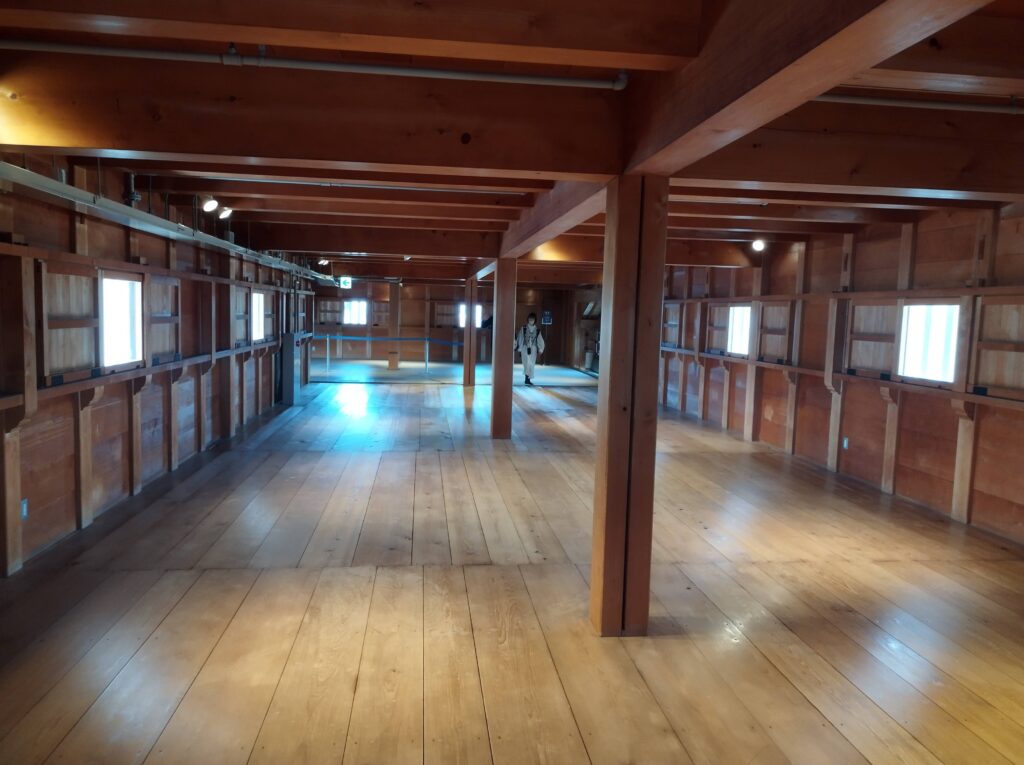
五十間長屋の長さが体感できる長い回廊! 《日本語》
-
-
-
-
- この御殿はサムライ時代が終わった後は、近代政府の軍隊が利用しました。
- しかしながら、約百年前に火災で焼失してしまい、現在は何も残っていません。
- 現在は跡地の掘削調査や建物の設計検討作業が進められていて、最新の発見資料に基づき御殿を完全復元する為です。
- この御殿の紹介映像がここの案内所の中で観られますが、近い将来、完全に復元されたオリジナルの威容が楽しめるかもしれません。
- この展示板の御殿の見取り図で当時の領主一族の生活のイメージを掴むことができます。
- 目の前の長い建物(五十間長屋)の中では当時の城の中の構造を見れますので、有料ですが、もしお時間とご興味あれば、と思います。
- 見学者はこの長屋の実際の長さを歩いて体感でき、菱櫓の中に入れば、そのユニークな形状が確認できます。
- 格子のある窓からは城全体の眺めや、金沢市内の遠景を楽しむことができます。
- お時間がなければ、入口だけ入って、中の構造を垣間見ることが、費用なしで出来ます。
- わかりますのが、一般住宅より多くの木材が使用されていて、柱の間隔が狭く、床板が厚めであることです。
- 構造は通常家屋では見られない密度の高さで、防御の為に城の強度を高める狙いです。
- 材料は強度だけでなく見た目の美しさも必要の為、城の殆どは柱は桧で、角梁はヒバで、小屋梁には松丸太で出来ています。
- 日本の湿気の高さを考慮し、錆びやすい釘の様な金属的なパーツは殆ど使われませんでした。
- その代わり、木材の端の凹凸を利用することで、木材同士を連結させました。
-
-
-
《英語》
-
-
-
-
- This palace was used by the military forces of the modern government after the Samurai period ended.
- But it was destroyed by fire about a hundred years ago, and nothing remains today.
- Currently, an excavation survey of the site and a design study of the building are underway in order to fully restore the palace based on the latest findings.
- You can watch an introductory video of the palace in the information center here, and in the near future, you may be able to enjoy the majesty of the fully restored original.
- The floor map of the palace on this exhibit board will give you an idea of the life of the lord’s family at that time.
- Inside the long building in front of you (50-ken Nagaya), you can see the structure of the castle’s interior from that period, for a fee, if you have time and interest.
- Visitors can walk around and experience the actual length of this building, and once inside the diamond turret, they can see its unique shape.
- The lattice windows provide a view of the entire castle or a distant view of Kanazawa city.
- If you do not have time, you can enter only the entrance to get a glimpse of the structure inside at no charge.
- You can see that more wood is used than in an ordinary house, with narrower spacing between columns and thicker planks on the floor.
- The structure is of a high density not usually seen in ordinary houses, designed to increase the strength of the castle for defense.
- Because materials must not only be strong but also beautiful, most of the castle is made of cypress for the pillars, hiba cypress for the angle beams, and pine logs for the tie beams.
- Considering the high humidity in Japan, metallic parts such as nails, which easily rust, were rarely used.
- Instead, the woods were interconnected by making use of the uneven edges of the wood parts.
-
-
-
建築大好き風の米国男性話者 9 2 笑いが取れるかも?説明例
👉《笑いがとれるかも?》パートについて:実際の案内現場ではあり得ない、脱線の多い長い説明パートですが、日常会話でも使える色々な表現を意図的に織り込んで構成されています。それによりインバウンドのその時の状況に合わせて柔軟な説明ができることを目指しています。
Q1 二ノ丸御殿ってなんですか?(何のためのもの?)
“What is Ninomaru Goten (for)?/ the lord’s palace for?
英語音声は前半(No1-4)と後半(No5-7)の2ファイルです。
-
-
-
-
- It served as the residence of the feudal lords and the administrative center of the Kanazawa domain.
- 領主の住居で金沢行政の中枢でした。
- The complex consists of about 60 rooms and two Noh stages for the traditional Japanese performances.
- 約60部屋があり能舞台も2つありました。
- It was decorated luxuriously and had areas for political affairs, living quarters, and even for concubines.
- 豪華な装飾が施され、政務、居住エリアの他に側室のエリアもありました。
- As a government rule at the time, the legal wife lived in Edo as a hostage.
- 当時の政府の決まり事として、正妻は人質として江戸に住んでいました。
- We envy the lords that they had two stages of Noh as well as two types of women.
- 能舞台だけでなく、女性達も2つ持つなんて、本当に羨ましい限りです。
- But perhaps it was the women who were truly envious. If the lord was on one side, he was absent from the other.
- でも、本当に羨ましいのは女性達だったかも。殿様が一方にいれば他方は留守。
- Some say that a wife’s greatest happiness is to have a husband who is always healthy and spends time away from home.
- 亭主元気で留守が良い、というのが妻の最高の幸せだという説もありますので。
- It served as the residence of the feudal lords and the administrative center of the Kanazawa domain.
-
-
-
👉前半(1ー4):真面目な米国男性が、当たり前のことを語ります。 👉後半(5-7):無邪気な米国女性が問いかけます。江戸時代の単身赴任の生活を楽しんでいたのは殿か?妻か? Q2 何故能舞台が2つもあったのですか?
“Why were there two Noh stages in this building?”
長いので英語音声は前半(No1-6)と後半(No7-12)の2ファイルです。
-
-
-
-
- The reason for having two Noh stages in the complex is not entirely clear.
- その理由は完全に明らかになってはいません。
- It is said that one was for performances for visitors and the other was for practice.
- 一つは客先用、一つは練習用といわれています。
- Another theory is that it may have been to accommodate different types of performances or to provide a backup in case one stage was unavailable.
- 他説では異なる種の公演の為とか、一方が使えない時の予備の為とか言われてます。
- The lords had a strong passion for Noh theater and established Kanazawa own unique style called “Kaga Hosho.”
- 領主は能芸にも情熱が高く、加賀宝生という独自のスタイルを確立しました。
- You can enjoy monthly performances at the Noh theater in the city.
- 市内の能楽堂では毎月定例公演が鑑賞できます。
- The unique business started by the feudal lord is still thriving today.
- 領主が始めた独自の能ビジネスは現在もこのように盛況です。
- In Japan, businesses started by noble people are called “daimyo businesses,” but in English, they are referred to as “amateur businesses.”
- 日本では偉い人が始めるビジネスを殿様商売と言いますが、英語では素人ビジネスというのですね。
- In other words, noble people usually don’t understand the feelings of ordinary people, or consumers, so their businesses don’t typically prosper.
- つまり、偉い人は下々の人、つまり消費者の気持ちがわからないので普通は商売繁盛しないです。
- The lords in Kanazawa probably had good business sense, establishing the current Kanazawa culture as entrepreneurs.
- 金沢の殿様は恐らくビジネスセンスがあったのですね。現在の金沢文化を起業したのてすから。
- Since masks are an integral part of Noh, it is significant that the lords “saved their faces.”
- 能にお面はつきものなので、殿様の面目が保てて良かったですね。
- However, we cannot tell from the Noh masks what kind of expressions they had behind them.
- でも、能面からは、その面の裏でどんな表情をしていたかわかりませんね。
- Highly educated people like the feudal lords may have had high self-esteem and been complex, having “two faces.”
- 殿様のように教養がある人たちは、その分、気位も高く複雑な性格で、表裏或る性格だったかもしれませんよ。
- This duality might explain why we don’t know the exact purpose of the two Noh stages.
- この二面性で2つの能舞台の目的が不明の理由がわかるかもしれません。
- The lords might not have wanted people to know which was the backstage, revealing their real faces!
- 領主たちは本当の顔が見えてしまう裏舞台がどちらなのか知られたくなかったのかもしれません!
- The reason for having two Noh stages in the complex is not entirely clear.
-
-
-
👉前半1ー6:米国女性:前半はいつも通り真面目に能舞台を語ります。 👉後半7-12:英国男性;いつの時代もトップのメンツが立たないと大変です。 10. 玉泉院丸庭園
10.0 庭園のポイント
ここではインバウンド説明の為の基本情報(背景知識)をご紹介していますが、今回はこのまま、眼の前の庭園を一緒に観ながらの説明にも使えるように、インバウンドの関心の高い「アート」「日本人」を主体に纏めてみました。いつも通り、関心の薄い固有名詞や年代は避けた日本語、英語順の構成です。
《日本語例文》
-
-
-
-
- 金沢城の領主はこの高台にこの庭園と兼六園のふたつの庭園をつくりました。
- この庭園は小さいですが兼六園より約五十年も前に領主一族の観賞用に作られました。
- 池を中心に置いてその周りを散策する伝統的な回遊式庭園ですが、目新しい仕掛けが見られます。
- 例えば、この庭園の石垣は純粋に観賞用に作られたもので美術作品の様に美的に積み上げられています。
- 更に、狭い敷地を最大限活用するために池底から石垣の最上部まで約20mの高低差のある立体的な庭園としました。
- この庭園での仕掛けや工夫がこの後の兼六園の創出のアイデアに影響与えたとも言われています。
- この庭園は近年復元された為、新しく見えますが約4百年の歴史があります。でもモダンで古さを感じさせません。
- この庭園にはサムライ時代には珍しく女性の名前がつけられています。
- この庭園が造られる前はここに二代目領主の正妻の住む屋敷が建っていました。
- その正妻の死後、屋敷は壊されましたが、正妻の子供ではない3代領主が彼女の為にこの庭園を造ったとの説があります。
- 正妻の子供でないのに3代目領主に推薦してくれた感謝の気持ちからだったようです。
- サムライ時代は忠義が特に重視されたのですがもしかして名前を残したかった位の綺麗な女性だったのかもしれませんね。
-
-
-
《英訳例》
-
-
-
-
- The lords of Kanazawa Castle created two gardens on this hill: this garden and Kenrokuen Garden.
- This smaller garden was created for the lord’s family to enjoy about 50 years before Kenrokuen.
- It is a traditional circular garden with a pond at its center around which visitors stroll, but it also has some novel features.
- For example, the stone walls of the garden are purely ornamental, and are aesthetically pleasing, piled up like a work of art.
- Furthermore, in order to make the best use of the narrow site, the garden was designed as a three-dimensional garden with a height difference of approximately 20 meters from the bottom of the pond to the top of the stone wall.
- It is said that the devices and innovations in this garden influenced the ideas for the later creation of Kenrokuen Garden.
- This garden was recently restored, so it looks new, but it has a history of about 400 years.But it is modern and does not look old.
- The garden is named after a woman, which was unusual in the Samurai period.
- Before this garden was built, there stood a mansion where the wife of the second lord lived.
- After the death of the wife, the house was destroyed, and it is said that the third lord, who was not the wife’s child, built this garden for her.
- It seems that it was out of gratitude for her recommendation for him to become the third lord, even though he was not the child of her, a legal wife.
- Loyalty was especially important during the samurai period, but maybe she was just a beautiful woman whom the lord wanted to keep her name for.
-
-
-
《補足》多くのインバウンドは見るだけで良いので、上記では石垣の形式は省きましたが、中には興味を示す外国人もいるので用語だけ付記します。
-
-
-
-
- 鑑賞目的だけの為の切石積石垣(色紙短冊み)に代表される趣向をこらした庭園。
- This garden employs various decorative features such as the stone walls with the technique of cut stone stacking (colored strip of paper) purely for viewing purposes。
-
-
-
10.1 インバウンドの視点
ここではいつも通り、実際にこの庭園を目の前にした多くのインバウンドが素直に感じるであろう彼らの想定視点をQAでご紹介します。実際のところ、本庭園は伝統的な回遊式庭園のイメージと違うので、戸惑うインバウンドも多いように思います。復元されたばかりの事もあり、高低差を活かしたコンパクトな設計はゴルフのショートコースも沸彿させ、モダンで古さを余り感じさせない要素がありますので、その辺り日英の順で置いてみました。
10.1.1:疑問例
《日本語例文》
-
-
-
-
- この庭園はいつごろ誰に作られたのてすか?
- 昔からずっとこのままだったのてすか?
- この庭園は何の目的で作られたのですか?
- 何故ここに作られたのですか?
- どうしてこんなに綺麗なんですか?
- 当時はどの様に使っていたのですか?
- 持ち主はどんな人達だったのですか?
- この庭園の見所、魅力はなんなんですか?
- この石垣の石はどこから運んできたものなのですか?
- 他の庭園となにが違うのですか?
-
-
-
《英訳例》
-
-
-
-
- When was this garden created and by whom?
- Has it always been this way?
- What was the purpose of this garden?
- Why was it built here?
- Why is it so beautiful?
- How was it used in thoseWhat were the owners like?
- What is the attraction of this garden?
- Where did the stones for this stone wall come from?
- What makes it different from other gardens?
-
-
-
10.1.2:回答例
《日本語例文》
-
-
-
-
- 約四世紀前に現代の金沢文化の基礎を造ったと言われる3代目領主によって作られたました。
- サムライ時代から近代政府に変わった約百五十年前に一旦埋められ近年復元されました。
- 主に領主一族の慰霊と文化観賞目的でつくられました。
- 元は二代目領主の正妻の邸宅がありましたが、彼女の死後、暫く更地でままで、庭に再活用されました。
- 近年の観光政策で発掘資料を元に復元され、小まめにメンテされている為です。
- 現代人が美術館を絵を観賞する様に、庭園内を散策しながら色々な角度から違った風景を楽しんでいました。
- お茶や能楽等の文化を堪能した裕福で優雅な人達でした。
- 本来は防衛の為の石垣をお城の中の屋外美術館と言えるほど美的に置き換えた点です。
- 金沢城の近辺の山からで、そこでしか取れない青と赤の種類の高級石です。
- 石垣上部の石樋からの人工滝の様に伝統的な日本庭園と人工物の合体と調和です。
-
-
-
《英訳例》
-
-
-
-
- It was built about four centuries ago by the third generation of lords who are said to have laid the foundation of modern Kanazawa culture.
- It was buried about 150 years ago when the Samurai period gave way to the modern government, and has recently been restored.
- It was built mainly for the purpose of memorializing the family members of the lords and for cultural appreciation.
- Originally the residence of the wife of the second lord, it remained vacant for a while after her death, and was then reused as a garden.
- The reason for this is that it has been restored based on excavated data in accordance with the recent tourism policy, and has been maintained carefully.
- Visitors strolled through the garden as if they were looking at a painting in an art museum, enjoying the different views from various angles.
- They were wealthy and elegant people who enjoyed the culture of tea ceremony and Noh drama.
- This is the point where the stone wall, originally intended for defense, was replaced so aesthetically that it could be called an outdoor museum inside the castle.
- They were brought in from nearby mountains in the vicinity of Kanazawa castle, and they consist of the blue and red types of high-grade stone, which can only be found there.
- The stone wall is a combination and harmony of traditional Japanese garden and artificial objects like the artificial waterfall from the stone gutter at the top of the stone wall.
-
-
-
10.2 笑いが取れるかも?説明例
👉《笑いがとれるかも?》パートについて:実際の案内現場ではあり得ない、脱線の多い長い説明パートですが、日常会話でも使える色々な表現を意図的に織り込んで構成されています。それによりインバウンドのその時の状況に合わせて柔軟な説明ができることを目指しています。
a.)この庭はいつ頃作られたのてすか?
“When was this garden made?”
👉古さを感じさせないので、新しく創ったのでは?と思われた外国人を想定しました。
-
-
-
-
- This looks new because it faithfully restored the garden of that time based on the latest excavation materials.
- 新しく見えるのは最新の発掘資料により、当時の庭園を忠実に再現したためです。
- The original was created over 300 years ago.
- オリジナルは300年以上前に作られました。
- The garden was named after the wife of the second lord.
- この庭園は二代目領主の妻の名前からそのまま命名されました。
- Unfortunately, there are few records of her.
- 残念ながらその妻の記録は殆ど残っていません。
- However, giving a woman’s name to a garden in a male-dominated samurai society is unusual.
- でも男性優位の武家社会で庭園に女性の名前が付けられることは珍しいのです。
- This is evidence that the lords valued women highly as the source of life wishing for the prosperity of their descendants.
- 領主が子孫繁栄を願い、命の源泉として女性を大切にした証ですね。
- It’s fortunate that this place didn’t become a dry landscape garden.
- ここが枯山水庭園にならなくてよかったですね。
- That is because the lady who was named after this garden wouldn’t have wanted to wither away even after her passing.
- 命名された夫人も死後まで枯れたくなかったでしょうから。
- This looks new because it faithfully restored the garden of that time based on the latest excavation materials.
-
-
-
👉亡き妻は資料が少ないのでNHK大河ドラマでは色んなキャラで描かれてます。 b)この庭園の見どころは何ですか?
“What are the highlights of this garden?”
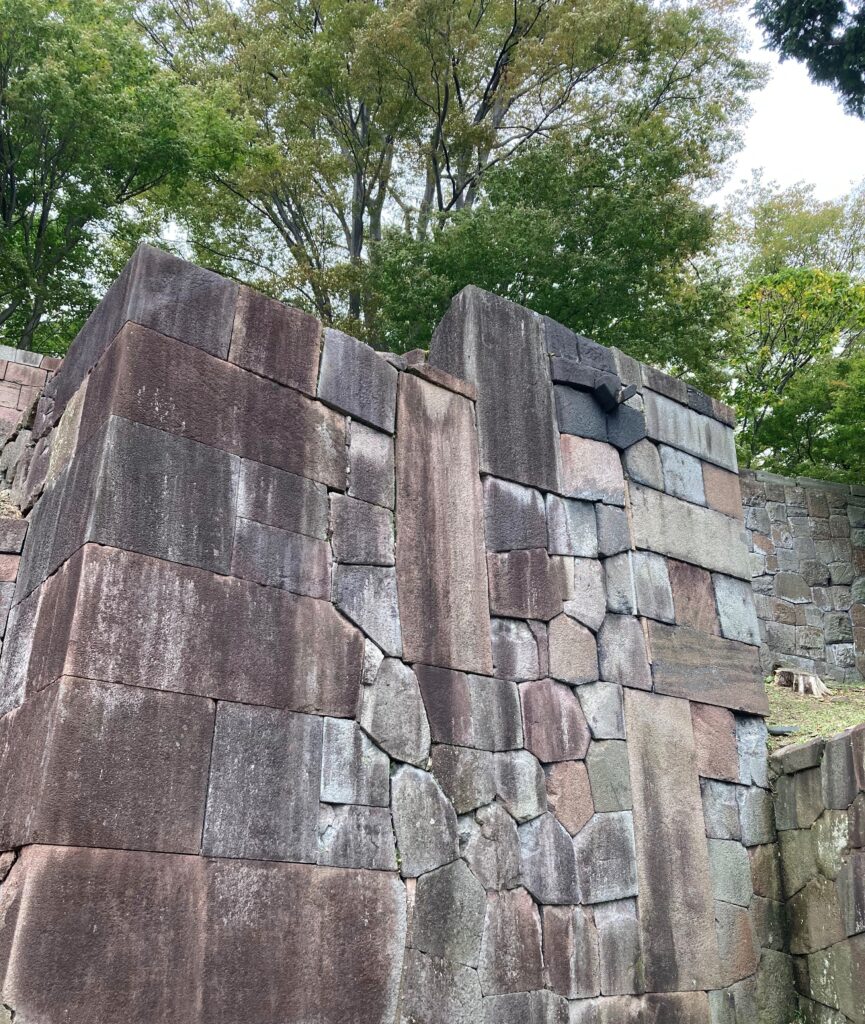
👉本当に文字を刻まなくてよかったですね。 -
-
-
-
- Unlike the Kenrokune garden for entertaining, we can see the lords’ idea of enjoying it themselves as an inner courtyard.
- 接待用の兼六園と違ってここは内庭ですので自ら楽しむ発想が見られます。
- One of them is the piled stone walls with the unique technology resembling colored strip of paper.
- ひとつには、色紙短冊に似せた石垣積です。
- The stone walls, a symbol of battle, are made just for viewing here.
- 戦いの象徴である石垣がここでは観賞用に作られています。
- It is unusual to stack the stone walls vertically like a strip of paper because it is unstable.
- 短冊のように石垣を縦に置くのは不安定なので普通はあり得ません。
- Originally in Japan, a strip of paper has been used for writing various wishes on it.
- もともと日本では短冊に願い事を書く習わしがありました。
- However, the lords did not think to write their wishes, the prosperity of their family on the stone strip of wall.
- でも領主はその石垣の短冊に文章を書こうとはしませんでした。
- They might not have wanted it to be mistaken for a tombstone, you know.
- 墓石と間違えられたくなかったからかもしれませんね。
- Unlike the Kenrokune garden for entertaining, we can see the lords’ idea of enjoying it themselves as an inner courtyard.
-
-
-
👉現代の墓石にはかなりモダンで斬新なデザインのものも見られますが。 11.三十間長屋
11.0 三十間長屋の説明ポイント
-
-
-
-
- 石川門と同じ石垣、鉛瓦、海鼠壁、唐破風の構成の重要文化財。
- それぞれの壁面が異なった構成になっている。
- もとは武器倉庫の頑丈な造りで、保存食も貯えられていた。
- このような城と同じ造りの倉庫が全部で10以上あったと言われている。
- 領主の裕福ぶりが伺える貴重な現存建造物。
-
- An important cultural asset composed of the same stone walls, lead tiles, namako walls, and karahafu as Ishikawa Gate.
- Each side of the walls is constructed differently.
- Originally built as a sturdy arsenal, it also stored preserved food.
- It is said that there were more than ten warehouses built in the same style as this castle.
- A valuable existing structure that gives insight into the wealth of the lord.
-
-
-
👉前田の殿様はクラウド(蔵人)で雲上の人 11.1 インバウンドの視点
城内の建物(櫓、門、五十間長屋)と同じ造りで似た名前の建物がただ続くだけなので、何も説明がないと素通りで終わってしまう、それはできれば避けたいですね。石川門から入ってここまで歩いてくると、疲れも感じたり、同じような雰囲気が続いて、飽きて集中力もない、そんな状態かもしれません。
11.2 笑いが取れるかも?説明例
👉《笑いがとれるかも?》パートについて:実際の案内現場ではあり得ない、脱線の多い長い説明パートですが、日常会話でも使える色々な表現を意図的に織り込んで構成されています。それによりインバウンドのその時の状況に合わせて柔軟な説明ができることを目指しています。
a) この長屋は先の長屋(五十間長屋)と何が違うのですか?
“What is the difference between this house and the previous long house?”
-
-
-
-
- This is a warehouse for storage purposes only, and one of the few remaining original (, surviving) buildings, not restored one.
- これは保管目的だけの倉庫ですが、再建物でなく、数少ないオリジナルの1つです。
- Despite being a warehouse, it has the same level of design just like the main castle and its each side of the walls is constructed differently.
- ただの倉庫なのに、お城本体と同じく意匠性が高く、壁面が異なる作りになっています。
- Originally, it was built for weapons and later on, preserved foods such as dried seafood were also stored.
- 元は兵器倉庫でしたが、後には干し魚等の保存食も保存されました。
- It’s hard to believe that there were more than ten such luxurious storehouses back then.
- 当時はこのような豪華な倉庫が10以上もあったなんて信じられません。
- In Japan, when we have our own home, we often say that I finally became the lord of my own castle.
- 日本ではマイホームを持つと、俺もようやく一国一城の主になったと言います。
- Although using the word “castle”, our house is far more like a warehouse than these storehouses of Kanazawa Castle. It’s significantly more shabby.
- 城と言っても我々の家は金沢城の倉庫よりもはるかに倉庫らしいです。はるかにショぼいです。
- Dose that mean that we are less valuable than preserved food?
- 我々は保存食より価値が低いってこと?
- That would be disrespectful to preserved food.
- それは保存食に失礼でしょう。
- This is a warehouse for storage purposes only, and one of the few remaining original (, surviving) buildings, not restored one.
-
-
-
👉保存食は多くの人を救いますので、確かに価値があります。 12. 鶴丸倉庫
12.0 鶴丸倉庫の説明ポイント
-
-
-
-
- 石川門、三十間長屋と同様、現存する重要文化財。
- 城本体より新しい時代のもので、装飾面で若干異なっている。
- もとは武器倉庫の頑丈な造りで、戦前は暫く陸軍も使用していた。
- 城内の土蔵としては、日本最大級の大きさのもの。
- 長い間、いつ建築されたか正確に把握できず、その価値がわからなかった。
-
- An important cultural property like the Ishikawa Gate and the Sanjukken Nagaya, surving buildings.
- Built in a newer era than the main castle and has some differences in its decorative features.
- Originally a sturdy armory, it was used by the army for a while before the modern wars .
- As a storehouse within the castle, it is one of the largest in Japan.
- For a long time, it was not known exactly when it was built, and its value was not understood.
-
-
-
👉目立たないから好き、という人もいますが。 👉再確認!主単語《土蔵》(dozo):storehouse / warehouse/ storehouse with thick mortar walls(🔷天守閣や櫓の”tower”と同じように”storehouse / warehouse”では正確な意味が伝わらないですが、一緒に見ているものの補足説明なので、結局は機能的な説明が必要となりますね。)
12.1 インバウンドの視点
城内でも地味な存在なので、哀しいかな、城内の(雰囲気をこわさない造りの)休憩所のような建造物の印象もあり、素通りされるケースも多いので説明の際には工夫が必要です。でも、元々倉庫は人に見せる為のものではないので、実力通りの存在感、と言ってしまえばその通りですね。そうは言っても意匠性があるのは加賀のお殿様の面目躍如でしょうか。
11.2 笑いが取れるかも?説明例
👉《笑いがとれるかも?》パートについて:実際の案内現場ではあり得ない、脱線の多い長い説明パートですが、日常会話でも使える色々な表現を意図的に織り込んで構成されています。それによりインバウンドのその時の状況に合わせて柔軟な説明ができることを目指しています。
a) 何が特徴なのですか?/他の建物と何が違うのですか?
“What are the features of this house?”/ “How is this different from the other buildings?”
-
-
-
-
- This warehouse with thick mortar walls is one of the largest of its kind in castles of the country.
- これは日本の城の中の土蔵としては最大級のものです。
- Furthermore, despite being a storehouse, it has decorative features on the walls, which reveals the lord’s attention to detail.
- しかも、土蔵にかかわらず、壁にも意匠性が見られるので、領主のこだわりを感じます。
- In fact, until recently, it was unclear when it was built.
- 実は、最近までいつ建てられたかわかりませんでした。
- It was ignored for a while, like a person whose age is unknown and value is uncertain.
- 年齢不詳でどう評価してよいかわからない人間のように、暫く軽視されていました。
- Through recent research, it was determined to be an old structure, and its value was recognized, leading to its designation as an important cultural property.
- 最近の調査で古いものと分かり、その価値が判明したので重要文化財に指定されました、
- But buildings are fortunate; when it is known to be old, its value increases.
- でも、建物は羨ましい。古いとわかると価値があがるんだから。
- Just like with an elderly person, when their real age is known, they may be judged worthless and forced to go to a warehoue (,left unused.)
- 高齢の人間だと、実年齢がわかると、無価値と判断され、そのままお蔵入りです。
- This warehouse with thick mortar walls is one of the largest of its kind in castles of the country.
-
-
-
👉生きていれば、それだけで勝者だ、という考え方もあります。 13.丑寅櫓跡(うしとらやぐらあと)

👉現在はのどかな眺めですが、かつては台地続きで有事の想定エリはでした。 👉ここからは眺望の良い3つの櫓跡が續きますので、比較説明に使えるので方角の説明も入れてますが、これら3櫓は見ていただいただけで満足されるので、細かい悦明の手間が省けるお勧めスポットです。
13.0 櫓跡の説明ポイント
-
-
-
-
- 元々は兼六園の物見や本丸の防御の為に作られた櫓の跡。
- なので、視界が良く、兼六園や後方の山々が眺望できる展望台となっている。
- ここを含む3つの櫓跡は本丸からの方角の名前がつけられている。
- ここは本丸から北東(丑寅)の方角にあることから、丑寅櫓の名前がついている。
- 日本では昔から方角と時刻は十二支で表されている。
- 丑寅櫓の石垣は金沢城内、最古の自然石積み石垣である。
- 👉残念ながら櫓からは足元で見えないので説明の際は登る前か降りた際に。
- この下を走っている道路はかってはお堀で今の金沢城公園を囲んでいた。
-
-
-
👉これまで通り、外国人向けに説明するレベル、表現ではありませんが、頭の片隅に置いておくと安心なので英語でも置いておきます。
-
-
-
-
- This is the remains of a tower that was originally built for surveillance for Kenrokuen Garden and defense of the Honmaru (inner citadel) .
- Therefore, it has become an observation deck with a good view of Kenrokuen Garden and the mountains in the background.
- The three tower remains in this area are named after the directions they face from the Honmaru.
- In Japan, directions and time have traditionally been expressed using the twelve zodiac animals.
- This tower is located in the northeast direction (called Ushitora meaning “cow and tiger” in Japanese), so it is called the Ushitora Tower.
- This tower is on the oldest stone walls here consisting of fieldstones, not processed ones.
- The road running below used to be a moat that surrounded the current Kanazawa Castle Park.
-
-
-
👉ここから見る兼六園も季節によって雰囲気が全然違います。 
👉金沢城最古の自然石積 13.1 インバウンドの視点
👉外国人から見たら、単に見晴らしの良い展望台なので(日本人同士であれば。あれが何、これが何と、会話が弾むところですが、当然ほとんどのインバウンドは何がなんだかわかりませんので)(天候にもよりますが)兼六園側を見下ろして、見てすぐわかる地形的ところ(ブラタモリ的に)補足すればとよろしいと思います。
14.辰巳櫓跡

👉右に見えますのがあの現代美術の館、21世紀美術館でございます(^^♪ 14.0 櫓跡の説明ポイント
-
-
-
-
- 金沢城の一番の弱点の兼六園方向の監視を補強する為に作られた。
- 他の櫓跡と同じく本丸から南東(辰巳)の方角にあることから巽櫓と名付けられた。
- 南側を向いている為、金沢市内と二十一世紀美術館が見える。
- この櫓を囲うように走っている下の道路はかつてお濠であった。
-
- Built to reinforce the surveillance of the Kanazawa Castle’s weakest point towards the Kenrokuen Garden.
- Named “Tatsumi Yagura” because it is located in the southeast direction (called Tasu-mi meaning dragon-snake) from the central enclosre like other turret ruins.
- As it faces south, you can see the city of Kanazawa and the 21st Century Museum of Contemporary Art.
- The road below that runs around this turret used to be a moat.
-
-
-
👉辰巳は巽を使う人もいます。 14.1 インバウンドの視点
👉インバウンド的には丑寅櫓より眺望が広く分かり易いので、学生のようにきれいですねェ、(インバウンドに有名な)二十一世紀美術館が見えますよ、なんて言っていればよいと思います。同じく百閒堀についても説明して良いでしょう。
15.戊亥櫓跡

👉再建されなかったのは、もう監視すべき怪しい侵入者もない時代になっていたからでしょう。 15.0 櫓跡の説明ポイント
-
-
-
-
- 他の櫓と違い、金沢城内の全域、特に二ノ丸の防衛、監視の為に作られた。
- 他と同様、本丸から西北(戌亥)の方角にあることから戌亥櫓と名付けられた。
- 現在は同じく城内が眺望できる展望台。
-
- Unlike other turrets, this one was built to defend and monitor the entire area of Kanazawa Castle, especially the Nino Maru of the lords’ mansion.
- As with the others, it was named Inui-yagura because of its location to the northwest (called Inu-i meaning dog-wild boar) of the Hon-maru (center of the castle).
- Today, it serves as an observation deck where visitors can enjoy views of the castle grounds.
-
-
-
👉平和のありがたさがわかる風景です。 15.1 インバウンドの視点
👉高さにはイマイチ欠けますが、城内を先に歩いて来た来訪者は、振り返ってホっとして、一望できる最良のポイントですので、ここも細かい説明は不要です。あれが今歩いてきた橋爪門です、二の丸御殿ですとか、言っていれば大体の方にはご満足いただけると思います。
補足
本ブログではインバウンドと歩きながら、極力思考力を相手に求めない短めの簡単な表現を心掛けておりますので、詳細情報や高度な描写をご要望の場合は下記の公式サイトを直接ご参照下さいませ。(HP上部メ言語ニューにてEnglishに設定できます。)
金沢城公園・玉泉院丸庭園|観光・体験|【公式】金沢の観光・旅行情報サイト|金沢旅物語 (kanazawa-kankoukyoukai.or.jp)
- Hashizume-mon was the main gate to the Ninomaru, where the feudal lord’s palace stood. It had a particularly high status and several distinctive features.