
Sakura:日本人の暮らし方ウォッチャー&ガイド
こんにちは!サクラです🌸
今回はインバウンドや接待で即役立つ「バス移動の英語表現」をまとめました!
お急ぎの方は、下記のボタンから、平常時、想定外時、緊急時の3部構成で、様々なケースごとに必要な英語表現をチェックできます。👤英語音声は米国女性話者です。👉各例文の乗り場や時間、具体的な手順は状況により異なる場合があります(今回は英語表現集で、観光情報記事ではありません)のでご注意ください。
🚀 目的のシーンへダイレクトジャンプ
【クイック参照】バス案内の「重要シーン別」キーフレーズ
今回カバーするフレーズからの抜粋ですが、詳細は目次よりピンポイントでチェックできます。
| シーンガイド | 判断・一言英語のキーフレーズ |
| 予定変更 | 「渋滞なので地下鉄にしましょう」 Let’s switch to the subway due to heavy traffic. |
| 正確な誘導 | 「右回りのバスに乗ります」 We’ll take the Right Loop bus. |
| 支払い案内 | 「降りる時に支払います」 Please pay when you get off. |
| トラブル発生 | 「このバスは満員で乗れません」 The bus is full. We’ll have to wait for the next one. |
| 緊急時の指示 | 「止まるまで席を立たないで」 Please stay seated until the bus stops completely. |
1. 平常時パターン
⏱️ 気になるボタンがあれば各ボタンから10秒チェック!
1.1 京都市内:路線バスと1日券の利用
👉京都市内など、均一運賃区間での「1日券(Day Pass)」利用を想定した表現です。
- Today, we’ll use the One-day Bus Pass to explore Kyoto. (今日はバス1日券を使って京都を観光します。)
- In Kyoto, we enter from the back door and exit from the front door. (京都では後ろのドアから乗り、前のドアから降ります。)
- Since this is a flat-fare zone, the price is the same no matter how far we go. (均一運賃区間なので、どこまで乗っても料金は同じです。)
- Please insert your pass into the card reader only the first time you get off. (最初に降りる時だけ、パスをカードリーダーに通してください。)
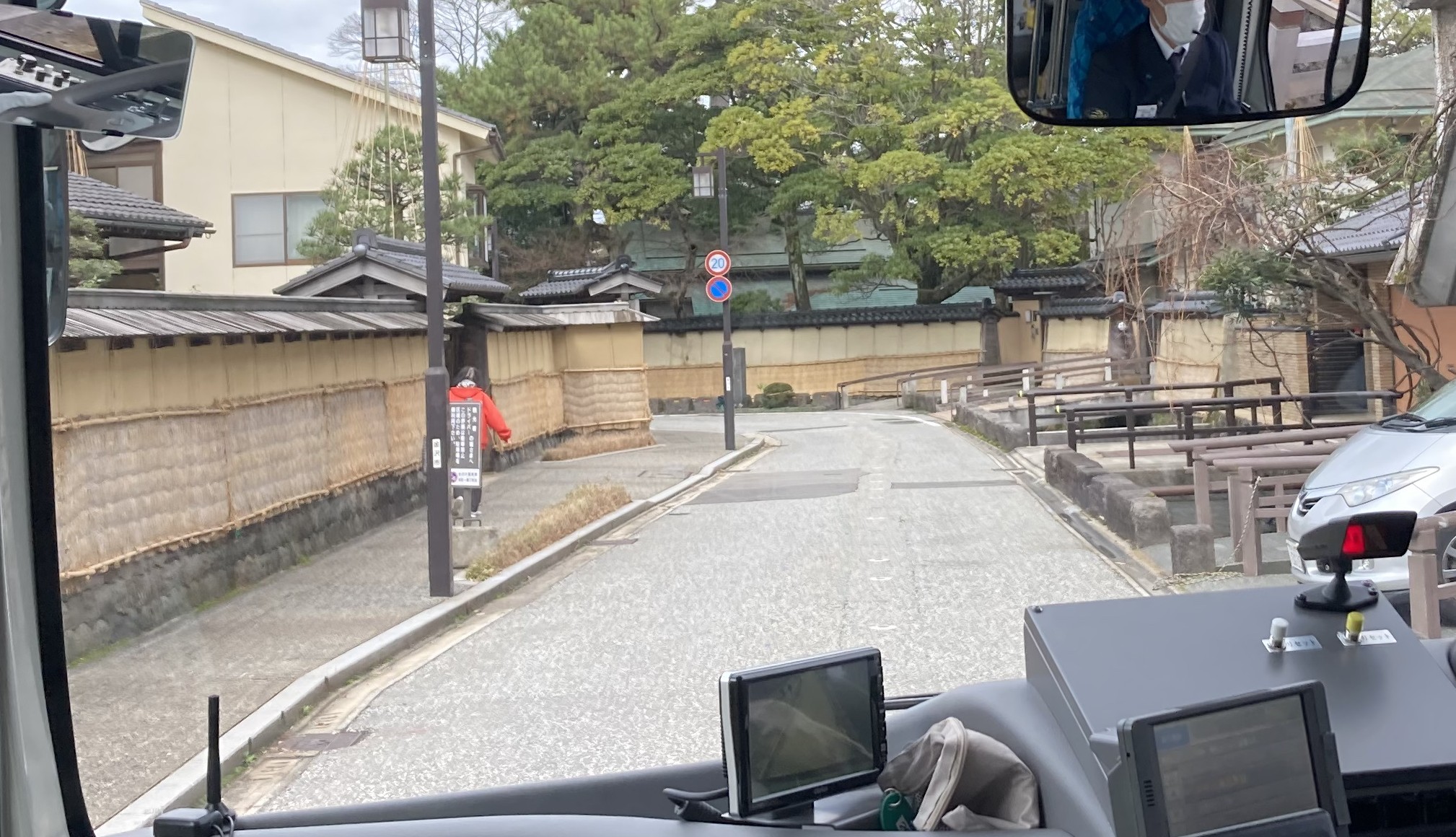
1.2 金沢市内:ループバス(右回り・左回り)の選択
👉金沢の「城下まち金沢周遊バス」のように、方向が重要なケースです。
- There are two types of loop buses: Right Loop (RL) and Left Loop (LL). (周遊バスには、右回り(RL)と左回り(LL)の2種類があります。)
- The Right Loop runs clockwise, and the Left Loop runs counter-clockwise. We’ll choose one based on our destination. (右回りは時計回り、左回りは反時計回りです。目的地に合わせて選びましょう。)
- To get to Kenrokuen Garden faster, we should take the Left Loop from platform 7. (兼六園へ早く行くには、7番乗り場から左回りに乗りましょう。)
- The bus comes every 15 minutes, so we don’t need to rush. (バスは15分おきに来るので、急がなくて大丈夫です。)
- The loop bus always returns to Kanazawa Station, so please remain seated until the end of the trip when returning.(ループバスは金沢駅に必ず戻りますので、帰りの際は最後まで着席していてください。)
1.3 遠距離・シャトルバス(金沢〜高山、白川郷)
👉予約制の長距離バスや、頻繁に発着するシャトルバスの例です。
- We’ll take the highway bus to Takayama. It’s a reserved-seating bus. (高山行きの高速バスに乗ります。座席指定制です。)
- Please make sure to put your large luggage in the trunk under the bus. (大きな荷物はバスの下のトランクに預けてください。)
- The trip to Takayama takes over two hours, with the Shirakawa-go bus stop about an hour and 20 minutes along the way.(高山までは2時間以上、途中の白川郷バス停まで1時間20分ほどかかります。)
- There is no restroom on the bus, so please use the restroom beforehand.(バスの中にトイレはありませんので、事前にトイレを済ませてください。)
- The shuttle bus to the Shirakawago Observatory departs every 20 minutes. (白川郷展望台へのシャトルバスは20分ごとに発車します。)
- The guide will pay for everyone in cash when we get off, so please don’t get off separately.(降車時にガイドが全員まとめて現金で払いますので、バラバラ下りないでください。)
1.4 車内・マナーの説明
- Please press the stop button when you hear the announcement for our stop. (目的地の放送が流れたら、降車ボタンを押してください。)
- The next stop is Kinkakuji Temple (the Golden Pavilion). (次は金閣寺道です。)
- We’ll be passing through standing passengers, so please start making your way to the front.(立っている乗客の中を通りますので下りる準備をしてください。)
- Please refrain from talking on the phone to avoid disturbing other passengers. (他のお客様の迷惑にならないよう、通話は控えてください。)
2. 想定外のパターン
⏱️ 気になるボタンがあれば各ボタンから10秒チェック!
2.1 満員・積み残し時の対応
👉観光地のバスで最も多い「満員で乗れない」ケースです。
- The bus is too crowded to board. Let’s wait for the next one or take a taxi. (バスが混みすぎていて乗れません。次を待つかタクシーにしましょう。)
- It looks like there’s a long queue. It might take 30 minutes to get on. (行列が長いですね。乗るまでに30分かかるかもしれません。)
2.2 渋滞・遅延の説明
- The bus is running behind schedule due to a seasonal festival. (お祭りの影響で、バスが予定より遅れています。)
- The road to Arashiyama is very congested. Walking might be faster from here. (嵐山への道が非常に渋滞しています。ここからは歩いたほうが早いかもしれません。)
2.3 支払いトラブル
- In many Japanese cities like Kyoto, you enter through the rear door and exit through the front door. (京都などの多くの都市では、後ろのドアから乗り、前のドアから降ります。)
- Please pay the fare into the box next to the driver when you get off. (降りる時に、運転席の横にある運賃箱に支払ってください。)
- This bus doesn’t accept credit cards. Do you have small change or an IC card? (このバスはクレカが使えません。小銭かICカードはありますか?)
- You can exchange a 1,000 yen bill at the money changer next to the driver. (運転席横の両替機で千円札を両替できます。)
3. 緊急事態のパターン
⏱️ 気になるボタンがあれば各ボタンから10秒チェック!
3.1 事故・故障発生時
- The bus has a mechanical problem. We need to transfer to a backup bus. (バスに故障が発生しました。代替のバスに乗り換える必要があります。)
- The road is blocked due to an accident. We have to change our itinerary. (事故で道路が封鎖されています。予定を変更しなければなりません。)
3.2 安全確保の指示
- Please hold on tight to the handrail or straps. The bus will make a sudden stop. (急停車しますので、手すりや吊り革にしっかりつかまってください。)
- Please stay behind the white line near the driver for safety. (安全のため、運転手横の白線の後ろに下がってください。)
💡 あわせて読みたい:セットで覚える表現
今回は「バス移動」に関連する表現をマスターしましたが、下記サイトで他の移動に関するフレーズも習得できます。インバウンド対応に欠かせない表現はこちらからチェック!
👉[リンク:電車移動の英語ガイド完全版|乗り換えから「上下線不通」のトラブル対応まで]
🌸 Sakura(サクラ)
今回も最後までお読みいただき、ありがとうございます。本ブログに関するご意見やご要望がございましたら、下記よりお気軽にお声がけくださいね。