Welcome! I’m Genji, your local Japanese castle and samurai heritage insider in Kanazawa. Welcome to my insider guide for Gyokusen’inmaru Garden (Gyokusen’inmaru Teien)—the creative daimyo garden nestled right below Ninomaru Palace, featuring a unique harmony of three-dimensional stone walls and scenic ponds!

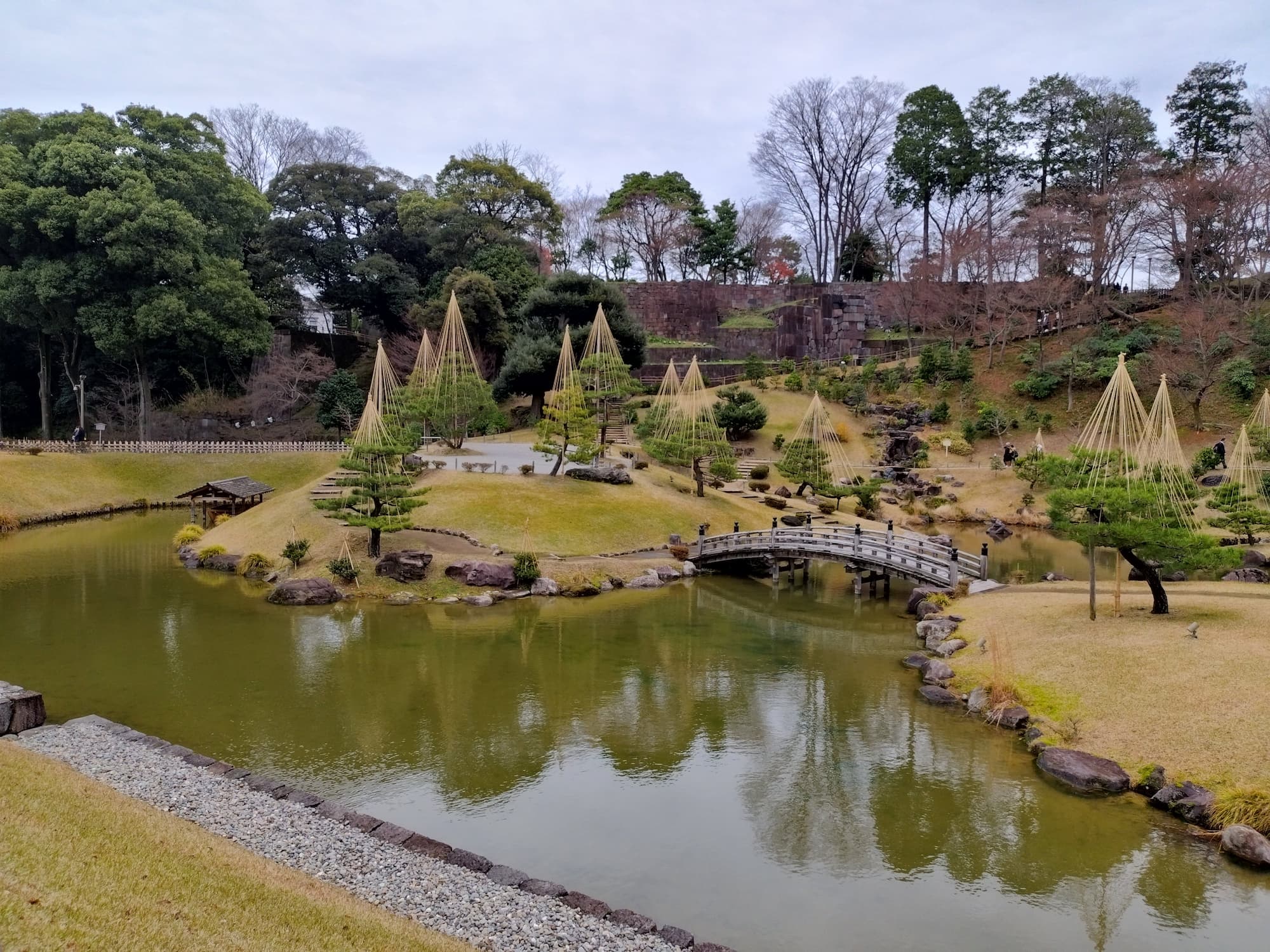
Located on the western side of Kanazawa Castle, Gyokusen’inmaru Garden was originally built on the residence site of Gyokusen-in (Princess Ei, daughter of Oda Nobunaga and wife of the second Maeda lord). It stands as an extraordinarily rare strolling garden that seamlessly integrates artistic castle stonework into its water landscape!
✨ Jump Straight to Gyokusen’inmaru Garden Secrets & Local Guide Mysteries!

Gyokusen’inmaru Garden: The Artistic Harmony of Castle Stonework and Water
📍 Quick Navigation: Explore Castle Highlights
9. Gyokusen’inmaru Garden (Gyokusen’inmaru Teien)
9.1 Essential History & Key Facts
- A Former Daimyo Garden
Gyokusen-inmaru Garden was first created in the early 17th century for the Maeda lords of Kanazawa Castle. Its name comes from Gyokusen-in, the wife of a former lord. The garden disappeared in modern times and was later reconstructed based on historical drawings, documents, and archaeological findings. - A Private Garden Within the Castle
Unlike Kenrokuen Garden, which became famous as a garden for entertaining guests, Gyokusen-inmaru Garden was primarily an inner garden for the lord of the domain. Its location within the castle reflects its more private character. - A Strolling Garden with a Pond and Waterfall
The garden follows the traditional Japanese strolling-garden style, with a central pond, small islands, paths, and a waterfall. Visitors can enjoy changing views as they move around the garden rather than viewing it from a single fixed position. - Stone Walls as Part of the Garden Design
One of the garden’s most distinctive features is the integration of castle stone walls into the garden scenery. The colorful Shikishi Tanzaku-zumi stone wall, combining square and rectangular stones, incorporates a waterfall and demonstrates how defensive structures could also serve as decorative elements. - A Garden Shaped by Water
Water plays an essential role in the garden’s design, connecting the pond, waterfall, and surrounding landscape. The original garden made use of water from the Tatsumi Canal, which supplied water to Kanazawa Castle. The reconstructed garden also incorporates a water supply system linked to this historic canal.
9.2 Fun Backstories & Mysteries (2 Local Guide Q&As)
Q1: What Does the Name “Gyokusen-inmaru” Mean?
- The name “Gyokusen-inmaru” is associated with a woman named Gyokusen-in.
- She was the wife of the second lord of the Kaga Domain.
- She once had a residence here, inside Kanazawa Castle.
- After she passed away, the residence was removed, and the area came to be known as Gyokusen-inmaru.
- Later, the third lord created a garden here, around the early 17th century.
- So, the garden itself was created after her death, but her name has remained here for centuries.
- Unlike Kenrokuen Garden, this was mainly a private garden for the lord and his family.
- It is a traditional strolling garden, with a pond, small islands, and a waterfall.
- One unusual feature is the stone wall with a waterfall built into it, combining the castle’s defensive architecture with the beauty of a garden.
- It was good for her! She wouldn’t have been happy if this had been a dry landscape garden. “I wouldn’t want to be ‘dry’ even in the afterlife!”
Q2: What Are the Highlights of This Garden?
- Unlike Kenrokuen Garden, which was used for entertaining guests, this garden was mainly a private retreat for the lords and their families.
- One of its most distinctive features is the unusual stone wall known as Shikishi Tanzaku-zumi.
- The name comes from the shapes of the stones, which resemble square pieces of paper and long, narrow strips of paper.
- In Japan, these strips of paper, called tanzaku, have traditionally been used for writing poems and wishes.
- But here, the strips are made of stone rather than paper.
- Castle stone walls were originally built for defence, but here, they were also designed to be appreciated as works of art.
- The long, narrow stones are arranged vertically, creating a striking decorative pattern.
- This is an unusual approach because arranging stones in this way requires considerable care and skill.
- However, the lords did not think to write their wishes for the prosperity of their family on these stone strips.
- They might not have wanted them to be mistaken for tombstones, you know.
Official Links & Resources
Official Website: Kanazawa Castle Park (Ishikawa Prefecture)
Thank You & Message from Genji

👆 Did you enjoy exploring the artistic stonework and secret backstories of Gyokusen’inmaru Garden? To dive into other iconic castle structures, use the quick navigation buttons above!
🛡️ Travel Safety Notice: Enjoying Historical Paths with Peace of Mind
Kanazawa Castle Park and historical samurai heritage sites feature ancient stone ramps, cobbled pathways, and wooden steps. While awe-inspiring, stumbles or trips can happen. For international visitors exploring Kanazawa and Japan’s castle sites, securing real-time travel health insurance is strongly recommended for smooth medical support during your trip.
⚔️ SafetyWing – Real-Time Travel Insurance for Global Travelers (Check Details)