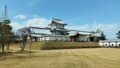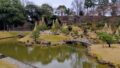
Welcome! I’m Genji, your local Japanese castle and samurai heritage insider in Kanazawa. Welcome to my insider guide for Ninomaru Palace (Ninomaru Goten)—the political and administrative heart of the Kaga Domain, currently undergoing a monumental grand restoration project!
Sprawling beyond Hashizume Gate lies the historic site of Ninomaru Palace. Historically divided into three meticulous zones—Omote-muki (government offices), Oima-mawari (lord’s official quarters), and Oku-muki (private living quarters)—this palace was filled with lavish sliding-door paintings and supreme craftsmanship, serving as the ultimate center of Maeda power!
✨ Jump Straight to Ninomaru Palace Secrets & Local Guide Mysteries!

Historic Site of Ninomaru Palace: The Political Center of Kaga Domain
📍 Quick Navigation: Explore Castle Highlights
8. Ninomaru Palace (Ninomaru Goten)
8.1 Essential History & Key Facts
- The Political Center of Kaga Domain
Kanazawa Castle’s Ninomaru Palace became the political center of the Kaga Domain following the great fire of 1631. It was rebuilt several times after subsequent fires, but the final structure was destroyed by fire in 1881, during the Meiji period. - More Than a Residence for the Lord
The Ninomaru Palace was not simply the lord’s residence. It was also where the lord conducted official business, met important visitors, and held formal ceremonies. It served as the administrative and ceremonial heart of the Kaga Domain. - Separate Areas for Different Functions
The palace was divided into three main areas: Omote-muki for official business and formal receptions, Oima-mawari for the lord’s daily life and work, and Okumuki for private living quarters, including the women’s quarters. - Architecture Reflecting the Lord’s Status
The palace featured rooms of different ranks and purposes, with elaborate sliding-door paintings, decorative fittings, and other fine details. These features reflected the status and wealth of the Maeda family, as well as the high level of craftsmanship in Kaga Domain. - Bringing the Lost Palace Back to Life
Ishikawa Prefecture is working to reconstruct parts of the Ninomaru Palace based on historical drawings, documents, old photographs, and archaeological research. The project aims not only to recreate the palace’s historic appearance but also to pass on traditional building techniques to future generations.
8.2 Fun Backstories & Mysteries (3 Local Guide Q&As)
Q1: What Does ‘Ninomaru’ in ‘Ninomaru Palace’ Mean?
- ‘Ninomaru Palace’ means the palace located in the Ninomaru enclosure.
- ‘Ninomaru’ is a common term used for Japanese castles, not a name unique to Kanazawa Castle.
- In Japanese castles, the central enclosure is traditionally called the ‘Honmaru’. ‘Hon’ means ‘main’ or ‘central’, while ‘maru’ refers to an enclosed area.
- The ‘Ninomaru’ is the second enclosure, while the ‘Sannomaru’ is the third.
- In other words, castles often have a layered structure: the Honmaru at the centre, the Ninomaru around it, and the Sannomaru further out.
- Although the main keep in the Honmaru was destroyed by fire in 1602, the Ninomaru later became the political and administrative heart of Kanazawa Castle, with its magnificent palace.
- But even though it’s the palace at the heart of the castle, the name ‘Ninomaru Palace’ makes it sound like second place, doesn’t it?
- Since the main keep in the Honmaru is long gone, why not call it the ‘Honmaru Palace’ instead?
- Actually, I think I’ve figured out why we can’t change the name. Apparently, the original name has to be preserved for the restoration.
- After all, the Ninomaru was originally designed to protect the Honmaru. Even today, it seems to have a Honmaru to protect—and this time, it’s City Hall!
Q2: Why Were There Two Noh Stages?
- The real reason why this palace had two Noh stages is still unknown.
- Some people say one was used for performances and the other for practice.
- Others believe they served different purposes, or that one was simply a backup.
- Whatever the reason, the Maeda lords were passionate supporters of Noh theater.
- They even helped create a local tradition known as Kaga Hosho.
- That tradition is still alive, and Noh performances are held regularly in Kanazawa today.
- In that sense, the lords were surprisingly successful cultural entrepreneurs.
- Still, highly educated and powerful people often have complicated personalities.
- Noh actors wear masks, and perhaps the lords wore masks of their own as well.
- Maybe that’s why we still don’t know the purpose of the two stages. They may not have wanted anyone to discover which stage revealed their real faces.
Q3: Was This Noh Stage Any Different from the Ones We See Today?
- Although we cannot see what the Noh stage inside the original palace looked like, the basic structure of Noh stages has been standardized over several centuries, so there are no major differences from modern ones.
- That said, there are subtle differences, such as the details of the pine tree painted on the back panel (kagami-ita), reflecting the preferences of the patron.
- In fact, a Noh stage from that era still survives in Kanazawa, so you can see its actual structure for yourself.
- When the feudal era ended and the Maeda family left this Ninomaru Palace, the former castle grounds came under military control.
- The military probably had little use for a Noh stage, so it was moved to another location in 1870.
- Just eleven years later, a fire destroyed most of the Ninomaru Palace. Fortunately, the Noh stage had already been moved, so it escaped the fire.
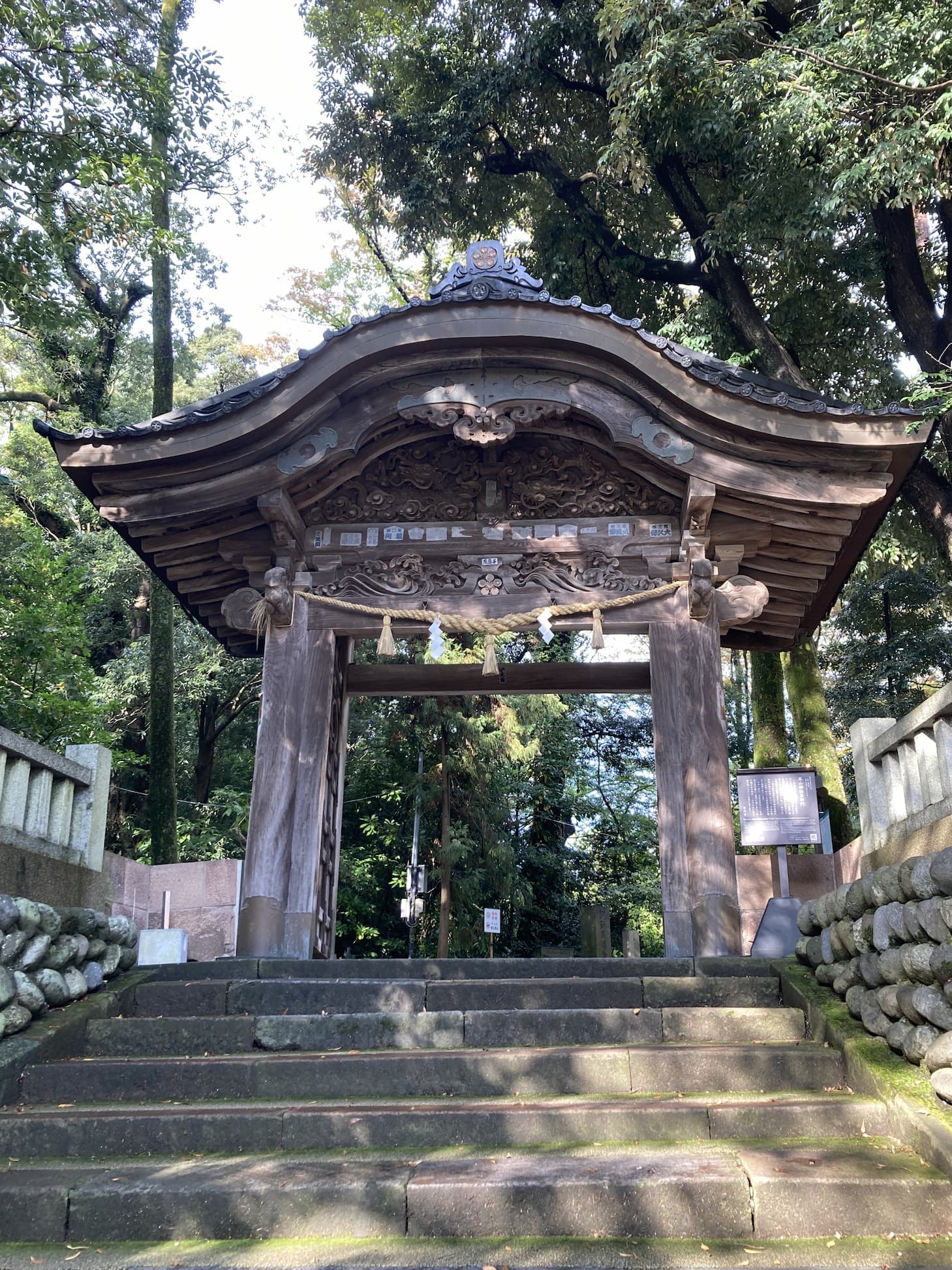
- It survived the turbulent years that followed, including World War II. Although few people know about its history, it now serves as the worship hall of Nakamura Shrine.
- So, if you’re hoping to make a comeback, you might want to pay a visit to Nakamura Shrine.
- In Japanese, the idiom hinoki-butai (literally, “a cypress stage”) refers to a prestigious stage where someone gets their big moment in the spotlight.
- After all, its worship hall is actually a Noh stage made of Japanese cypress. This might be the only place in Japan where you can literally say you’ve stood on a hinoki-butai just by visiting a shrine!
Official Links & Resources
Official Website: Kanazawa Castle Park (Ishikawa Prefecture)
Thank You & Message from Genji
👆 Did you enjoy exploring the history, Noh culture, and secrets of Ninomaru Palace? To dive into other iconic castle structures, use the quick navigation buttons above!
🛡️ Travel Safety Notice: Enjoying Historical Paths with Peace of Mind
Kanazawa Castle Park and historical samurai heritage sites feature ancient stone ramps, cobbled pathways, and wooden steps. While awe-inspiring, stumbles or trips can happen. For international visitors exploring Kanazawa and Japan’s castle sites, securing real-time travel health insurance is strongly recommended for smooth medical support during your trip.
⚔️ SafetyWing – Real-Time Travel Insurance for Global Travelers (Check Details)