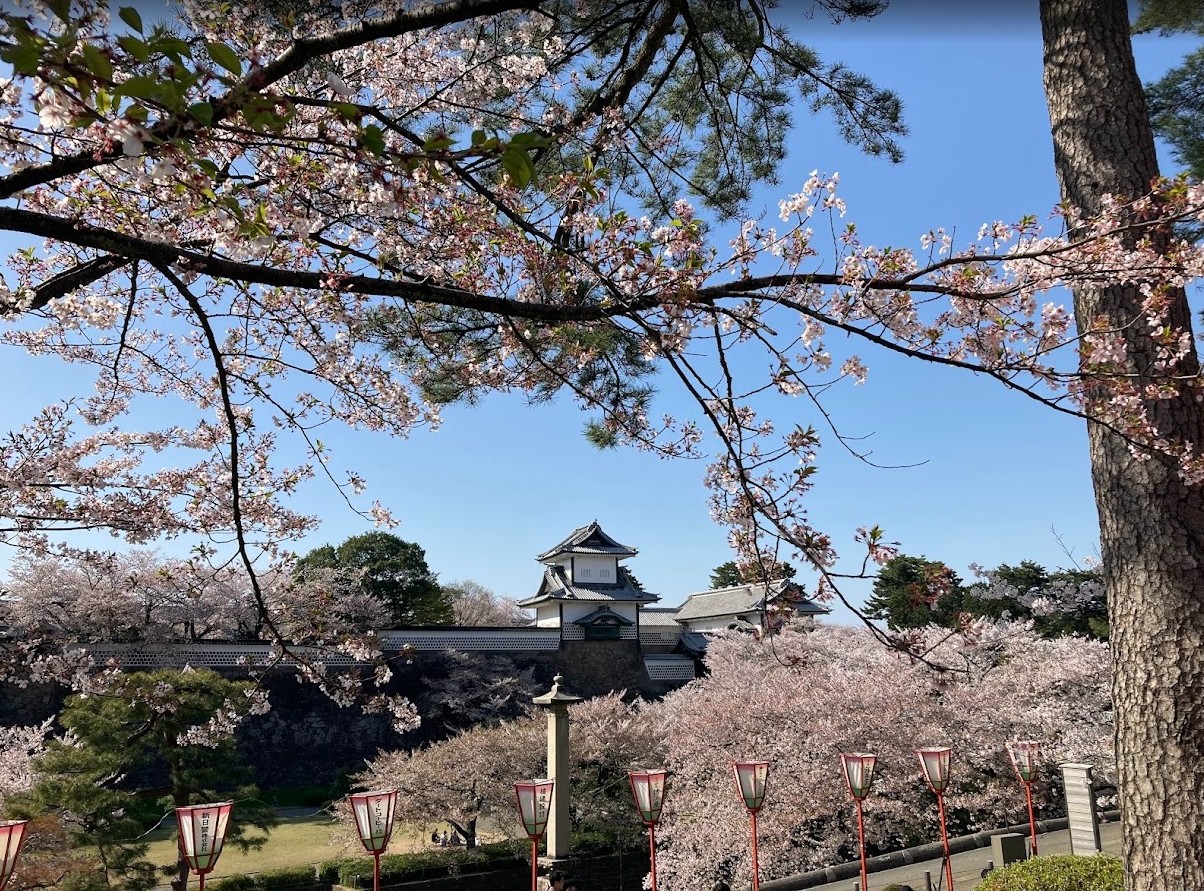
Welcome! I’m Genji, your local Japanese castle and samurai heritage insider in Kanazawa. Welcome to the official feature page for Ishikawa Gate (Ishikawa-mon)—an Important Cultural Property of Japan and the grand 18th-century entrance to Kanazawa Castle Park!

Rebuilt in 1788—the year before the French Revolution—this ancient gate connects Kenrokuen Garden directly to the castle. It exhibits brilliant samurai military engineering, including a two-tiered “Masugata” square trap, contrasting stone masonry techniques, elegant Karahafu gable roofs, and a surprising postwar history as the “back-door” entrance to Kanazawa University!
✨ Jump Straight to Ishikawa Gate Secrets & Local Guide Mysteries!
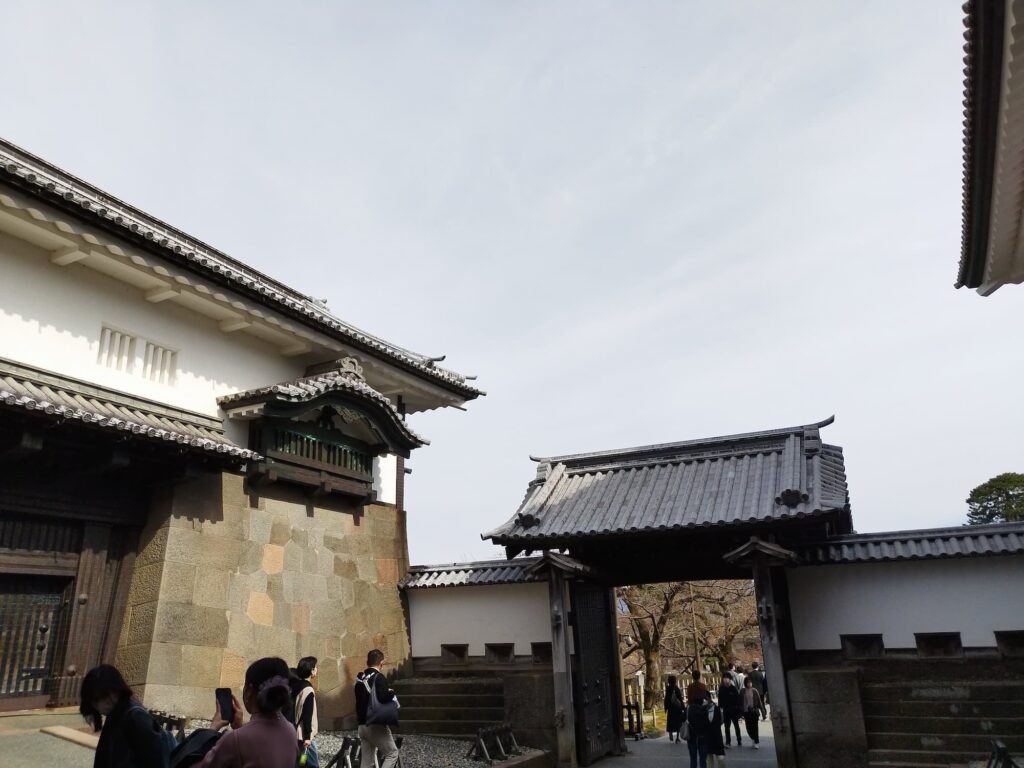
The Iconic Entrance to Kanazawa Castle: Ishikawa Gate (Ishikawa-mon)
📍 Quick Navigation: Explore Castle Highlights
2. Ishikawa Gate (Ishikawa-mon)
2.1 Essential History & Key Facts
- One of the Oldest Surviving Structures in Kanazawa Castle
The current gate is not the original structure. It was rebuilt in 1788, the year before the French Revolution. It is one of the oldest surviving structures in Kanazawa Castle and is designated as an Important Cultural Property of Japan. - From a Rear Gate to an Iconic Entrance
Ishikawa-mon was originally a rear gate (karamete-mon) of Kanazawa Castle. Today, it serves as a main entrance for visitors coming from Kenrokuen Garden. Its distinctive appearance has also made it one of the most recognizable symbols of Kanazawa. - The Defensive Design of Ishikawa-mon
The Ishikawa Gate is a typical masugata gate, with the first and second gates positioned at right angles to each other. This prevented enemies from advancing straight through the gate. The connecting turrets allowed defenders to attack enemies from multiple directions. - Two Different Styles of Stone Walls
As you enter the Ishikawa Gate, you can see two different styles of stone walls. One is made of roughly shaped natural stones stacked together, while the other is made of carefully cut stones fitted closely together, with almost no gaps. It is unclear why these two techniques were used in the same gate complex. - A Popular Cherry-Blossom View
In spring, you can enjoy the beautiful contrast between the cherry blossoms near Ishikawa Bridge and the white walls of Ishikawa Gate. This is one of Kanazawa’s most popular spots for cherry-blossom viewing, attracting many visitors during the day and for the nighttime illuminations.
2.2 Fun Backstories & Mysteries
Q1: What Are the Highlights of This Gate?
- It is the famous Ishikawa Gate, the oldest gate at Kanazawa Castle, with a history stretching back over 200 years.
- As the main gate leading from the castle to Kenroku-en Garden, it is also the busiest gate.
- During the cherry blossom season in particular, the area around the gate is packed with people taking souvenir photos against the backdrop of the gate and the cherry trees in full bloom.
- Images of the Ishikawa Gate can be seen in various media, not only as a symbol of Kanazawa Castle but also as a symbol of Kanazawa City itself.
- It is beautifully decorated, featuring elements such as a karahafu-style roof, as if to showcase the authority and aesthetic sensibilities of the lords of Kanazawa Castle.
- Many people are so captivated by these beautiful features that they may well forget that this gate was built for defence in times of war.
- This gate is a typical masugata gate, commonly found in Japanese castles, and is said to be one of the most advanced and robust gate designs.
- For example, just when an enemy force thinks it has passed through the first gate with ease, there is another gate to its right; if the first gate is then closed, there is no escape.
- It is just like a rat trapped in a mousetrap. By the time they realise their mistake, it is already too late.
- You must never be deceived by outward appearances, especially when you get married!
Q2: Is There Anything Special About This Gate Compared with Other Castle Gates?
- Structurally, there’s nothing particularly unusual about it. It’s similar to other gates at Kanazawa Castle and at many other Japanese castles.
- It’s called a masugata-mon, a type of defensive gate that became common in Japanese castles in the early modern period.
- Two gates and the surrounding walls and turrets form a square enclosure. This makes it difficult for enemies to charge straight in and allows defenders to attack them from several directions.
- So, what makes Ishikawa-mon stand out from all those other castle gates? Probably its fame!
- One reason may be that Kanazawa University was located inside the castle grounds for nearly half a century after the war.
- After the war, the former military site became a university campus. Kanazawa University, a national university, opened in 1949.
- It was one of the few universities in Japan to have a campus inside an actual castle. At the time, Kanazawa University was very popular.
- The gate was often seen in images introducing the university, which may have helped make it even more famous.
- Many students dreamed of getting into Kanazawa University and took its entrance exams. But getting into this popular national university was no easy task, just like getting through this gate!
- Both then and now, getting through the Ishikawa Gate could feel like a matter of life and death!
Q3: What Is This Roofed Bay Window?
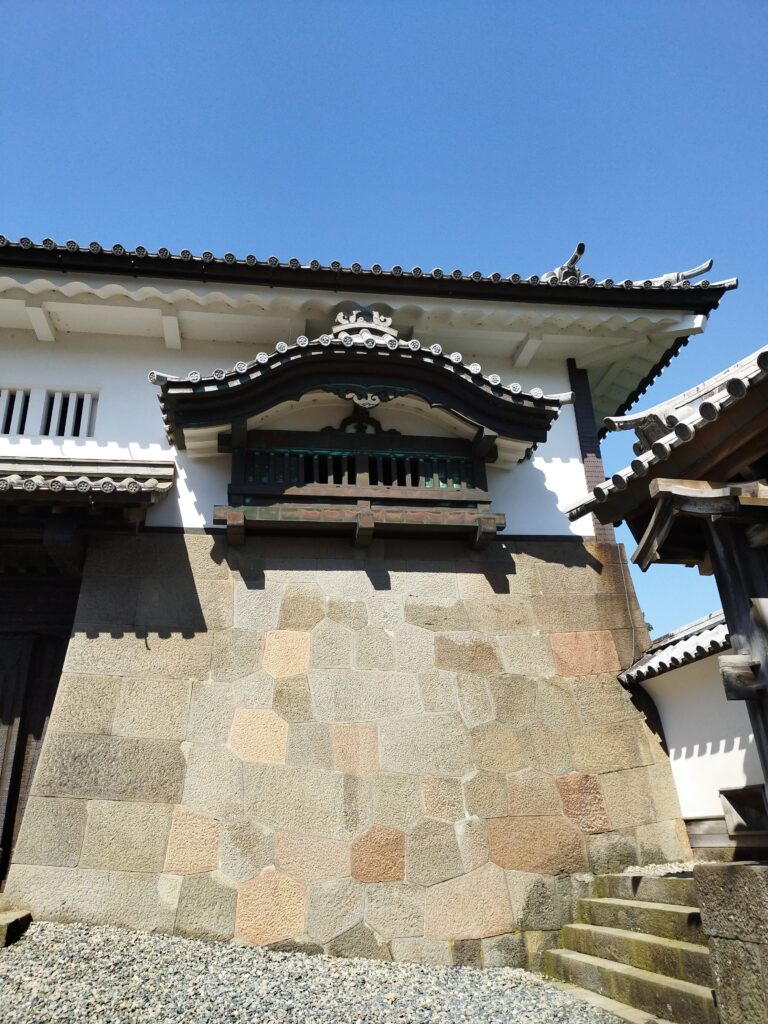
Decorative Karahafu Roof on Ishikawa Gate
- This is a traditional Japanese architectural feature known as a karahafu. It can be seen not only on castles but also on temples, shrines, and other traditional buildings.
- Strictly speaking, karahafu refers to this distinctive curved gable, not to the bay window itself.
- A more conventional triangular gable is simply called a hafu. You can see this type of gable on many Japanese castles, too.
- Both designs can help shelter the space below from the rain, but the karahafu serves a purpose beyond its practical function.
- The word kara is associated with China, particularly the Tang dynasty, but the karahafu is a distinctive feature of Japanese architecture rather than simply a copy of a Chinese design.
- The karahafu was often used as a decorative feature to give a building a grand appearance and symbolize the lord’s authority and wealth.
- Its shape is basically symmetrical when viewed from the front, although its three-dimensional appearance changes depending on the viewing angle. Intricate wood carvings can add even more decorative detail.
- Kanazawa Castle has no surviving main keep, so it may seem rather modest at first glance. But when you look at details like this, you can see how much money and effort went into its construction.
- The Maeda clan, one of the wealthiest daimyo families in Japan, had good reason to be wary of attracting the shogunate’s suspicion. Perhaps that’s why they might have avoided spending too conspicuously.
- Come to think of it, truly wealthy people often spend money on the details rather than showing off. Unfortunately, I can’t afford either.
Q4: Is It True That There Used to Be a University Here?
- Yes. For nearly half a century after the war, Kanazawa University was located here, and many students passed through this Ishikawa Gate on their way to class.
- At the time, it was famous as “a university inside a castle,” and students often referred to the campus as jōnai, meaning “inside the castle.”
- Although the castle grounds may look vast, they proved too small to accommodate all the faculties of a growing comprehensive university.
- The university headquarters and several faculties, including Arts, Law and Economics, were located within the castle grounds, while Engineering and Medicine were based outside the castle.
- As student numbers grew and the university expanded its undergraduate and postgraduate programmes, the campus became increasingly cramped. The university completed its relocation to the suburbs by 1995.
- In any case, Kanazawa University was famous for its unique location inside the castle. This unusual setting added to its appeal, and admission was highly competitive.
- For students and their families, passing the entrance exam and walking through the Ishikawa Gate must have been a source of great pride. They probably had something to boast about to their neighbours, too!
- However, as is often the case in any walk of life, one incident changed everything.
- On the day the Kahoku Gate was restored as the castle’s main gate, a shocking truth came to light: the Ishikawa Gate had actually been the rear gate all along.
- You thought you’d entered through the main gate in all glory, but in reality, it was a back-door entry? Just kidding.
Official Links & Resources
Official Website: Kanazawa Castle Park (Ishikawa Prefecture)
Thank You & Message from Genji

👆 Did you enjoy exploring the secrets of Ishikawa Gate? To explore other iconic structures like Kahoku Gate or Hishi Yagura, use the quick navigation buttons above!
🛡️ Travel Safety Notice: Enjoying Historical Paths with Peace of Mind
Kanazawa Castle Park and historical samurai heritage sites feature ancient stone ramps, cobbled pathways, and wooden steps. While awe-inspiring, stumbles or trips can happen. For international visitors exploring Kanazawa and Japan’s castle sites, securing real-time travel health insurance is strongly recommended for smooth medical support during your trip.
⚔️ SafetyWing – Real-Time Travel Insurance for Global Travelers (Check Details)