 ユイ(Yui)
皆さん、こんにちは!日本の自然・里山ウオッチャー&ガイドのユイです。合掌造りの屋根裏に息づく『養蚕の名残(Remnants of Silkworm Farming)』英語案内ページへようこそ!
白川郷の暮らしを支えた生命線「養蚕業(Sericulture)」。地元の人々は親愛と感謝を込めて蚕を「お蚕様(o-kaiko-sama)」と呼び、命をかけて育ててきました。屋根裏に整然と展示された道具類や、蚕の習性を巧みに利用した「まぶし(繭を作る足場)」の仕組みから、先人の驚くべき観察眼と知恵を学ぶことができます。
現場でサッと使える短文フレーズから、養蚕のプロセス、ゲストをクスッと笑わせる雑談ネタまで網羅しました。目的の項目ボタンからご自由にご活用ください。
📍 Quick Navigation: 各章へジャンプ
9. 合掌造り屋根裏(養蚕の名残)
ここでは屋根裏に展示されている養蚕の道具類や、命を大切にした地元の精神性をカバーします。用途に合わせて以下のボタンから直接アクセスできます。
9.1 基本情報
ここではインバウンドと一緒に屋根裏を見る際の養蚕業の観点で押さえておきたい基本ポイントを10項目(日英)でご紹介します。屋根裏では多くの人が建物に注意が奪われますので、養蚕に関する長い説明は不要ですが、そもそも養蚕業や生き物としての蚕(かいこ)の知識がないと陳列された道具の意味もよくわからないので、より興味をそそる親しみやすいネタをベースに纏めてみました。英語音声は前半(1-5)(ウェールズ男性話者)と後半(6-10)(英国女性話者)の2ファイルに分けました。👄下記表現の習得用音声ツールをご利用の際はこちらへ!
《日本語ポイント》
- 少ない農業収入をカバーする貴重な現金収入をもたらす蚕をここではお蚕様と敬称をつけて呼び大切にしてきたが、それは与えられるもの全てを自然の恩恵として感謝、崇拝してきた地元の精神性を反映している。
- 生糸生産は卵から蚕が繭になるまで飼育する養蚕業と繭から生糸を製造する製糸業に大きく分けられるがこの屋根裏では前者の工程を請け負っていてその為の作業道具が展示されている。
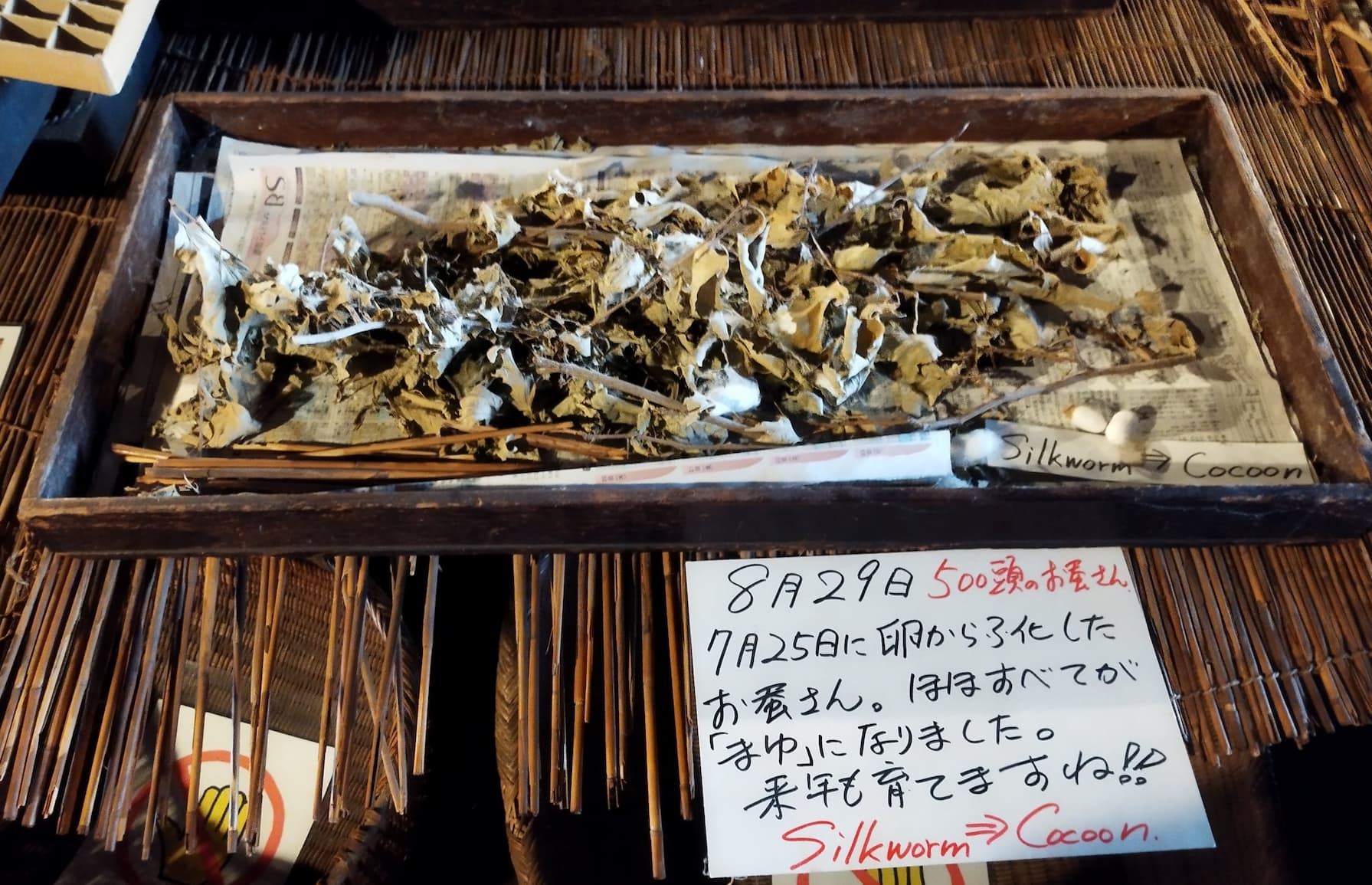
- 蚕は卵から孵化し、桑の葉を食べ、成熟して繭を作り、50日間という短い一生を終えるが、その名残を、パネルやさまざまな道具の展示で見ることができる。
- 絹の品質は蚕の健康状態に大きく影響されるため、蚕は非常に繊細でデリケートなので、屋根裏部屋は適切な桑の葉の量、温度、湿度を保つために24時間注意を払う必要があった。
- 蚕は卵、幼虫、蛹、成虫の4段階で完全変態する。 成虫になる前に4回脱皮し、繭を作ってサナギになった後、成虫になる前に繭は次の製糸業者に出荷される。
- 繭は蒸気の熱で乾燥され、一定期間保管された後、熱湯で解かれ、1つの繭から約1kmの長さの絹糸に生まれ変わる。
- 蚕は生まれてから繭を作るまで体重は約一万倍、絹糸を吐き出す絹糸腺は10万倍以上とサイズも形態もドラマチックに変化するので、映画の怪獣のモデルにもなった。
- 蚕の上に登る習性を利用して2つの特殊な道具が作られた。蚕が登れる穴のある網は糞が網の下に分離され、小さな仕切りがある格子状の板はそれが繭を紡ぐための誘いとなり、労力をかけず綺麗に並んだ繭を入手できる。
- オスの蚕はメスよりも絹の品質が高く、生産量もメスの2割ほど多いが、階級制の武士の時代でも、メスの蚕がそれを理由に避けられていたという記録はない。
- 養蚕業は衰退したが、蚕の飼育は多くの人が主に学校で経験していて、特に蚕が桑の葉を貪り食う音は小雨の音や波の音を遠くで聞くような記憶に残るもので、それを聞いた後何人かの子供は食事を静かに食べた。
《英訳例》
- Silkworms, which provided valuable supplementary income to the modest farm earnings, were respectfully called ‘o-kaiko-sama’ (meaning ‘Mr./Mrs. Silkworm’), reflecting the local mentality of gratitude and reverence for everything nature provides.
- Raw silk production can be divided into two main stages: sericulture, where silkworms are raised from eggs until they form cocoons, with tools for this process displayed here, and spinning, where raw silk is extracted from the cocoons.
- During their short 50-day life, silkworms hatch from eggs, feed on mulberry leaves, and mature to form cocoons, the remnants of which visitors can see through displays of panels and various tools.
- Since the quality of silk was greatly affected by the health of silkworms, the attic required 24-hour attention to maintain the right amount of mulberry leaves, temperature, and humidity, as silkworms were extremely sensitive and delicate.
- The silkworm undergoes complete metamorphosis in four stages: egg, larva, pupa, and adult. After molting four times and forming a cocoon to become a pupa before reaching adulthood, the cocoon is shipped to the next silk manufacturer.
- After the cocoons are dried with steam heat and stored for a certain period, they are unraveled in boiling water and transformed into silk yarn, with each cocoon producing nearly one kilometer of thread.
- Silkworms undergo such dramatic changes in size and form from birth to cocoon-making that they have inspired monster designs in movies. Their weight increases by about 10,000 times, and their silk glands, which produce the silk threads, grow more than 100,000 times.
- Utilizing the silkworms’ natural tendency to climb, two special devices were invented: a net with holes that allows them to climb through, separating their droppings below, and lattice-shaped boards that encourage them to move up into small compartments to spin their cocoons, resulting in neatly aligned cocoons without manual labor.
- Male silkworms produce higher-quality silk and about 20% more than females, but there seems to be no records showing that female silkworms were avoided due to this disadvantage, even during the class-based Samurai period.
- Although the sericulture industry has declined, many people experienced raising silkworms, mainly at school, and vividly remember the sound of silkworms devouring mulberry leaves—much like the sound of light rain or distant waves. Some children even ate their meals quietly after hearing it.
9.2 口頭用簡略説明
ここではお相手との会話の合間や歩きながら使える様に上記基本情報の10項目を口頭説明用の簡略文に置き換えています。各文ごとに【英語 > 日本語】の順で記述しています。英語音声は各文短いので(米国少女話者)1ファイルです。
- Silkworms were a source of income here and were respected so much that people called them “Mr. and Mrs. Silkworm.” This reflected the local mindset of gratitude toward nature.
(カイコは、この地域の人々にとって収入源であり、とても大切にされていたため、「おかいこさま」と呼ばれていました。これは、自然への感謝の気持ちを表す地元の考え方でした。) - Making silk has two main steps: sericulture of raising silkworms and spinning of silk thread. You can see the tools used for raising silkworms here.
(絹を作るには、大きく分けて2つの工程があります。カイコを育てる養蚕と、糸を紡ぐ製糸です。ここでは、カイコを育てるための道具を見ることができます。) - Silkworms live for only about 50 days. They hatch from eggs, eat mulberry leaves, and spin cocoons. Displays showcasing the process of raising silkworms are available here.
(カイコは約50日しか生きません。卵から孵化し、桑の葉を食べ、繭を作ります。カイコを育てる過程を紹介する展示があります。) - People had to watch over them 24/7 to get good silk. Silkworms are very picky and require precise amounts of food, the right temperature, and controlled humidity.
(良質な絹を得るためには、24時間体制でカイコを見守る必要がありました。カイコはとても繊細で、餌の量、温度、湿度を厳密に管理する必要があります。) - Silkworms change a lot! They start as eggs, then become worms, then make cocoons. Before becoming moths, the cocoons are sent to factories to make silk thread.
(カイコは大きく変化します!卵から幼虫になり、繭を作ります。蛾になる前に繭は工場に送られ、絹糸に加工されます。) - The cocoons are dried and stored. Then, they’re boiled to unravel the silk thread. Each cocoon can make almost a kilometer of thread!
(繭は乾燥させて保管されます。その後、茹でられて糸を解きます。1つの繭から約1キロメートルの糸が取れます!) - Silkworms grow huge enough to have inspired movie monsters! They get about 10,000 times heavier and their silk glands grow even more.
(カイコは、映画のモンスターを思わせるほど大きく成長します!体重は約1万倍になり、絹糸を作るための絹糸腺はさらに大きく成長します。) - Silkworms tend to climb. People used special nets separating their droppings below and lattice boards to help them climb and make their cocoons neatly without manual labor.
(カイコは登る習性があります。人々は、糞を下に落とすための特別なネットと、きれいに繭を作るための格子状の板を使って、カイコが登りやすくしました。) - Male silkworms produce more silk of higher quality, but people didn’t seem to mind raising females, even during the class-based Samurai era.
(オスのカイコは、より高品質な絹を多く生産しますが、武士階級の時代でも、メスを育てることに抵抗はなかったようです。) - Even after the sericulture industry declined, many experienced raising silkworms in school. They remember the sound of silkworms eating mulberry leaves—it sounded like rain, which made some kids quiet when eating!
(養蚕業が衰退した後も、多くの人が学校でカイコを育てた経験があります。彼らが覚えているのはカイコが桑の葉を食べる音が雨の音に似ていることで、それである子どもは食べる時には静かになりました。)
9.3 インバウンドの視点:笑いも取れるかも?
Q1 この格子状の板(まぶし)はなんですか?
“What is this lattice-like board (mabushi)?”
英語の雑談力とその為の日常用語を身に付ける為のおふざけストーリです。かなり長いのでお気に入りのワンフレーズがあれば現場でも試してみる、そんな軽いノリでご利用ください。各文ごとに【英語 > 日本語】の順で記述しています。全12文は前半の真面目パート(1-7)と後半のおふざけパート(8-12)の2ファイル構成になっています。👄下記表現の習得用音声ツールをご利用の際はこちらへ!
- This net, called a mabushi, is a device made of wood or woven straw, with many small spaces in its frame for silkworms to spin their cocoons.
(これはまぶしといって、蚕が自分の繭を作る為の細かい枠を木か藁を編んで作ったものです。) - Silkworms cannot make cocoons on a flat, empty surface, so they need the mabushi as a scaffold, similar to how humans use scaffolding when building.
(蚕は平らな何もない場所では繭を作れないので、丁度人間が足場を組んで、建物を作るように、繭を作る為の足場が必要なのです。) - Silkworms have a natural tendency to climb, so when the frame is placed above them, they will climb into the individual small compartments on their own and make their cocoons there.
(蚕は上に登る性質があるので、この枠を蚕に被せておけば、自分達で個々の枠まで登って入ってそこで繭を作るのです。) - However, removing the finished cocoons from their compartments without damaging them is laborious and time-consuming, so a new device was developed.
(でも、出来上がった繭を傷めず、その枠から取り出すのは、手間と時間がかかって大変なので、新しい装置も生まれました。) - It’s a new type that rotates vertically, like a Ferris wheel. When placed in the middle of a group of silkworms, they naturally climb up and enter the higher compartments to spin their cocoons.
(それは観覧車の様に縦に回転するタイプのもので、蚕の群れの中にそれを立てておけば、蚕の天性で最も高い位置にあるスペースまで登ってそこで繭を作るのです。) - The top compartments, filled with silkworms, naturally become heavier, causing them to rotate downward like a Ferris wheel, while the empty compartments at the bottom rotate up to the top.
(蚕が入った上部のスペースは当然重くなるので、その重みで観覧車が回る様に最も下になり、変わりに空っぽの下のスペースが最上部になります。) - By the same logic, the other silkworms fill the higher compartments one by one, causing the same rotation and resulting in a box of cocoons, with all the spaces neatly filled and aligned—without any manual labor.
(同じロジックで他の蚕は高い位置にあるスペースを順々に埋め、同じ様に回転し、出来上がるのが、全ての空間が綺麗に埋まって並んだ繭の箱詰めで、手間なしなんです。) - That’s a wonderful idea, but am I the only one who somehow sees a similarity to human nature and feels a bit sad?
(それは素晴らしい発想ですが、でも、なんとなくそこに、人間と変わらない性質を見て、なんとなく寂しく感じるのは私だけでしょうか?) - Like silkworms, humans also have an upward tendency. When something is placed before us, we feel the urge to climb up and create a comfortable, cocoon-like home to live in.
(蚕に限らず、人間だって上昇志向の性質があって目の前にその対象物があれば登ってそこで素晴らしく居心地のよい繭の様な家を作って住みたいですよね。) - But with the weight of the mortgage on the house we’ve built, we may gradually feel like we’re becoming the working poor, and at times, as if we’ve fallen to the bottom of society.
(でも作った家の住宅ローンの重みで段々ワーキングプアになり時々、社会の底辺に落ちた気分にもなりますよね。) - Additionally, in the comforting, cocoon-like home we worked so hard to build, we may not even be able to live, and someone else might take it away from us,—just like what happens with silkworms.
(おまけに一生懸命作った快適な繭の様な家には自分は住めず誰かに奪われる可能性だってあるかもしれません、ーまさに蚕と同じように。) - We often hear of more and more older husbands at a ripe age going through divorce, blurting out things like this: ‘My comfortable, cocoon-like home is about to be taken away by my tycoon-like wife!’
(現在増加中の熟年離婚する多くの旦那様のこんなボヤキがしばしば聞こえます。「私の快適な繭(コックーン)の様な家が大君(タイクーン)の様な妻に奪われそう!」って。)
屋根裏(養蚕の名残)の解説はお楽しみいただけましたか?
他のスポット(城跡&高台展望台、歴史、茅葺き屋根など)の解説へ移動する際は、冒頭の緑色ナビゲーションボタンをご活用くださいね!