 ユイ(Yui)
皆さん、こんにちは!日本の自然・里山ウオッチャー&ガイドのユイです。白川郷の経済と大量生産を支えた『屋根裏(仕事空間 / Attic as Work Space)』英語案内ページへようこそ!
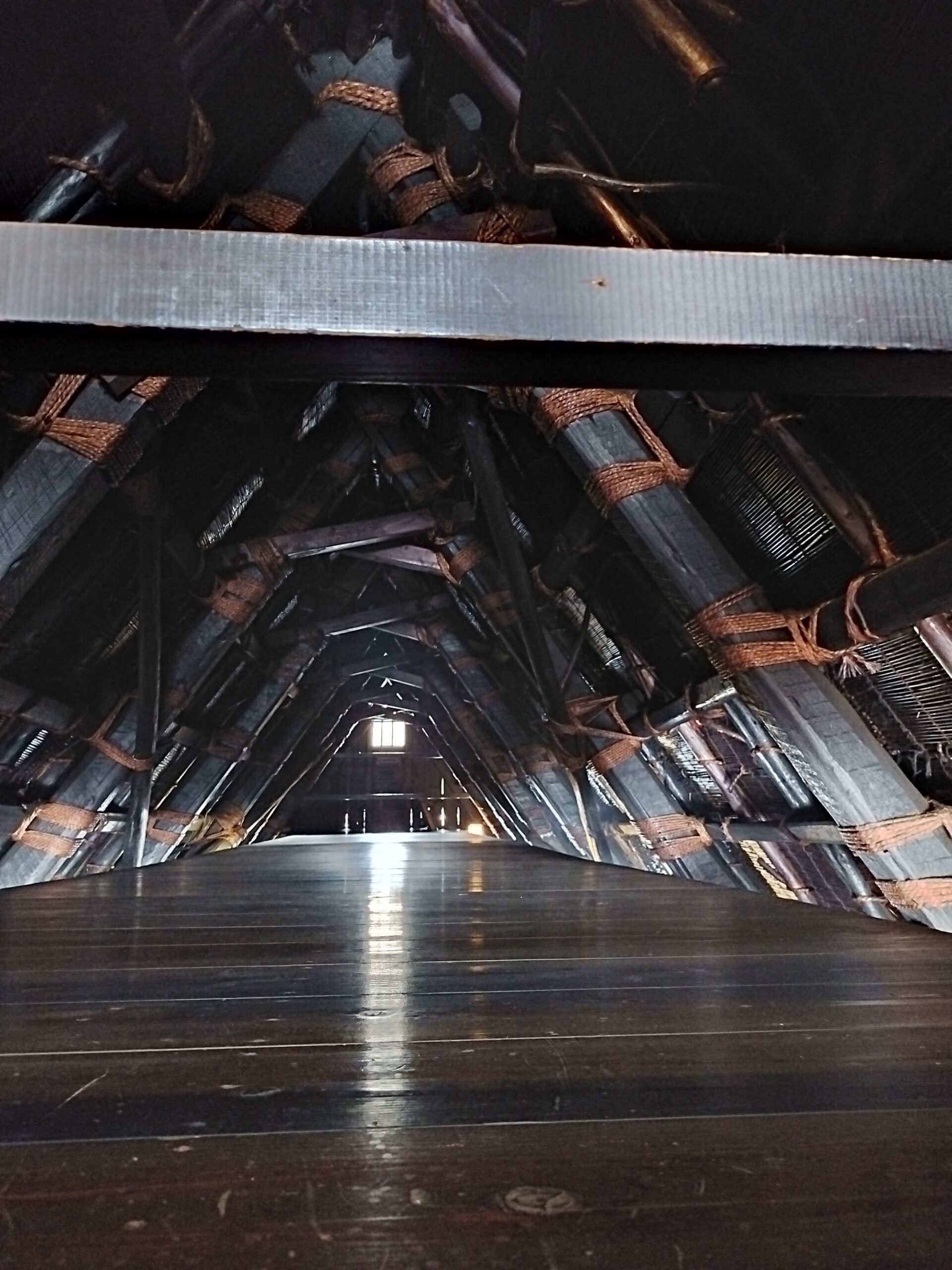
白川郷合掌造りの最大の見どころである巨大な屋根裏空間は、単なる物置ではなく、かつて外貨獲得の要であった「養蚕業(Sericulture)」の巨大な生産工場(ワークスペース)でした。複層階の空間活用、囲炉裏の熱と煙を利用した温湿度の自然調整、切妻屋根による無償の採光・換気など、日本のモノづくりの原点ともいえる画期的な低コストシステムが詰まっています。
現場でサッと使える短文フレーズから、生産効率化の仕組み、ゲストをクスッと笑わせる「日本式ピラミッド」雑談ネタまで網羅しました。目的の項目ボタンからご自由にご活用ください。
📍 Quick Navigation: 各章へジャンプ
7. 合掌造り屋根裏(仕事空間)
ここでは合掌造りの屋根裏(仕事空間・生産工場)の役割と経済的仕組みをカバーします。用途に合わせて以下のボタンから直接アクセスできます。
7.1 基本情報
ここでは合掌造り最大のアトラクションである屋根裏を一緒に見る際に、定番の建築空間でなく仕事空間(日本人の経済感)として押さえておきたい基本ポイントを10項目(日英)でご紹介します。英語サンプルは前半(1-5)(オーストラリア女性話者)と後半(6-10)(米国男性話者)の2ファイルに分けました。👄下記表現の習得用音声ツールをご利用の際はこちらへ!
《日本語ポイント》
- 2階からの上の階は中二階が使用人家族用に使われたこともあるが、全てが仕事スペースとして効率的に設計、運用された。
- 通常の日本家屋の屋根裏は小規模で物置の役割しかないがここの屋根裏は巨大で、更に内部を複層階に区切ることで最大の仕事スペースを確保している。
- ここの屋根裏は収益性の高い養蚕業の生産性を更に高め市場での価格競争力をつけるために進化して出来上がったもので現代ビジネスと同じ経済原理が働いている。
- 屋根裏の内部を2層から5層に分けることで作業スペースは広くなるが、その分、各階の間の移動時間も増える為、少しでも効率化を図る工夫がされている。
- 例えば、若いカイコは目が離せず、手間がかかる為、居住エリアに近い下の階で育て、成虫になった蚕は手数が減るので上の階に移動させたりした。
- さらに、1階の囲炉裏から立ち上る熱と煙によって、各階の湿度が徐々に自然に調整され、蚕の成長段階によって湿度を変えて使用することができた。
- 同じく、その下から上がってくる熱と煙は茅葺き屋根から徐々に時間をかけて外側に排出されながら、屋根裏に滞留して安定的に暖かく乾燥した状態を保つので、寒さと湿気に敏感な蚕を育てる理想的な環境となっている。
- 切妻スタイルを採用することでその切妻の両側の窓から日光と空気が安定的に入り空調設備のコストなしで屋根裏は明るく換気の良い空間となっている。
- ここでしか見られないこの広大でユニークな屋根裏屋は自然環境を巧みに利用した驚くべき独創的な低コストシステムで、当時国内最大の養蚕大量生産体制を作り、後の日本製造業と経済的成功の予兆と見ることができる。
- 公開家屋では養蚕業の蚕育成の為の設備の他に農具、山仕事道具などの展示で当時の生活を垣間見ることができるが、さらに地下では密かに火薬の原料を生産するところもありこれも大きな収入源となっていた。
《英訳例》
- 1. The upper floors, starting from the second, were efficiently designed and utilized as workspaces, with a mezzanine floor sometimes reserved for servants’ families.
- 2. The attic of a typical Japanese house is small and used only for storage, but here, the attic is spacious, and by dividing it into multiple stories, it maximizes the available workspace.
- 3. The attics here have evolved to enhance the productivity of the highly profitable sericulture work, making it more competitive in the marketplace by applying the same economic principles as modern business.
- 4. Dividing the attic into two to five layers creates more workspace, but it also increases the time spent moving between floors, so the workflow layout was carefully arranged to maximize efficiency.
- 5. For example, young silkworms were raised on the lower floor near the living area because they required constant monitoring and care, while adult silkworms were moved to the upper floor as they required less labor.
- 👥連続音声1-5
- 6. Furthermore, the heat and smoke rising from the hearth on the first floor gradually and naturally adjusted the humidity on each floor as one ascended, allowing different floors to be used with varying humidity levels depending on the stage of silkworm growth.
- 7. Likewise, the heat and smoke rising from below are gradually expelled outward through the thatched roof, staying in the attic to maintain a stable warmth and dryness, creating an ideal environment for raising silkworms, which are sensitive to cold and moisture.
- 8. The gable-end design allows sunlight and air to enter the attic through windows on both sides, creating a bright and well-ventilated space without the need for air conditioning equipment.
- 9. This vast and unique attic, seen only here, can be seen as a premonition of Japan’s later manufacturing and economic success, as it developed the nation’s largest mass production system for sericulture at the time, using a remarkably ingenious low-cost system that wisely leveraged the natural environment.
- 10. You can see the equipment used for raising silkworms, as well as tools for farming and mountain work, offering a glimpse into life in those days. Additionally, some families secretly produced raw materials for gunpowder underground, providing another major source of income.
- 👥連続音声
7.2 口頭用簡略説明
ここではお相手との会話の合間や歩きながら使える様に上記基本情報の10項目を口頭説明用の簡略文に置き換えています。日本語の主旨は基本情報のままなので、ここでは英語>日本語の順で置いています。英語音声は各文短いので(オーストラリア女性話者)1ファイルです。
- 1. “Starting from the second floor, the upper levels were workspaces—sometimes even used by servants’ families.” 🧑🔧「2階から上の階はワークスペースであり、使用人の家族が使用することもありました。」
- 2. “Unlike regular Japanese attics, this one is big and divided into levels to make the most of the space.” 🏠 「普通の日本家屋の屋根裏よりずっと広くて、何層にも分かれて有効活用されていました。」
- 3. “It was designed to boost sericulture productivity—like a well-planned factory before modern factories existed.” 🐛 「この構造は、養蚕の生産性を高めるための工夫で、まるで昔の工場のようなんです。」
- 4. “They added multiple layers, but to keep it efficient, the layout minimized moving up and down too much.” 🪜 「階層が多いぶん移動も大変なので、効率を考えて作業の流れがうまく設計されていました。」
- 5. “Young silkworms stayed on lower floors for close care, while adults moved higher since they needed less attention.” 🐣 「手のかかる幼虫は下の階で世話をし、手間が減る成虫は上の階に移しました。」
- 6. “Warmth and humidity from the downstairs hearth rose naturally and created just the right conditions on each floor.” 🔥 「1階的囲炉裏の熱と煙が上に昇り、階ごとにちょうど良い湿度になるよう工夫されていました。」
- 7. “That heat stayed in the attic and helped keep the silkworms warm and dry—perfect for their delicate needs.” 🌬️ 「その熱は屋根裏にとどまり、冷えや湿気に弱い蚕にとって理想的な環境を作っていたんです。」
- 8. “The pointed roof design let in light and air from both sides, so the space stayed bright and breezy without machines.” 🌞 「両側の窓から光と風が入り、機械なしでも明るく風通しの良い空間になっています。」
- 9. “This creative attic system feels like the beginning of Japan’s future success in low-cost, large-scale production.” 🏭 「この仕組みは、のちの日本のものづくりの成功を予感させるような、大規模で賢い生産体制です。」
- 10. “You can still see the old tools for silkworms, farming, and forestry—and some families even made gunpowder underground!” 🧰 「蚕の道具や農具・山仕事の道具も展示されていますし、中には火薬の原料をこっそり作っていた家もあったそうですよ。」
- 👥全文連続音声
7.3 インバウンドの視点:笑いも取れるかも?
Q1 この屋根裏は物置として使っていたのですか?
“Was this attic used for storage?”
英語の雑談力と単語力UPの為の長いおふざけストーリ。ワンフレーズでも使えそうなものあれば現場でも試してみる、そんな軽いノリでご利用ください。全15文は前半の真面目パート(1-8)と後半のおふざけパート(9-15)の2ファイル構成になっています。
- This attic is currently used to display old, traditional work tools, but it was primarily used to raise silkworms for the sericulture business. 現在この屋根裏は昔の伝統的な仕事道具が展示されていますが主に養蚕業の蚕を育てる為に使われいました。
- Over hundreds of years, it evolved into the large multi-story attics we see today, designed to maximize sales and profitability from sericulture. その養蚕による売上と収益性を最大化する為に数百年かけて現在の様な巨大な複層階の屋根裏に進化しました。
- Until the global depression about a hundred years ago, global demand for silk was increasing, and this attic was bustling with activity, raising large numbers of silkworms for what was then modern Japan’s most important export product, earning valuable foreign currency. 約百年前の世界的な恐慌が起きるまで高級な絹の需要は高く、近代日本の外貨獲得の為の重要な輸出製品のひとつで、この屋根裏は大量の蚕を育てるのに大忙しでした。
- But the global depression and the rise of less expensive synthetic fibers caused the demand for costly silk to fall sharply. でもその世界的不況とその後の安価で丈夫な合成繊維の普及で、高価な絹の需要は大幅に落ち込みました。
- In addition, unable to compete with the low prices of cocoons from China and other countries with cheaper labor, the silkworms here have almost disappeared from the attic over the past hundred years. また中国や安価な賃金の国々の繭との価格差にも太刀打ちできず、この屋根裏から蚕の姿はこの約百年の間に殆ど消えてしまいました。
- The displays before us now show the remnants of a time when sericulture was in its heyday, generating enough income to support a large family of several dozen people and maintain this huge attic. 今、目の前に展示されているのは、この巨大な屋根裏と数十名の大家族の生活が維持出来る程の収入が得られた養蚕業全盛時の名残りです。
- The many gassho-zukuri buildings in the area, which once numbered nearly 2,000, have now dwindled to about a hundred, as it became difficult to maintain such massive structures. かつては二千近くあった多くのこの地区の合掌造りの建物も、この巨大な設備を維持できず、現在は百件程になってしまいました。
- However, it’s perhaps a miracle that a few of them are still open to the public, and that so many domestic and foreign visitors continue to visit sites like this today. でも、その中の数件はこうして公開して、今日もこうやって多くの国内外の訪問客に来ていただけるのは、奇跡的なことと言えるかもしれません。
- The irony is that Shirakawa-go’s sericulture industry, which lost out in the global silk market, has found new life in the global tourism market, preserving its former glory in a transform. 皮肉なことに、世界の絹市場で敗れた白川郷の養蚕業は、世界の観光市場で新たな息吹を見いだし、かつての栄光を形を変えて守っています。
- In a way, it’s similar to the pyramids in Egypt, which now attract people from around the world to see the structures that once symbolized their former glory. ある意味、かつての栄華の後の建造物を見るために世界から多くの人達を引き付けるなんて、エジプトのピラミッドの様にも思えます。
- Both the attic and the pyramid have an impressive 60-degree slope, capturing people’s attention with their height and mysterious appearance, making everyone wonder, ‘What in the world is this?’” 屋根裏部屋もピラミッドも60度の傾斜が印象的で、その高さと神秘的な外観で人々の注目を集め、誰もが “これはいったい何なのだろう?”と不思議に思います。
- When people step inside, they might also notice the similarities. This attic was once a very prosperous kingdom, and they are now witnessing the remnants of its peak—a graveyard of its former glory. 一歩足を踏み入れると、その共通点に気づくかもしれません。 この屋根裏部屋はかつて非常に繁栄した王国であり、彼らは今、その絶頂期の名残、かつての栄光の墓場を目の当たりにしているのだと。
- The owners of this vanished glory are the moths, which were never allowed to exist, as they were destined to be sacrificed for the production of raw silk from their cocoons. この消えゆく栄光の持ち主は蛾。繭から生糸を生産するために生け贄に捧げられる運命にあった蛾は、決して存在を許されなかったのです。
- Since an adult silkworm is referred to as a moth in English, how about promoting this attic with a unique tour titled ”Japanese-style Pyramid: Mausoleum of Moths: You might even sense the solemn presence of their souls through a Gassho experience!” 蚕の成虫を英語では蛾と呼ぶので、この屋根裏部屋をユニークなツアーで宣伝するなんてどうてしょう。 「日本式ピラミッド、 蛾の霊廟:その魂の厳かな存在を合掌体験で感じるかも」
- In this experience, you might find yourself naturally putting your hands together in Gassho, just as Japanese people do, to offer a prayer. この体験では、日本人が合掌するように、自然に合掌して祈りを捧げている自分に気づくかもしれませんよ。
屋根裏(仕事空間)の解説はお楽しみいただけましたか?
他のスポット(屋根裏の建築空間、養蚕の名残、高台展望台など)の解説へ移動する際は、冒頭の緑色ナビゲーションボタンをご活用くださいね!