金沢で商談相手とハイヤーで移動中… 「能登上布って?って何」と聞かれたら?
Takumi:日本の伝統工芸ウオッチャー&ガイド
こんにちは!たくみです🧵今回は海外ゲストに「能登上布」を、移動中の短い時間でも相手の心に響く形でご紹介します。「伝統的な織物です」と答えるだけでは、ゲストの心は動きません。相手の感性に響き「ぜひ一度行ってみたい!」と言わせるための、5つの視点(食べ物・アート・建築・ファッション・日本人)でのトークを揃えました。
ゲストの関心に合わせて30秒でネタを仕込む!
【一言で腑に落ちる】王道アプローチ
【インバウンド5大関心別・深掘り】さらに一歩踏み込む
※ハイヤーの窓越しならパート1を、じっくり語るならパート2をチョイス!
1. この一言で腑に落ちる?
このパートのいずれかのワンフレーズでご納得いただけたらラッキーですね。もしだめなようでしたら、次のパートもお試しください。いつも通り、日本語で言えないことは英語でも言えませんので日本語⇒英語の順でご紹介します。移動中の短い時間でもパッと情景が浮かぶフレーズです。
1.1 二千年伝承伝説の高級織物?
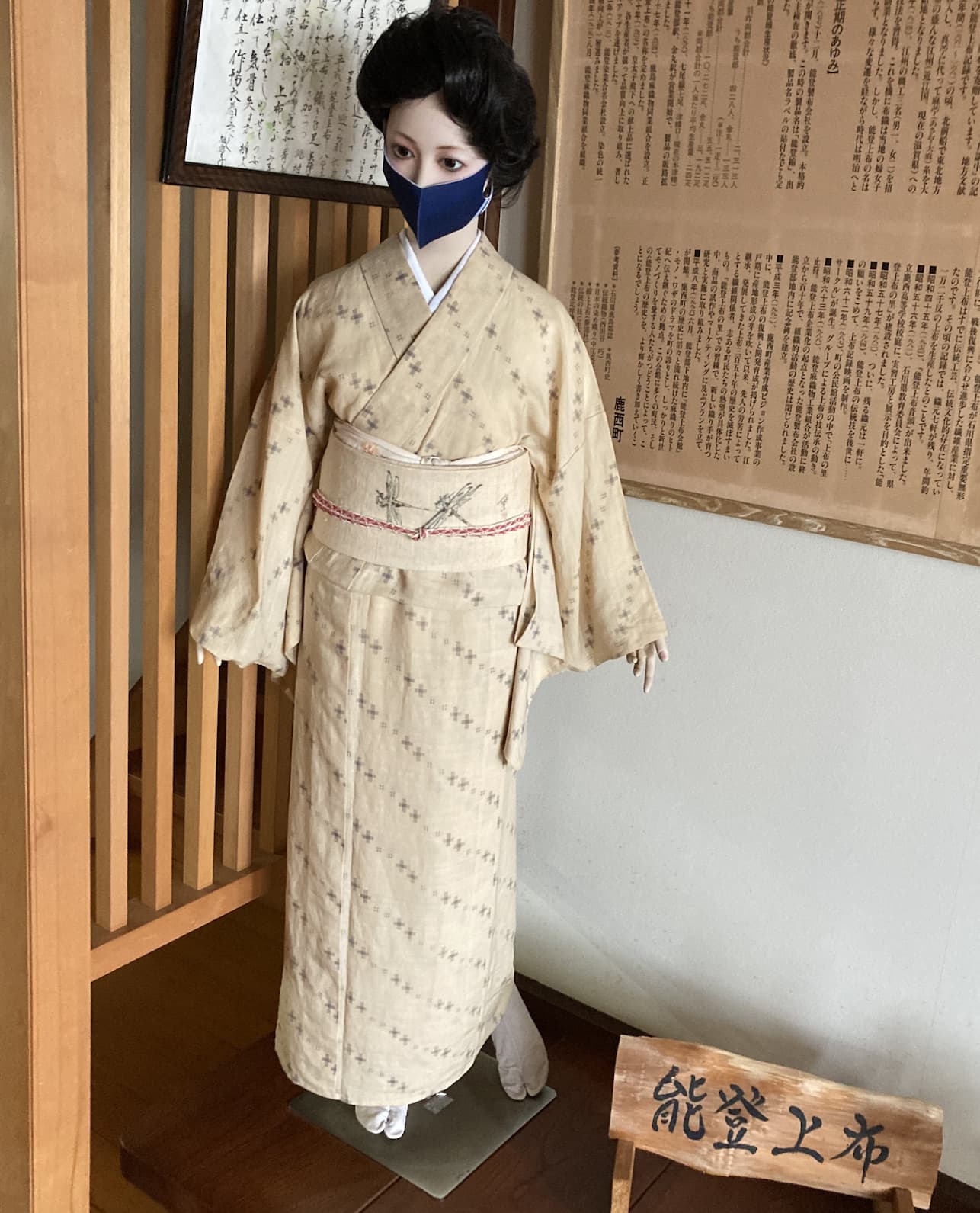
能登上布は、二千年の伝承を持つとされる伝説的な高級ラミー織物で、伝統的な手織り技法によって丁寧に織り上げられています。その驚くほど精巧で手間のかかる製造工程ゆえ、現在では石川県能登にあるただ一軒の工房でのみ作られており、まさに“隠れた逸品”と言える存在です。ぜひ工房を訪れ、その涼やかな手触りと洗練された意匠を実際に体感してみてください。
“Noto Jofu is a premium ramie fabric said to have a legend dating back over two millennia, meticulously crafted using traditional hand-weaving techniques. Because of its astonishing precision and labor-intensive production, it is now made at only one remaining workshop in Noto, Ishikawa—truly a hidden gem. Why not visit the workshop and experience its refreshingly cool texture and refined designs for yourself?”🎧米国話者
👆コメント 🧵 まずは(詳細は抑え気味に)基本的なポイントでお誘いするオーソドックスなパターンから。ここでの1か所は(株)山崎麻織物工房を指しています。この他には保存・プロモーション組織の能登上布会館(展示・体験・Shop)があります。
1.2 山水画のぼやけた霧のモチーフ?
能登上布は、伝統的な絣(かすり)模様を生かした代表的な工芸品で、日本の山水画に漂う霧を思わせる、ほのかににじむような表情が魅力です。機械織りではなく手織りで仕上げられるため、一点一点がまさに唯一無二の風合いを持っています。伝統的な着物だけでなく、現代的なアクセサリーやバッグ、日常使いの衣類まで幅広く展開されており、時代を超えて楽しめる“唯一無二のお土産”として人気があります。
“Noto Jofu is a representative craft featuring traditional kasuri (ikat) patterns that create subtly blurred, mist-like motifs reminiscent of Japanese landscape paintings. Because it is hand-woven rather than machine-made, each piece carries a truly one-of-a-kind texture. Beyond classic kimonos, the collection includes modern accessories, bags, and everyday clothing—offering unique souvenirs that are both timeless and easy to enjoy.”
👆コメント 🪡絣(kasuri)について質問された場合の英語説明例👉kasuri (ikat): A traditional Japanese technique in which patterns are created by dyeing threads before weaving. In Noto Jofu, specially dyed warp and weft threads are precisely aligned to create intricate, crisp motifs. (織る前に糸を染めて柄を作る日本の伝統技法。能登上布では、緻密に染め分けた経糸と緯糸を正確に合わせることで、精緻でくっきりとした模様を生み出す。)
2. 次のフォローでご納得?
残念ながら前パートで外した場合のフォローセリフ、いつも通りインバウンド視点を踏まえ関心別に置いてみました。様々な英語表現を織り込むため全体的にかなり長くなっていますが、お気に入りのフレーズがあれば現場でも試してみる、そんな軽いノリでご利用ください。
2.1 建築(匠:たくみ)系
自宅に日本の建築の雰囲気 ?
建築を愛する方には、建築用スクリーンとしての機能美を備えた能登上布がきっと響くはずです。ラミー特有の半透明感と高い耐久性を活かし、古くから夏の障子やのれんなどの間仕切りとして用いられてきました。視線をやわらかく遮りながら、風や光を自然に通すという日本の空間づくりの本質を捉えたこの素材は、ご自宅に日本建築の優雅さを添える、時代を超えたしつらえの方法を提供します。
“Architecture enthusiasts will appreciate Noto Jofu for its refined functional beauty as an architectural screen. With its distinctive translucency and durability—a hallmark of ramie—it has long been used in summer for shoji screens and noren dividers. By capturing the essence of traditional Japanese spatial design—softly blocking direct views while allowing wind and light to pass through—it offers a timeless way to bring the quiet elegance of Japanese architecture into your home.”🎧英国話者
👆コメント 🪡❶shoji(障子)❷noren(のれん)を聞かれた場合の説明例。👇
❶ Shoji(障子) “Shoji are traditional Japanese sliding screens made of wood and paper that let soft light through.” (障子は、木枠と和紙で作られ、柔らかな光を通す日本の伝統的な引き戸です。)
❷ Noren(のれん) “Noren are short fabric curtains hung at shop entrances or doorways.” (のれんとは、店の入り口や出入り口に掛けられる短い布製のカーテンのことです。)
2.2 アート系
ミニマリズム・ピクセルアートの先駆け?
能登上布のデザインは、現代のミニマリズムやピクセルアートの初期の先駆けとも言える存在です。十字や格子といった幾何学的なモチーフを、余計な要素をそぎ落とした純粋な形で表現し、その本質を体現しています。デジタルグラフィックスが登場する何世紀も前から、職人たちは染められた経糸と緯糸の交点に一点ずつ模様を描き込み、そこから自然にイメージが立ち上がるように仕上げてきました。何世紀にもわたる伝統工芸でありながら、現代のコンセプチュアル・アートを思わせる印象を与えるのが魅力です。🎧オーストラリア話者
“The designs of Noto Jofu can be viewed as early precursors to modern minimalism and pixel art. They feature simple geometric motifs—crosses, grids, and latticework—distilled to their purest essence. Centuries before digital graphics, artisans created patterns dot by dot at the precise intersections of dyed warp and weft threads, allowing the image to emerge organically. It is a centuries-old craft that feels strikingly akin to modern conceptual art.”
👆コメント 🪡❶ warp(経糸)❷ weft(緯糸)を聞かれた場合の説明例。(🎧米国話者)👇
❶ warp(経糸)“Warp threads are the vertical threads stretched tightly on the loom.” (経糸とは、織機にまっすぐ張られた縦方向の糸のことです。)
❷ weft(緯糸)“Weft threads are the horizontal threads woven across the warp.” (緯糸とは、経糸の間を横方向に通して織り込む糸のことです。)
2.3 ファッション系
日本の夏の重ね着スタイル?
極細のラミー繊維と精巧な手織りが生み出す能登上布ならではの透け感を活かすことで、下に重ねた色や柄をさりげなく覗かせる、洗練された“日本の夏の重ね着スタイル”を楽しめます。伝統的な着物としてはもちろん、モダンなシースルーのトップス、ベスト、スカーフとしても抜群の存在感を放ちます。この透け感を逆光で撮影した写真は、SNSであなたのシックなスタイルをきっと引き立ててくれるでしょう。
“By taking advantage of Noto Jofu’s distinctive sheer quality—created through ultra-fine ramie fibers and precision hand-weaving—you can enjoy a refined ‘Japanese summer layering style’ that subtly reveals the colors and patterns beneath. It makes a striking statement not only in traditional kimono, but also as modern sheer tops, vests, or scarves. Capture this translucent texture in a backlit photo, and your chic style is sure to stand out on social media.”🎧米国話者
2.4 フード系
能登上布のコースターと地酒で涼しい気分?
食を愛する皆さまには、涼やかな夏の装いで、能登上布のコースターと冷やした地元の能登酒を組み合わせて楽しむひとときをおすすめします。もしこの洗練された時間を気に入っていただけたなら、お土産にコースターのセットを持ち帰ってみてはいかがでしょうか。ご自宅でこのひとときを再現すれば、日本の蒸し暑い夏からふっと抜け出すような、涼やかで時代を超えた体験を味わえます。
“For food lovers, we recommend pairing Noto Jofu coasters with a chilled glass of local Noto sake, ideally enjoyed in comfortable summer attire. If you find this refined moment appealing, consider taking a set of coasters home as a souvenir. By recreating this ritual at home, you can relive the feeling of escaping Japan’s sweltering summer in a cool, timeless style.”🎧インド話者
2.5 日本人系
身に付ければ畏敬の歴史が肌でわかる?
日本の夏は圧倒的な湿気に包まれるため、汗を吸い、すぐ乾き、肌に張り付かない麻やラミーといった天然繊維は、暮らしに欠かせない存在でした。こうした天然繊維は、それぞれの役割に応じて厳密に使い分けられてきました。成長が早く丈夫な麻は、日常の作業着やロープ、神道の祓いの儀式に用いられました。一方、極細で張りのあるラミーは、能登上布のような高品質の夏衣や、神道の神聖な儀式に使われました。これらに共通するのは、日本人の深い信念です。これらの繊維は単なる衣服ではなく、神々が宿る“器”として見なされてきました。触れたり身につけたりすると、日本人が自然や神々に抱いてきた古来の畏敬の念を、そっと肌で感じられるかもしれません。
“Because Japanese summers are overwhelmingly humid, natural bast fibers like hemp and ramie—which absorb sweat, dry quickly, and don’t cling to the skin—became essential for daily life. Even among these fibers, each type was carefully chosen according to its specific role. Fast-growing, sturdy hemp was used for everyday workwear, ropes, and Shinto purification rituals. Meanwhile, ramie, with its ultra-fine, crisp fibers, was reserved for high-quality summer garments like Noto Jofu and for sacred Shinto ceremonies. What they share is a deep-rooted belief: to the Japanese, these fibers were never merely clothing, but sacred vessels in which the gods reside. When you touch or wear them, you may feel the ancient reverence the Japanese have long held toward nature and the divine.”🎧米国話者
【Glossary(用語集)】
- ramie(ラミー/苧麻:ちょま) 麻の一種。極細で光沢があり、能登上布の主原料。吸湿・速乾・通気性に優れる。
- hemp(麻) 成長が早く丈夫な天然繊維。作業着・ロープ・神道の祓いなどに使われた。
- legendary origin(伝承的な起源) 崇神天皇の皇女が機織りを教えたという伝承に基づく、神話的な起源のこと。
- hand-weaving techniques(手織りの技法)
- hand-woven(手織り):hand-weaving(名詞)とほぼ同義だが、これは形容詞なので後に名詞が必要。
- kasuri(絣/かすり) 糸を染め分け、経糸と緯糸の模様を合わせて柄を生み出す日本の伝統的な染織技法。能登上布では独自の櫛押捺染などによる緻密な絣模様が特徴。
- geometric motifs(幾何学模様) 十字・格子・井桁など、形を単純化した伝統模様の総称。
- mist-like pattern(霧のような模様)
- translucency(半透明感)
- shoji / traditional Japanese sliding screen(障子)
- noren / short fabric curtain(のれん)
- spatial partition(空間仕切り)
- minimalism(ミニマリズム) 形を極限までそぎ落とす美術思想。
- pixel art(ピクセルアート) 小さなドットを組み合わせて画像を表現するデジタル/グラフィック表現。能登上布の細かな絣模様との視覚的な類似を説明する比喩として本文で使用。
- warp / weft(経糸/緯糸) 織物の縦方向の糸と横方向の糸。能登上布では、染め分けた経糸と緯糸の位置を細かく合わせて、緻密な絣模様を生み出す。☛warp(経糸) 古英語 weorpan / wearp(投げる・前に伸ばす)が語源。織機に“まっすぐ張り渡す縦糸”を指す専門用語として定着した。☛weft(緯糸) 古英語 wefan(織る)の過去分詞 wef / weft が語源。“織り込まれたもの=横糸”を意味し、中世の織物職人の技術語として広まった。
- sheer fabric(シアー素材/透け感のある布) 能登上布の特徴である軽やかな透け感。
- layering(レイヤリング/重ね着)
- backlit photo(逆光写真)
- summer attire(夏の装い)
- Shinto purification(神道の祓い)
- ancient reverence(古来の畏敬の念) 自然や神聖なものに対して抱く、古くからの深い敬意。
御礼🔶あとがき

広範な背景知識を踏まえ、ゲストの好奇心に応える一助となれば幸いです。本記事へのご感想や現場での解説のご相談などがありましたら、下記よりお気軽にご連絡ください。