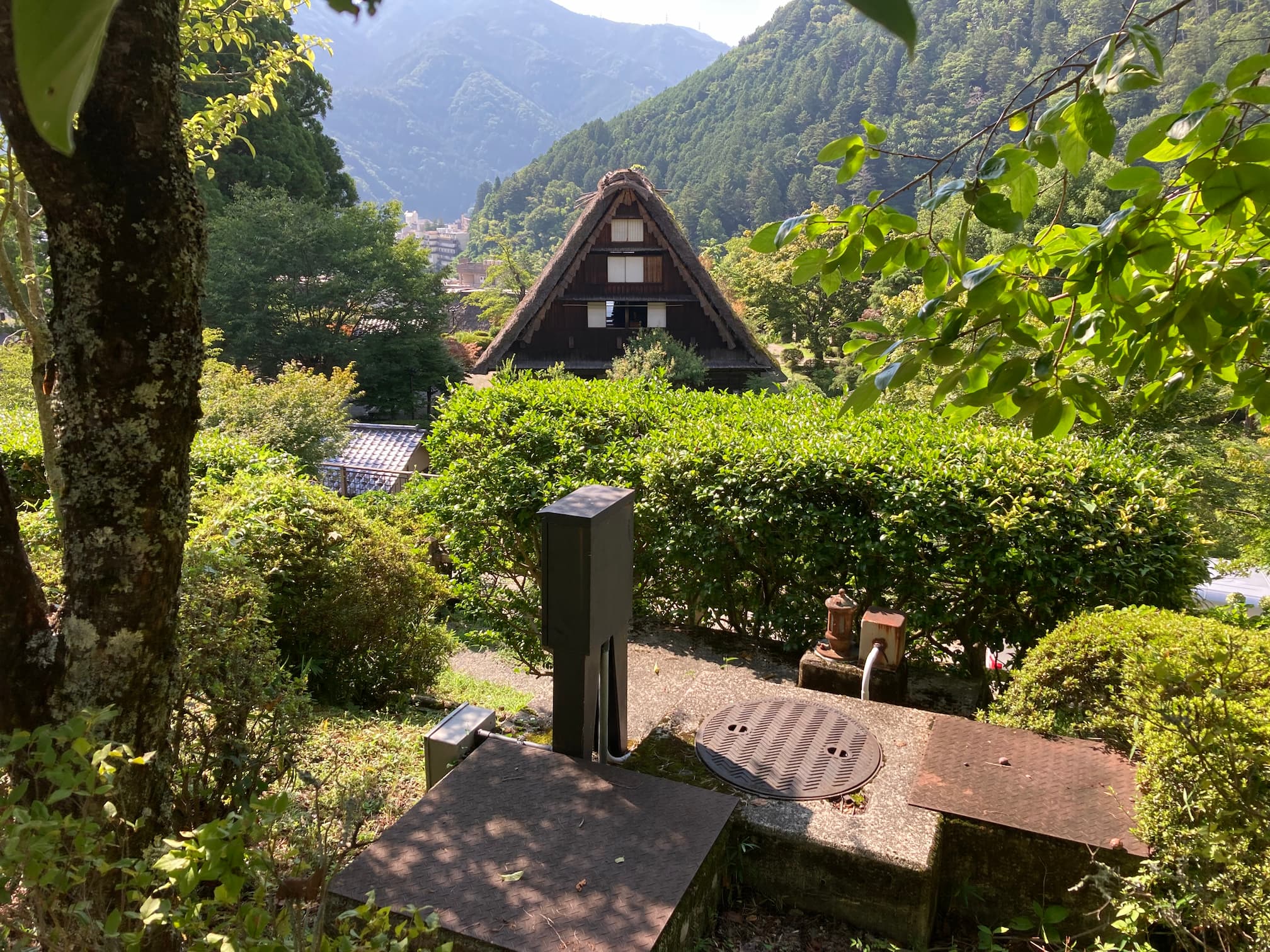
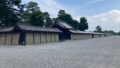
Gero Onsen Gassho Village is an open-air museum featuring authentic gassho-zukuri farmhouses relocated from the broader Shirakawa-go area, known for its World Heritage Site. Far from being mere theme-park replicas, this collection of original structures includes buildings designated as Important Cultural Properties of Japan. It offers a convenient, high-quality cultural experience while relaxing at one of Japan’s most famous hot spring resorts—without the need to travel all the way to Shirakawa-go. 🎧米国話者
💡 Pick-up Vocabulary open-air museum 👉 野外博物館 / authentic 👉 本物の、真正の / relocate 👉 移築する、移転させる / far from being… 👉 〜とは程遠い / mere 👉 単なる、ほんの / replica 👉 レプリカ、模造品 / Important Cultural Properties 👉 重要文化財 / hot spring resort 👉 温泉リゾート
Gassho Village is an open-air museum featuring traditional houses built in the “Gassho-zukuri” style, a unique form of A-frame architecture. The word gassho (合掌) combines gō (meaning “bringing together”) and shō (meaning “palms”), referring to the traditional Japanese posture of prayer. The architecture earned this name because its steeply pitched thatched roofs resemble hands pressed together in prayer. Here, you can witness architectural intentions that are entirely different from modern design. As you learn about the frugal, faith-filled rural lifestyle that once thrived beneath these roofs, you might even feel inspired to join your own palms together in quiet appreciation. 🎧英国話者
For architecture enthusiasts, I highly recommend the Oto House—one of the largest surviving examples of gassho-zukuri architecture in Japan, which actually led to the creation of this Gassho Village. Many visitors are awed by the highly rational philosophy behind its massive roof. With a steep pitch of approximately 60 degrees, it naturally sparks curiosity: Why was it built this way? How was it constructed without nails? And how has it been maintained for centuries? Furthermore, local tradition says this house traces its roots back to a distinguished samurai family who fled from the ancient capital of Kyoto centuries ago. Here, you can truly savor the very best of traditional Japanese architecture.🎧米国話者
If you want to capture a unique photo, try taking a picture while praying at the Frog Shrine. There are a few fun theories about why it’s dedicated to frogs, which makes for a great story to share! One theory is that the name Gero Onsen sounds like a frog’s croak in Japanese: “Gero, gero.” Another plays on the word for frog, kaeru, which also means “to return”—symbolizing the return of your youth, good fortune, or money. But honestly, what we hope most is that you will return to visit us again. Strike a pose praying for whichever “return” you wish for most—and who knows, maybe a little online popularity will come back to your post, too! 🎧米国話者
💡 Pick-up Vocabulary capture a photo 👉 写真を撮る、収める / be dedicated to… 👉 〜に捧げられている、祀られている / croak 👉 (カエルの)鳴き声 / play on the word 👉 言葉遊びをする、掛詞にする / symbolize 👉 象徴する / good fortune 👉 幸運 / strike a pose 👉 ポーズを決める / online popularity 👉 オンラインでの人気・注目
For art lovers, the Enku Hall in Gassho Village is a hidden gem. Here, you can admire wooden Buddhist statues carved by the legendary 17th-century monk and sculptor Enku, featuring striking marks left by his axe and chisel. Over his lifetime, Enku is said to have carved 120,000 such statues, spending his final years in this region. He carved them not as museum pieces, but to offer comfort and salvation to ordinary people. It is precisely this selflessness and purity of intention that makes them true works of art. In that sense, the gassho-zukuri architecture itself—built purely for survival and community—can be viewed through the exact same lens, making this village a place truly brimming with art.🎧インド話者
💡 Pick-up Vocabulary hidden gem 👉 隠れた名所 / admire 👉 鑑賞する、感嘆する / striking marks 👉 印象的な痕跡 / axe and chisel 👉 斧と鑿(ノミ) / museum piece 👉 博物館の展示品 / salvation 👉 救済、安らぎ / selflessness 👉 無私無欲 / through the exact same lens 👉 まったく同じ視点・切り口から / brim with… 👉 〜で満ち溢れる
How about trying some salt-grilled river fish during your visit to Gassho Village? Local freshwater fish like iwana (char) and amago (trout), raised in the pristine streams of the Hida region, are skewered and grilled to perfection over charcoal right in front of the shop or at the hearth. Eating the fish whole—head and all—is a rustic Japanese dining tradition that many travelers love. After savoring such a fresh, natural meal, you might find yourself instinctively placing your hands together in the “Gassho” posture to express your heartfelt gratitude.🎧オーストラリア話者
In Gassho Village, alongside the works of Enku—the legendary 17th-century Buddhist sculptor—you will find an exhibition dedicated to another legendary artist: a master puppeteer born and raised right here in Gero. Self-taught in the traditional art of Bunraku, he single-handedly performed an entire show that traditionally requires a tayu (narrator), a shamisen player, and three puppeteers for every single puppet. Tragically, no one could replicate his genius, and with his passing, the tradition lived on only within this hall. While visitors marvel at his legacy, there is often a quiet sense of sorrow. It mirrors a familiar pattern in Japan—from traditional crafts to modern business—where a solo genius achieves extraordinary feats, yet leaves behind no successor, leaving only a memory of what once was.🎧米国話者