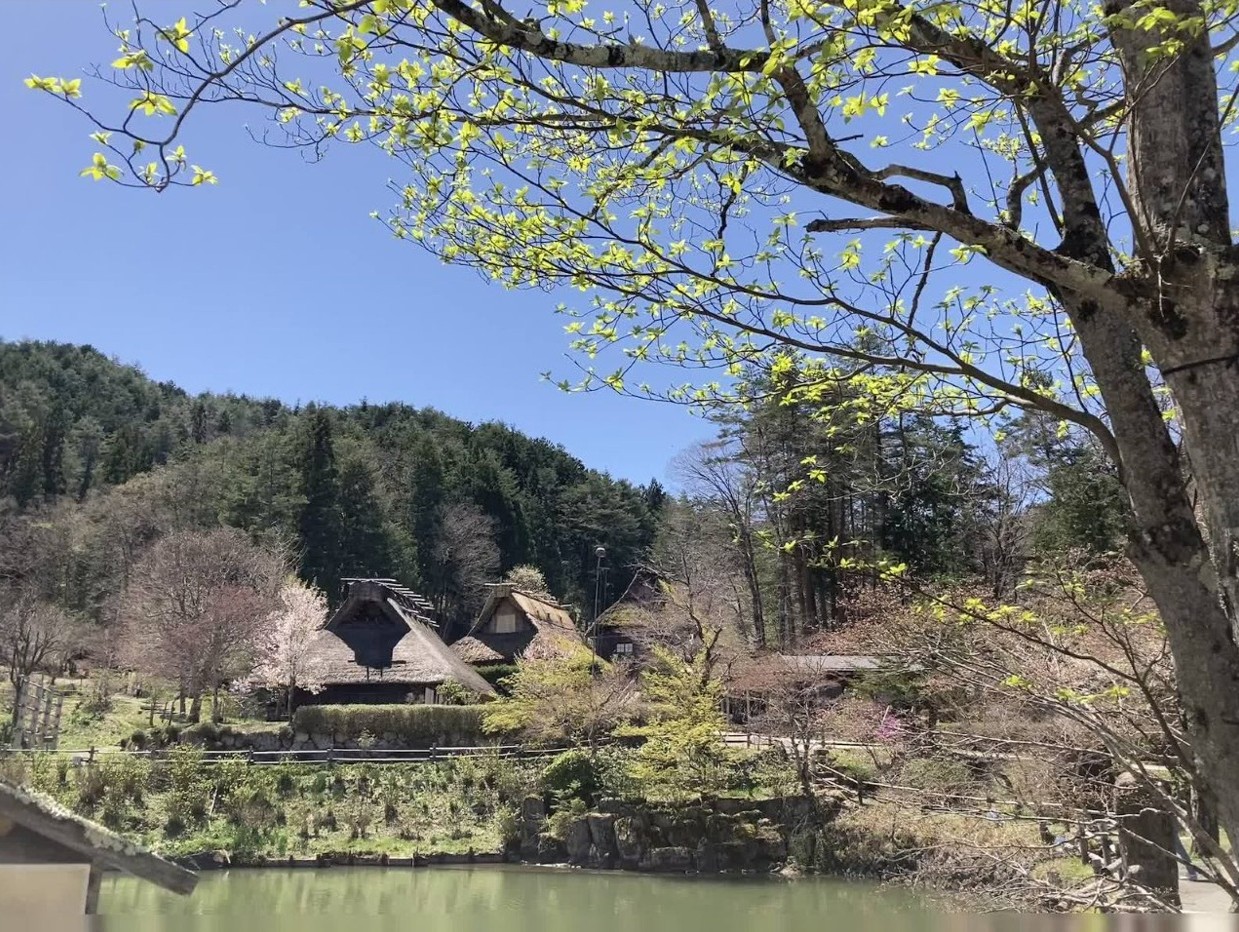
商談相手とハイヤーで移動中… 「ネットで見た『飛騨の里』って一体何?」と聞かれたら?
こんにちは!結です。🌸 今日は飛騨高山の『飛騨の里』についてご案内します。「古い家がある村です」と答えるだけでは、ゲストの心は動きません。 移動中のわずかな時間で、相手の感性に響き「ぜひ一度行ってみたい!」と言わせるための、5つの視点(食べ物・アート・建築・ファッション・日本人)を揃えました。
ゲストの関心に合わせて30秒でネタを仕込む!
【一言で腑に落ちる】王道&変化球
【インバウンド5大関心別】さらに一歩踏み込む(フォローセリフ)
1. この一言で腑に落ちる?
このパートのいずれかのワンフレーズでご納得いただけたらラッキーですね。もしだめなようでしたら、次のパートもお試しください。いつも通り、日本語で言えないことは英語でも言えませんので、日本語>英語順でご紹介します。
1.1 日本の原風景を展示した野外博物館?
飛騨の里は、飛騨地域の伝統的な暮らしを保存・紹介する施設です。近代化の中で取り壊されるはずだった数多くの古民家の中から、約20棟がこの地に移築され、丁寧に復元されています。家屋の内部には、養蚕や布づくりに使われた道具が展示されており、当時の人々の生活を支えた営みを具体的に感じ取ることができます。こうした建物と生活道具を通して、日本人でさえどこか懐かしさを覚える「日本の原風景」に触れられます。
Hida no Sato is a heritage park that preserves and showcases the traditional way of life in the Hida region. Around twenty historic houses—among countless others once destined for demolition—were relocated here and carefully restored. Inside these homes, you’ll find tools used for silk farming and textile production, the very work that sustained daily life in those days. Together, these elements offer visitors a glimpse into Japan’s original rural landscape—one that even many modern Japanese still feel nostalgic about. 🎧米国話者
👆まずはオーソドックスな基本説明パターンから。 今回は定番用語の”an open-air museum”でなく、”a heritage park”を使いました。直訳すると歴史公園ですが、英語圏の旅行者にとっては「敷地全体で歴史文化を体験できる屋外施設」というイメージが直感的に伝わります。
💡 Pick-up Vocabulary
heritage park 👉 歴史・文化遺産公園 / preserves and showcases 👉 保存し、紹介・展示する / way of life 👉 暮らし、生活様式 / destined for demolition 👉 取り壊しが運命づけられていた / relocated 👉 移築された / restored 👉 復元された / silk farming 👉 養蚕 / textile production 👉 布づくり、織物生産 / livelihoods 👉 生業、生活手段 / sustained 👉 支えた / glimpse into… 👉 〜の一端を垣間見ること / original rural landscape 👉 日本の原風景
1.2 日本式テーマパーク?
高山の「飛騨の里」は、日本の農村で数百年にわたり営まれてきた暮らしを再現した、日本式テーマパークです。 主役は、伝統的な日本家屋の中でもひときわ存在感を放つ合掌造りの建物です。しかし、それだけではありません。旅人や子どもを守る“道しるべ”として親しまれてきたお地蔵さんや、村人たちが娯楽として楽しんだ能舞台などを通して、昔の人々がどのように暮らし、どんな喜びを見いだしていたのかを実感できます。もしディズニーランドが“おとぎ話の世界”を描く場所だとすれば、ここは“日本の本物のフォークロアの世界”を生き生きと体験できる場所と言えるでしょう。
Hida Folk Village is a Japanese‑style theme park that recreates the daily life of traditional Japanese rural communities as it was for hundreds of years. The main attraction is the gassho‑zukuri architecture—arguably the superstar of traditional Japanese houses. But from the Jizō statues, long regarded as protectors of travelers and children, to the Noh theater stages built for village entertainment, you can truly sense how people in the past lived and found joy. If Disneyland showcases a fairy‑tale world, then this place brings to life the world of authentic Japanese folklore.
👆もう一つの定番用語、theme park(テーマパークと言う表現を現地の人はあまり好みませんが)で、誘ってみます。
💡 Pick-up Vocabulary
main attraction 👉 見どころ、主役 / arguably 👉 間違いなく / superstar 👉 花形、一番目立つ存在 / regarded as… 👉 〜とみなされている / protectors of… 👉 〜の守り神 / Noh theater stages 👉 能舞台 / village entertainment 👉 村人たちの娯楽 / found joy 👉 喜びを見いだした / showcases 👉 披露する、展示する / fairy-tale world 👉 おとぎ話の世界 / brings to life… 👉 生き生きと再現する / authentic folklore 👉 本物の民俗・フォークロア
2.次の補足でご納得?
残念ながら前パートで外した場合のフォローセリフ、いつも通りインバウンド視点を踏まえ関心別に置いてみました。色々な表現を織り込むため、全体的にかなり長くなっていますが、お気に入りのフレーズあれば現場でも試してみる、そんな軽いノリでご利用ください。
2.1 建築(匠:たくみ)系
👉ダーウィン法則の建築世界?
ここでは、まさに「ダーウィンの建築世界」を体験できます。豪雪をしのぐために急勾配の茅葺き屋根をもつドラマチックな合掌造りの家々のそばには、強い風に耐えるため、重い石で押さえられた緩やかな勾配の木屋根の家も並んでいます。こうした建築様式の鮮やかな対比から、建物が動植物と同じように環境に合わせて進化してきたことが実感できます。
Visitors can discover a Darwinian world of architecture. Alongside the dramatic A‑frame gassho‑zukuri houses—built with steep thatched roofs to shed heavy snow—you’ll find houses with low‑pitched, wooden‑shingled roofs weighted down by heavy stones to withstand strong winds. These striking contrasts show how building styles evolved in response to their environment, much like flora and fauna. 🎧英国話者
💡 Pick-up Vocabulary
Darwinian world 👉 ダーウィン的進化の世界 / dramatic A-frame 👉 ドラマチックなA字型の構造 / steep thatched roofs 👉 急勾配の茅葺き屋根 / shed heavy snow 👉 重い雪を滑り落とす / low-pitched 👉 勾配の緩やかな / wooden-shingled roofs 👉 こけら葺きの屋根 / weighted down by… 👉 〜で重しを置かれた / withstand strong winds 👉 強風に耐える / striking contrasts 👉 鮮やかな対比 / evolved 👉 進化した / in response to… 👉 〜に適応して / flora and fauna 👉 動植物
2.2 ファッション系
👉写真映えする田園風景?
飛騨の里では、季節ごとの伝統行事が生き生きと再現されています。4月下旬から5月上旬の「こどもの日」の時期には、池の上を色鮮やかな鯉のぼりがはためき、その水面に映る姿が合掌造りの家々と美しいコントラストを生み出します。5月下旬には、昔ながらの手植えによる田植えの実演が行われ、まるで映画のワンシーンに入り込んだような、本物の田園風景の中で写真を撮る貴重な体験ができます。
Hida no Sato vividly recreates traditional seasonal events. During the Boys’ Festival from late April to early May, brightly colored koinobori (carp streamers) float above the pond, their reflections creating a photogenic contrast against the gassho‑zukuri houses. In late May, you can witness a traditional hand‑rice‑planting demonstration, offering a rare chance to capture photos of yourself immersed in an authentic rural landscape—as if stepping into a scene from a movie. 🎧オーストラリア話者
💡 Pick-up Vocabulary
vividly recreates 👉 生き生きと再現する / Boys’ Festival 👉 端午の節句 / brightly colored 👉 色鮮やかな / koinobori (carp streamers) 👉 鯉のぼり / float above… 👉 〜の上を泳ぐ / photogenic contrast 👉 写真映えする対比 / witness 👉 目の当たりにする / hand-rice-planting 👉 手植えの田植え / demonstration 👉 実演 / rare chance 👉 貴重な機会 / immersed in… 👉 〜に溶け込んだ / authentic rural landscape 👉 本物の田園風景
2.3 アート系
👉人の哲学が詰まったアート?
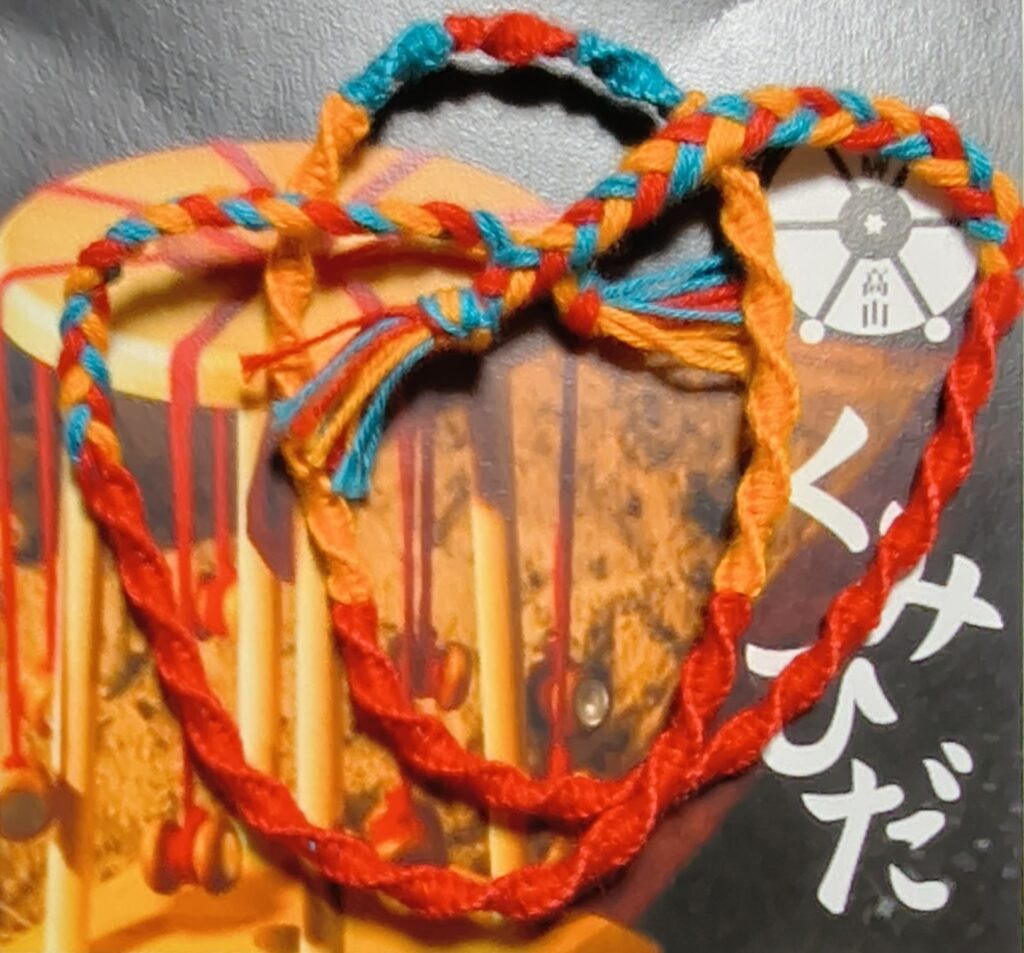
ハートをつなぐ組紐@飛騨の里
ここでは、日々の暮らしに根ざしたアート「組紐」を楽しめるかもしれません。 平らな織物とは異なり、組紐は木製の台の上で絹糸を斜めに交差させて作られます。もともとは侍の甲冑を補強するために生まれ、後に着物を彩る美しい工芸へと発展しました。この地域が舞台となった映画『君の名は。』では、時間と運命の結びつきを象徴する存在として描かれています。組紐を手にすると、この飛騨の里での出会いがどこか“運命的”に感じられるかもしれません。
Here, you may well find yourself enjoying kumihimo, an art form rooted in everyday life. Unlike flat woven fabrics, it is made by criss‑crossing silk threads diagonally on a wooden frame. First developed to reinforce samurai armour, it later became an aesthetic craft used to embellish kimonos. In the popular film Your Name, set in this region, it symbolizes the ties of time and fate. Holding it, you may well feel that your visit to this Hida village was a fateful encounter. 🎧インド話者
💡 Pick-up Vocabulary
rooted in… 👉 〜に根ざした / flat woven fabrics 👉 平織りの布地 / criss-crossing 👉 交差させて編む / diagonally 👉 斜めに / wooden frame 👉 織り台・枠 / reinforce 👉 補強する / samurai armour 👉 侍の甲冑 / aesthetic 👉 美的な、美意識の / embellish 👉 装飾する / symbolizes 👉 〜を象徴する / ties of time and fate 👉 時間と運命の結びつき / fateful encounter 👉 運命的な出会い
2.4 フード系
👉歯応えがある食感体験?
食に興味がある方には、わらび餅がおすすめです。水車小屋の展示では、その作り方を知ることができます。山野に自生するワラビの根からでんぷんを採り、貴重な食料として使われてきた歴史を知ると、この素朴な味わいがより深く感じられるでしょう。歯応えのある食感がお好きな方は、体験コーナーで手焼き煎餅を試してみてください。数分で焼き上がるできたての煎餅は、文字通り「カリッ」とした食感が思い出になるはずです。
For food lovers, warabi mochi is recommended. You can learn how it’s made at the watermill exhibition. Understanding how the starch was harvested from wild bracken roots and served as a vital food gives you a whole new appreciation for this subtle treat. If you prefer a crispier texture, try baking your own senbei (rice crackers) at the hands‑on corner. It takes just a few minutes, and tasting the crunch of a freshly baked cracker will make for a delicious and memorable experience. 🎧ニュージーランド話者
💡 Pick-up Vocabulary
food lovers 👉 グルメな人、食に関心がある人 / warabi mochi 👉 わらび餅 / watermill exhibition 👉 水車小屋の展示 / starch 👉 でんぷん / harvested from… 👉 〜から採取された / wild bracken roots 👉 野生のワラビの根 / vital food 👉 不可欠な食料 / whole new appreciation 👉 深い味わい方・新たな感慨 / subtle treat 👉 素朴なごちそう / crispier texture 👉 香ばしくカリッとした食感 / senbei (rice crackers) 👉 煎餅 / satisfying crunch 👉 心地よい歯応え
2.5 日本人系
👉日本人の魂がわかるお地蔵さん?
ここでは日本人が古代から受け継いできた精神文化を実感できます。 道ばたに静かに佇むお地蔵さんは、全国同じように人々の暮らしを見守ってきました。子どもを守り、迷子を導き、旅人の道しるべとなり、時には災厄を遠ざける存在として信じられてきたのです。しばしば仏教と神道の違いを問われますが、お地蔵さんはさまざまな民間伝承が混ざり合って形成された民間信仰です。狩猟時代の日本を形づくったアニミズムの名残が感じられるかもしれません。
Here, you can truly experience the spiritual culture shared by the Japanese people since ancient times. The Jizō statues standing quietly along the roadside have watched over people’s lives in the same way across the country. They have long been believed to protect children, guide the lost, serve as signposts for travelers, and even ward off misfortune. While visitors often ask about Buddhism versus Shinto, Jizō actually became a folk belief blending various folk traditions. You may even sense echoes of the animism that shaped Japan during its hunting era. 🎧米国話者
💡 Pick-up Vocabulary
spiritual culture 👉 精神文化 / shared since ancient times 👉 古代から受け継がれてきた / Jizō statues 👉 お地蔵様 / standing quietly 👉 静かに佇む / watched over… 👉 見守ってきた / guide the lost 👉 迷子を導く / serve as signposts 👉 道しるべとなる / ward off misfortune 👉 災厄を遠ざける / folk belief 👉 民間信仰 / blending various folk traditions 👉 さまざまな民間伝承が混ざり合った / sense echoes of… 👉 〜の名残りを感じ取る / animism 👉 アニミズム
御礼&後書き

👆 今回も最後までお読みいただき、ありがとうございます。 本ブログに関するご意見やご要望がございましたら、下記より、お気軽にお声がけくださいね。